Your Consultative Signs and Graphics Partner for Eastside Businesses


Our Work – Signarama Redmond, WA
Troubleshooting Flickering LED Signs: Causes and Safe Next Steps
Oct 12, 2026 by Signarama Redmond
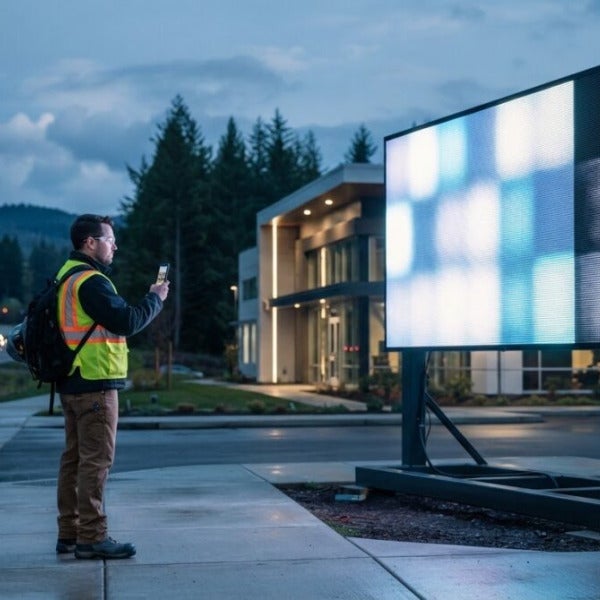
What if a flickering LED sign doesn’t need to be replaced? Uneven light can affect visibility, but the cause may be the power supply, controls, or an electrical connection rather than the LEDs themselves. Troubleshooting flickering LED signs starts with documenting the pattern, not opening the sign or swapping parts. It’s natural to wonder whether the issue is with the sign, its controls, or the building’s electrical supply, and whether inspection or replacement is the right next step. Start by noting whether the whole sign flickers or only one section, whether the change is continuous or intermittent, and whether it coincides with other visible changes in the building. These details can help clarify what needs assessment. Leave sign cabinets, wiring, and electrical components to a qualified professional. Your observations can help guide the next conversation, whether it’s about assessing the sign’s condition or planning a larger illuminated-sign project.
Read more
Understanding Sign Fabrication Timelines in 2026: What to Expect
Oct 10, 2026 by Signarama Redmond
This guide explains the main factors that shape a sign project’s schedule, where delays can arise, and what details to prepare before discussing your project. You’ll also learn how to distinguish fabrication from installation and plan approvals with fewer surprises. Signarama Redmond offers signs and graphics and can help you organize the details of your project.
Read more
Law Firm Lobby Signs in Kirkland: Create a Confident First Impression
Oct 9, 2026 by Signarama Redmond
This guide explains how to plan lobby signage around your firm’s identity, reception space, and client arrival. You’ll compare common sign styles, consider sightlines and privacy, and prepare a practical project brief. Signarama offers signs and graphics to help bring those project goals into a focused direction.
Read more
How to Compare Quotes from Different Sign Companies: A Practical Guide
Oct 8, 2026 by Signarama Redmond
This guide will help you compare scope, specifications, schedule, and project fit so you can choose based on the sign you need, not price alone. You’ll also learn to identify exclusions, clarify who is responsible for each step, and understand the next steps before moving forward. With a shared view of the finished sign and the work behind it, you can make a more confident decision and have a clearer project conversation with Signarama Redmond.
Read more
How to Prevent Vinyl Wrap from Peeling: Causes, Application, and Care
Oct 8, 2026 by Signarama Redmond
This guide covers common causes of lifting and offers a checklist for before, during, and after installation. Learn why cleaning and decontaminating the surface matters, how stretching can put stress on edges, and what to consider when washing a newly wrapped vehicle, including waiting 48 to 72 hours before its first wash. You’ll also learn what to document if peeling appears and why a quick DIY fix may not solve the underlying problem.
Read more
Guide: What to Do If Your Sign Violates City Code
Oct 6, 2026 by Signarama Redmond
This guide explains how to interpret a sign-code notice, document the issue, and compare practical options before committing to replacement. It also explains how Signarama Redmond’s sign and graphics team can help you review the physical sign and develop a correction concept to bring back for city review. The goal is a clear, documented path toward resolving the concern, not a rushed decision.
Read more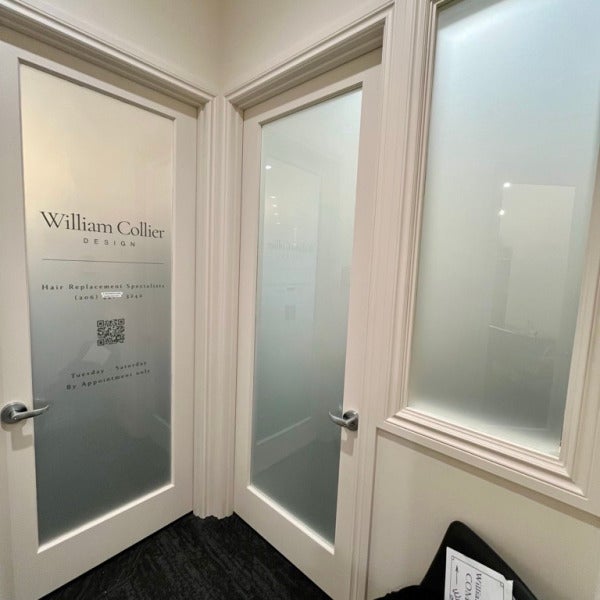
Frosted Vinyl: Privacy Without Losing Light - Redmond, WA
Oct 5, 2026 by Alex Fong
Commercial Sign Safety Inspection in Redmond: A 2026 Guide
Oct 5, 2026 by Signarama Redmond
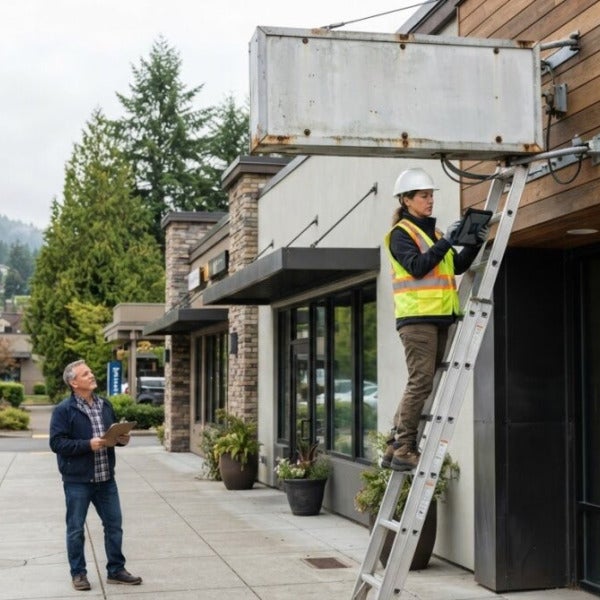
This guide explains what to look for, how to record concerns and follow-up work, and when to involve a qualified sign professional, insurer, or legal adviser. It also covers how thoughtful sign planning and professional installation fit into a practical safety approach for Redmond businesses.
Read more
Custom Football Run-Through Banners in Redmond, WA: Fire Up Your Team
Oct 5, 2026 by Alex Fong

Avoiding Cheap Signs That Hurt Brand Perception: A Practical Business Guide
Oct 4, 2026 by Signarama Redmond
This guide explains how to spot sign choices that can weaken a professional impression and assess options using visual, practical, and lifecycle criteria. You’ll learn what to review in a design proof, how to compare proposals beyond the bottom line, and how to weigh durability and potential rework. A clear brief helps you choose signs and graphics that present your business consistently and help customers understand who you are.
Read more
Sidewalk Signs in Redmond, WA: Use and Care Tips
Oct 4, 2026 by Alex Fong
Preventing Moss and Mildew on Outdoor Signs in Washington
Oct 3, 2026 by Signarama Redmond
This guide explains why buildup appears, how to clean different sign materials without unnecessary wear, and what to check during routine inspections. You’ll also find practical ways to reduce moisture and keep your sign presentable and readable through Washington’s damp seasons.
Read more
How to Get Management Approval for a New Signage Budget
Oct 2, 2026 by Signarama Redmond
A strong signage budget request isn’t the one with the most ambitious promises. It’s the one that makes the need, scope, and next steps easiest to understand. If you’re figuring out how to get management approval for new signage budget, your request may have to compete with other priorities or answer questions about its value.
A clear proposal connects signage to a specific organizational need, such as helping visitors find their way, communicating information, or supporting a business goal. It also explains what the budget covers and how the organization can assess whether the project meets its objectives. This gives decision-makers a practical basis for considering the request.
This article explains how to build a concise business case, compare signage approaches, estimate the project scope, and set baseline measures before installation. You’ll also learn how to make a direct approval request and outline manageable next steps.
Key Takeaways
Connect the signage request to a specific operational need and an existing business priority.
Build an evidence-based case using organization-approved information, such as customer feedback, site observations, or current performance measures.
Compare signage options using consistent criteria, including purpose, audience, placement, scope, and upkeep.
Present project-specific estimates, practical alternatives, and a clear decision request.
Prepare for budget objections by clarifying the evidence or scope, and consider a focused phase that still addresses the core need.
Table of Contents
Make the Case for a New Signage Budget by Starting with the Business Need
Build a Signage Business Case with Evidence Management Can Evaluate
Compare Signage Options by Scope, Audience, and Long-Term Use
Prepare a Clear Signage Budget Request and Present It with Confidence
Address Budget Objections and Turn Signage Approval into Next Steps
Make the Case for a New Signage Budget by Starting with the Business Need
Start with the problem, not a preferred design. Visitors may struggle to find reception, customers may overlook an entrance, or employees may encounter inconsistent information across a workplace. Explain where the issue occurs, who experiences it, and how addressing it supports an existing priority, such as improving the visitor experience, strengthening brand consistency, or making workplace communication clearer.
Signs and graphics serve different purposes, from identifying a location to sharing information. A brief overview of what is signage can help frame those uses, but your case should focus on the need at your organization. Instead of saying “the lobby needs better signs,” describe which visitors have difficulty finding which destination and what observations or feedback support that concern.
Translate a signage request into a business objective
Name the location, audience, and experience you want to improve. Then connect that outcome to an organizational objective: helping customers locate a service, making an entrance easier to identify, or presenting consistent information across a site. Use available evidence, such as customer comments, staff feedback, site observations, or approved business measures. If you don’t have enough evidence yet, state what you still need to observe or collect instead of presenting a hunch as a proven problem.
Separate facts from assumptions. “Staff report that visitors regularly ask for directions to the meeting rooms” is an observation if staff have shared that feedback. “New signs will reduce delays” is a potential outcome, not an established result, unless you have data to support it. This distinction gives management a credible basis for evaluating the request.
Identify who will evaluate and approve the request
Identify the people who may review or influence the decision. Finance may focus on budget fit, marketing on brand consistency, facilities on placement and coordination, and location leadership on the day-to-day issue. These are perspectives to prepare for, not guaranteed approval criteria. Tailor your explanation to each stakeholder’s role while keeping the underlying need consistent.
Make the timing clear. Explain why the request is relevant now, such as a documented navigation issue, a planned change to the space, or a current communication gap. To explain how to get management approval for new signage budget, begin with a concise link between a verified need and a business priority. That helps decision-makers understand the reason for the request before you present options or costs.
Build a Signage Business Case with Evidence Management Can Evaluate
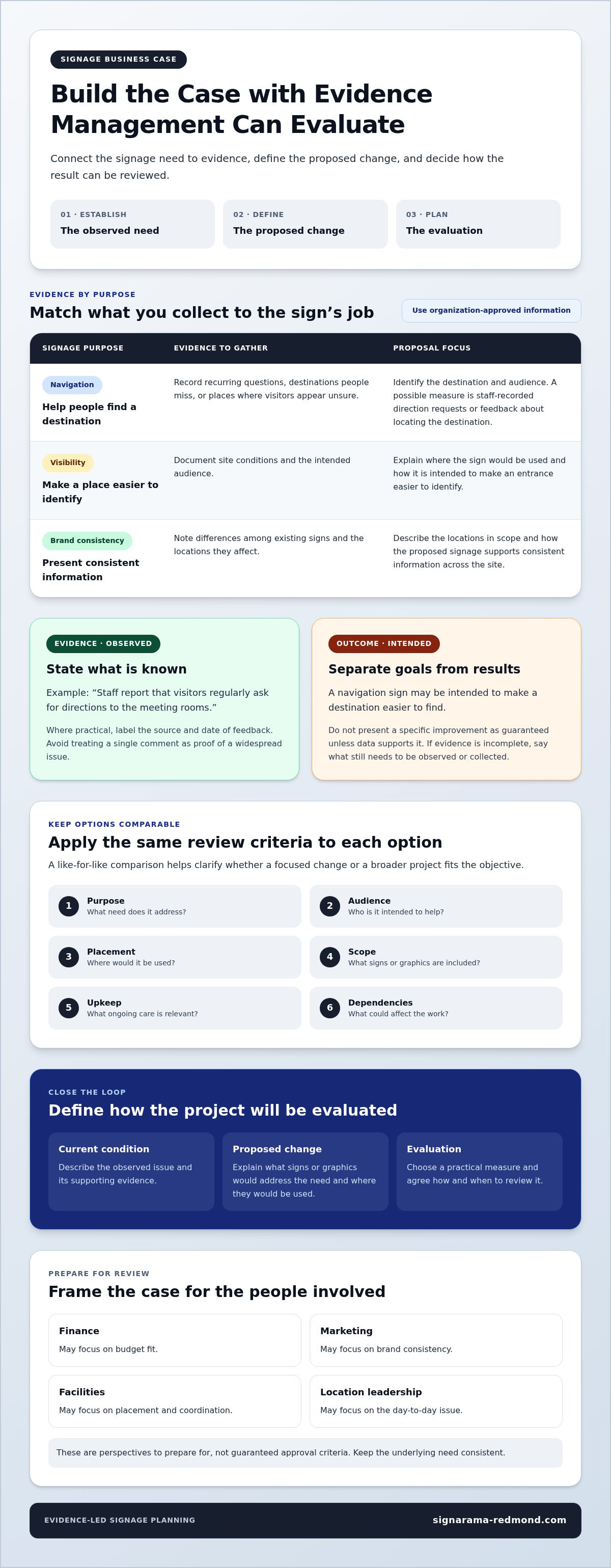
Once the need is clear, make the proposal easy to assess. Define the issue, collect relevant evidence, scope realistic options, and ask management for a specific decision. This keeps the discussion focused on what the organization knows, what it proposes to change, and how it will review the result.
Use information the organization already trusts, such as approved customer feedback, staff observations, site notes, or existing performance measures. Keep the evidence connected to the sign’s purpose. General comments may show that people have concerns, but specific examples tied to a location or task make the problem easier to evaluate.
Choose evidence that matches the proposed sign’s purpose
Match the evidence to the job the signage needs to do. For navigation, record recurring questions, destinations people miss, or places where visitors appear unsure. For visibility, document site conditions and the intended audience. For brand consistency, note differences among existing signs and the locations they affect. Examples of professional office signs in Redmond can help illustrate the office-signage context as you consider your own space.
Distinguish observations from assumptions. Where practical, label the source and date of feedback, and avoid treating a single comment as proof of a widespread issue. If information is incomplete, say what additional observation or approved data would help establish a baseline before the project moves forward.
Describe outcomes without promising unsupported returns
State the intended outcome without presenting it as guaranteed. A proposed navigation sign might be intended to make a destination easier to find. That is different from claiming it will reduce questions by a certain amount. Choose a practical measure the organization can track after installation, and agree on how and when to review it.
A short comparison can clarify the case:
Current condition: Describe the observed issue and the evidence supporting it.
Proposed change: Explain what signs or graphics would address the need and where they would be used.
Evaluation: Name the measure, such as staff-recorded direction requests or feedback about locating a destination.
This structure gives decision-makers a way to evaluate both the request and its follow-through. When you’re ready to develop the need into a project scope, work with Signarama Redmond on signs and graphics.
Compare Signage Options by Scope, Audience, and Long-Term Use
With the need and supporting evidence established, compare options that address the same problem. A like-for-like review helps management see whether a focused change is sufficient or a broader project better fits the objective. Apply the same criteria to each option: purpose, intended audience, placement, scope, upkeep, and dependencies that could affect the work.
Use a like-for-like comparison in the proposal
If customers have trouble identifying an entrance, compare approaches that improve visibility at that entrance, rather than weighing an unrelated interior sign against it. If the issue involves information displayed on a window, custom window decals for Redmond businesses offer a relevant example of window graphics. For each option, consider who needs to see it, where it would appear, how much of the site it covers, and what upkeep it may involve. Avoid claiming one choice will last longer or perform better unless you have evidence for that comparison.
Describe each option’s trade-offs in relation to the need. A targeted replacement may focus on one location or audience, while a wider project may address several locations or a broader consistency issue. Neither scope is automatically preferable. Explain what each would cover and which documented need could remain unaddressed if management chooses the narrower option.
Explain the complete project scope clearly
Make the request concrete enough for reviewers to understand what they’re considering. List the signs or graphics included, the locations involved, and the intended audience for each. Include design, production, or installation needs when relevant, and identify dependencies such as content decisions or coordination with another project.
Focused scope: Identify the specific sign or location and the core need it addresses.
Broader scope: Describe the additional signs, locations, or consistency goals included, and why they matter.
Open decisions: Note assumptions that could change the scope, such as final placement or approved messaging.
This detail makes alternatives easier to compare and keeps a broad request from obscuring the central business need. Present each option with clear boundaries so decision-makers can weigh fit, coverage, and upkeep before reviewing project-specific estimates.
Prepare a Clear Signage Budget Request and Present It with Confidence
Turn the need, evidence, and options into a focused request that makes the decision clear. Put the business problem and the approval you’re seeking near the beginning. Then show how the recommended scope addresses the issue, what alternatives you considered, and how the budget was developed. Reviewers should be able to see what they’re approving and what remains undecided.
Create a concise approval-ready proposal
Organize the proposal in a practical sequence:
Problem and evidence: Summarize the issue and the observations or approved data that support it.
Recommended scope: List the signs or graphics, locations, and audience covered.
Alternatives: Briefly explain other reasonable scopes and what each would address.
Budget basis: Use project-specific estimates, with relevant components and assumptions clearly stated.
Decision needed: State the approval requested, the date a decision is needed, and the next action if approved.
Base the budget on the proposed project rather than generic market figures. If the scope includes multiple elements, show how the estimate relates to them and identify assumptions that could affect it. A visual mockup, annotated photograph, or simple location reference can make the proposal easier to assess. For an example related to sign installation, see professional sign installation in Redmond.
Adapt the presentation to management’s concerns
Lead with the evidence and business priority most relevant to the people in the room. Finance may want to understand the budget basis, facilities may focus on location and coordination, and marketing may ask how the proposed signs fit existing brand use. Prepare clear answers about scope, timing assumptions, alternatives, and how the organization could review outcomes. Explain what the project is intended to address and what measure could be reviewed afterward, without overstating results.
Present the request as a decision, not a demand. For example: “We’re requesting approval for the defined signage scope, based on the attached project estimate, with a decision by [date] so we can begin [next step].” Leave room for questions and invite feedback on scope or assumptions. A calm, collaborative approach helps reviewers engage with the proposal and clarify what they need to decide.
A clear structure helps management evaluate the request. To develop a project-specific scope for signs or graphics, see this example of professional sign installation in Redmond.
Address Budget Objections and Turn Signage Approval into Next Steps
A question or objection doesn’t always mean management has rejected the idea. It may show that the proposal needs stronger evidence, a narrower scope, another option, or a plan for reviewing results. Listen for the specific concern and respond to it rather than repeating the full case.
Respond to common concerns without overclaiming
If the request is seen as discretionary spending, return to the documented problem and the business priority it affects. Keep the explanation grounded in evidence, and distinguish the reason for the request from the outcome you hope to achieve. If results are uncertain, suggest a practical way to evaluate the change, such as tracking feedback or recording how often staff are asked for directions. Present this as a review method, not a promised return.
For scope concerns, separate essential elements from those that could wait. A focused phase may address the most immediate location or audience, while a later phase could consider other areas. Make clear what the smaller scope would and wouldn’t cover. If it no longer addresses the core need, revise the proposal rather than treating a reduced budget as an automatic solution.
Move from approval to a defined project plan
Once management approves the request, document the decision while the details are fresh. Confirm the approved scope, budget basis, responsible stakeholders, open questions, and next decision point. This shared record keeps expectations aligned and gives the project a clear starting place.
Then identify the practical discussions needed to move forward. Depending on the approved scope, these may include clarifying sign or graphic content, locations, design decisions, production requirements, and installation planning. Assign an owner to coordinate each next step and agree on when the group will review progress. If approval is deferred, record what additional evidence or revision management needs and set a date to revisit the request.
Getting approval also means making the follow-through as clear as the request itself. Signarama provides signs and graphics to help turn an approved need into a project scope. Discuss your signage project with Signarama Redmond.
Turn Your Signage Proposal into a Clear Next Step
A persuasive signage request begins with a real business need, supported by evidence decision-makers can review. Keep the proposal focused: explain the problem, show how the recommended scope responds to it, compare practical alternatives, and make the approval decision clear. Use project-specific estimates and describe how the organization can assess the intended outcome without promising unproven results.
If management raises concerns, treat them as a chance to clarify the case. Adjust the scope if a smaller phase still addresses the core need, and agree on who will take the next step and when the request will be revisited. Practical follow-through is an important part of getting approval for a new signage budget.
When you’re ready to develop an approved need into a project scope, Signarama can help with signs and graphics. Discuss your signage project with Signarama Redmond and take the next step with a clear plan.
Frequently Asked Questions
How do I justify a new signage budget to management?
Connect a documented signage problem to an existing business priority. Explain who is affected, where the issue occurs, and what evidence supports it, such as customer feedback, staff observations, or approved performance data. Then describe the proposed scope and how the organization could evaluate the change. This keeps the case focused on business needs rather than design preference.
What should a signage budget proposal include?
Include the problem, supporting evidence, recommended scope, alternatives, project-specific budget estimate, and the decision management needs to make. Identify the signs or graphics and locations involved, along with relevant assumptions or open questions. A visual mockup or location reference can help reviewers picture the proposal. Close with the decision date and the next step after approval.
How can I show the ROI of new business signs?
Set a baseline before the signage changes, then track a measure connected to the sign’s purpose. For navigation, that might mean recording how often staff give directions or reviewing relevant visitor feedback. For visibility, consider an existing business measure related to the intended audience. Compare results before and after, while noting other factors that may affect them. Treat expected benefits as projections, not proven returns or guaranteed outcomes.
What if management says signage is not a priority?
Ask what information or concern is behind the decision, then respond with relevant evidence rather than repeating the original request. Reconnect the signage need to an existing priority and clarify who is affected. If budget or scope is the main concern, consider a smaller phase only if it still addresses the core problem. If management needs more evidence, agree on what to gather and when to revisit the request.
Should I present multiple signage options to management?
Yes, if each option addresses the same documented need. Compare them using consistent criteria, such as purpose, audience, placement, scope, upkeep, and relevant project dependencies. Include a focused option and a broader one when both are practical, and explain what each covers or leaves unresolved. Avoid overwhelming reviewers with unrelated possibilities or unsupported performance claims. Recommend the option that best fits the business need and explain why.
How do I estimate a signage budget before requesting approval?
Define the project scope before estimating: list the signs or graphics, locations, and relevant design, production, or installation needs. Use project-specific estimates based on that scope rather than general market figures. State assumptions and identify open decisions that could affect the estimate. If the proposal includes alternatives, show each scope separately so management can compare them fairly. Keep the estimate tied to the work being requested, not unsupported outcome projections.
When should I ask management to approve a signage project?
Bring the request forward once you can explain the business need, support it with relevant evidence, and outline a workable scope and project-specific estimate. Allow time for the organization’s review and planning process, and state when a decision is needed and why. If key information is missing, identify what needs to be gathered first. Clear, early communication gives stakeholders time to review the request and raise questions before the next project step.

Fall for Depth: Why Dimensional Lobby Signs Build Stronger Brands
Oct 2, 2026 by Alex Fong
What to Do When Your Sign Is Vandalized in King County
Oct 1, 2026 by Signarama Redmond
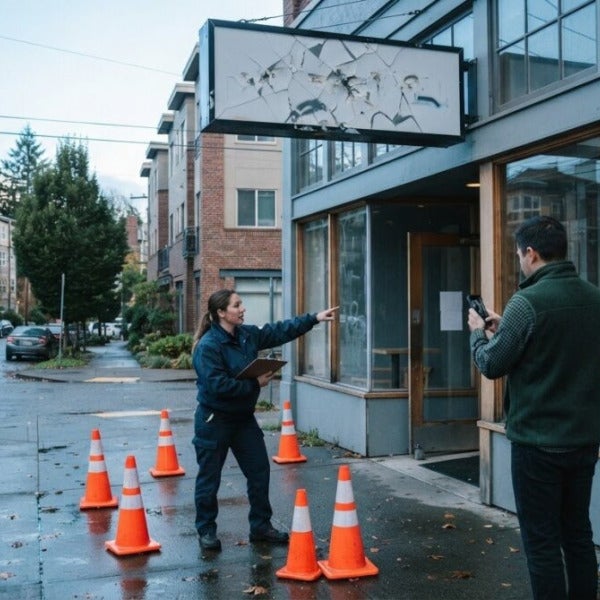
Your business sign is damaged, visibility is reduced, and you may be wondering what to do first. When you’re deciding what to do when your sign is vandalized in King County, start by checking whether the damage creates an immediate hazard. Keep people away from loose, unstable, or sharp materials, and call 911 if a crime is in progress or someone is in immediate danger.
It’s understandable to want the sign restored quickly, but taking a few careful steps first can protect people and preserve useful evidence. Reporting channels depend on where the sign is and who manages it. A storefront sign, county road sign, transit sign, or park sign may need to be reported differently.
This guide walks you through a safety-first plan: secure the area, photograph the damage and surroundings, report the incident through the appropriate local channel, and check your insurance or possible reimbursement options. Then assess whether the sign may be repaired or needs replacement. If you’re considering signs or graphics for the next step, share photos and details with a provider to discuss possible options. The right approach depends on the type and extent of the damage.
Key Takeaways
For what to do when your sign is vandalized in King County, follow a safety-first sequence: keep people clear, document the damage, report it, then consider restoration.
Confirm whether the sign is within city limits or unincorporated King County so you can identify the appropriate reporting authority.
Record when you discovered the damage and take wide and close-up photos before cleanup or repairs, when it’s safe to do so.
Compare limited repairs, component replacement, and full sign replacement by considering stability, legibility, electrical condition, and brand consistency.
Before choosing a restoration path, check insurance or reimbursement options and ask a sign provider about possible scope, materials, scheduling, and approvals.
What to Do When Your Sign Is Vandalized in King County: Contents
How to Document Vandalized Sign Damage for Insurance or Reimbursement
Repair or Replace a Vandalized Business Sign? Compare the Options
Restore Your King County Business Sign and Reduce Future Disruption
What to Do First When a Sign Is Vandalized in King County
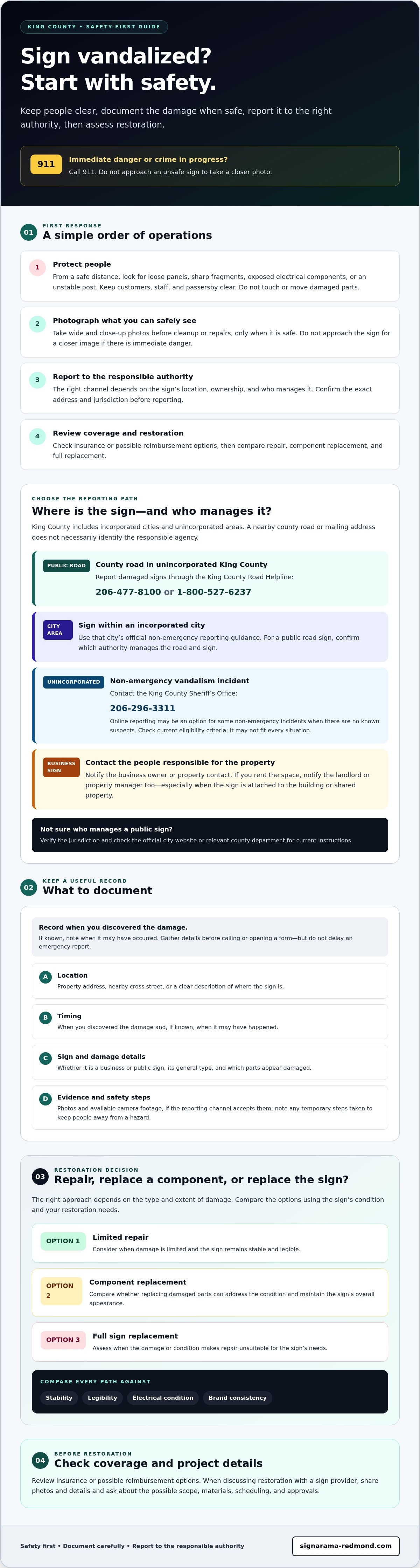
If you’re deciding what to do when your sign is vandalized in King County, follow this order: protect people, take photos if it’s safe, report the damage to the right authority, then assess restoration. Don’t rush to clean up or handle damaged parts. Careful first steps can help prevent injury and preserve details you may need later.
Keep people safe, photograph the damage, and report the incident before assessing restoration.
Is the damaged sign unsafe or obstructing access?
Look from a safe distance. A loose panel, sharp fragments, exposed electrical components, or an unstable post may pose a risk even if the damage seems limited. Don’t touch or try to move the sign. Keep customers, staff, and passersby clear. If possible, redirect people without blocking an accessible entrance or walkway.
If there’s immediate danger or a crime is in progress, call 911. Don’t approach the sign to get a closer photo. Document what you can from a safe location. Cosmetic damage, such as paint or a mark on a stable sign, may not require the same urgent response, but it should still be documented and reported through the appropriate channel.
Is it a public traffic sign or a private business sign?
Before choosing where to report the damage, identify who owns or manages the sign. Public traffic signs and private business signs follow different reporting paths. For background on the term, see Vandalism. For your next step, the sign’s location and ownership matter.
For a public roadway sign, confirm which authority manages that road. If it’s a county road in unincorporated King County, report damaged signs through the King County Road Helpline at 206-477-8100 or 1-800-527-6237. If the sign is within an incorporated city, check with the city responsible for that location rather than assuming the county handles it.
For a business sign, contact the business owner or the person responsible for the property. If you rent your space, notify the landlord or property manager too, especially if the sign is attached to the building or shared property. Include the sign’s address and a brief description of the damage. If you’re unsure who manages a public sign, verify the jurisdiction before submitting a report.
How to Report Sign Vandalism in King County
The correct reporting channel depends on where the sign is and who manages it. King County includes incorporated cities as well as unincorporated areas, and a nearby county road or mailing address doesn’t necessarily show which agency is responsible. Before reporting, confirm the sign’s exact property address and whether it falls inside a city’s limits. Then check the official website for that city or the relevant county department for current instructions.
How does location affect who you contact?
For a non-emergency vandalism incident in unincorporated King County, contact the King County Sheriff’s Office at 206-296-3311. The Sheriff’s Office online reporting system may be an option for some non-emergency incidents if there are no known suspects. Check the system’s current eligibility criteria before starting. An online report may not fit every situation.
If the sign is within an incorporated city, use that city’s official non-emergency reporting guidance to identify the appropriate agency. For a damaged sign on a public road, confirm which authority manages the road and sign. If there’s immediate danger or a crime in progress, call 911. For damage that has already occurred and presents no immediate emergency, use the relevant non-emergency channel. These steps help direct your report to the agency responsible for that location.
What information should you have ready to report?
A clear, factual report helps the agency understand what happened and where. Gather details before calling or opening an online form, but don’t delay an emergency report to collect them.
Location: The property address, nearby cross street, or a clear description of where the sign is.
Timing: When you discovered the damage and, if known, when it may have occurred.
Sign details: Whether it’s a business sign or public sign, its general type, and which parts appear damaged.
Evidence: Photos and any available camera footage, if the reporting channel permits uploads or submission.
Safety steps: Any temporary measures taken to keep people away from a hazard.
Describe what you observed without guessing about who caused the damage or when it happened. Reporting procedures and evidence requirements can vary, so follow the agency’s instructions. Don’t assume a particular report will be accepted, handled anonymously, or answered within a specific timeframe.
Once you’ve identified the responsible agency and made the report, you can explore restoration options. To discuss the sign’s condition and possible next steps, share photos and sign details with Signarama Redmond. The appropriate option depends on the sign and the damage.
How to Document Vandalized Sign Damage for Insurance or Reimbursement
Good records can help you explain what happened to an insurer, property owner, or agency reviewing a reimbursement request. If it’s safe, take photos before cleaning, covering, or repairing the sign. Capture the overall scene and close-up details so the damage can be understood in context. Don’t put yourself at risk to document evidence, and follow any instructions from responding authorities before moving or altering damaged items.
Which photos and records can help explain the damage?
Take wide photos that show the sign’s location and surroundings, then closer images of each affected area. Include visible hazards, such as a loose panel or damaged support, from a safe distance. Keep the original image files and note when and where each photo was taken. If the property has relevant camera footage, preserve it according to the owner’s normal retention process.
Use a simple incident log to record when you discovered the damage, what you observed, which sign components appear affected, and any temporary steps taken to keep people clear. Keep related records together, including the incident-report reference or confirmation, communications with the property owner, repair estimates, invoices, and receipts. Ask your insurer what it needs before assuming a particular format or set of documents will be sufficient. Insurers set their own documentation requirements.
Evidence checklist: dated wide and close-up photos, original image files, discovery time, location, visible damage, affected components, safety measures, incident-report details, relevant footage, estimates, invoices, receipts, and related correspondence.
Could a King County storefront grant help pay for repairs?
A King County storefront repair program is historical context, not confirmation that funding is currently available. The program’s application period ran from October 1 through December 31, 2023. It was for qualifying small businesses with 10 employees or fewer in unincorporated King County that had experienced vandalism since March 2020. Eligible expenses included repair or replacement of signs and other specified storefront items. Whether the program has been renewed is unclear, so don’t treat an old article or application information as proof that an opportunity is open.
Before planning around financial assistance, check official King County sources for the program’s current status, service area, eligibility rules, covered expenses, and deadlines. Save the information you find and retain your records even if no program is open now. Clear photos and sign details can help explain the condition when discussing restoration options with a provider, but they don’t replace documentation an insurer or grant administrator may request.
Repair or Replace a Vandalized Business Sign? Compare the Options
Once any immediate hazard has been addressed and the damage documented, compare the sign’s condition with the visibility and appearance your business needs. A scraped face panel, broken lettering, and a damaged support structure call for different decisions. Photos can help explain what happened, but they can’t confirm structural stability or electrical safety. If either is in question, avoid touching the sign and ask an appropriately qualified professional to assess it.
Think in three possible scopes: a limited repair for localized damage, replacement of an affected component, or replacement of the full sign. The right option depends on the sign’s condition and the work needed to restore its function and appearance, not just how noticeable the vandalism looks.
When might a repair be sufficient?
A limited repair may be worth exploring when damage appears confined to one area, the sign remains stable, and its message is still legible. Replacing a damaged panel or lettering may also be possible if the rest of the sign is in good condition. Ask how closely new colors, lettering, and materials can match the existing sign. Even a small repair can stand out if the finish differs.
Don’t judge a sign’s safety by appearance alone. Have structural concerns reviewed by a qualified professional, and seek an appropriate assessment if electrical components are involved. For background on the assessment and installation process, see this professional sign installation guide.
When should you consider replacing the sign?
Consider full replacement if damage is extensive, the sign is difficult to read, its support may be compromised, or repeated repairs haven’t restored a consistent appearance. Replacement may also make sense if matching the original colors, lettering, or materials would be difficult. These are factors to discuss, not a diagnosis. A photo alone can’t establish whether a sign or its support is structurally sound.
Separate a cosmetic refresh from a safety concern. Faded or marked graphics may affect presentation, while a loose structure or damaged electrical components need attention before appearance decisions. If you’re weighing what to do when your sign is vandalized in King County, gather the sign’s details and photos, then ask what scope may be practical. Discuss affected components, material and color matching, scheduling, and whether any approvals need to be checked before work proceeds.
For a conversation about your sign’s condition and possible next steps, contact Signarama Redmond about your sign. Share the details you have and confirm whether a particular repair or replacement option is available.
Restore Your King County Business Sign and Reduce Future Disruption
A clear process can help you move from incident response to a practical restoration decision. Confirm the area is safe, report the damage through the appropriate channel, organize your photos and incident records, check with your insurer about coverage, then ask about possible sign options. Each step gives you better information for the next decision.
Before work begins, confirm whether the sign is subject to local approvals. Requirements can depend on the sign’s location and the work planned. In unincorporated King County, permits are generally required to install, replace, or alter a sign, with some exceptions. Routine maintenance usually doesn’t require one unless it changes the supporting structure. Check with the city or county responsible for the property before proceeding.
The Redmond sign installation resource offers related information about sign projects. It doesn’t confirm that a specific repair or installation service is available, so ask about the work your damaged sign may need.
What should you share when requesting sign guidance?
Give the provider enough context to understand the sign and the issue. Share its location, approximate dimensions, material if known, and clear photos of the damage. Explain whether it appears unsafe, is difficult to read, or is affecting customer access. Don’t approach or handle a sign that may be unstable or electrically damaged just to gather more details.
Ask specific questions: What repair or replacement scope might be appropriate? Can colors, lettering, and materials be matched to the existing sign? What scheduling options are available, and should you confirm approvals first? A provider can discuss possibilities based on the information shared, but the available options need to be confirmed for the particular sign.
How can you reduce the impact of another incident?
Prevention starts with reviewing the site. Talk with the property owner or manager about lighting, sightlines, and existing security measures. Consider whether a sign’s placement makes it vulnerable to accidental contact or harder to see, while keeping entrances and walkways accessible.
Ask about materials suited to the sign’s location and intended use. No material can be assumed to prevent vandalism, so weigh durability alongside legibility, appearance, and maintenance needs. Keep a record of the restored sign’s condition and retain relevant project documents for future reference.
If you’re still weighing what to do when your sign is vandalized in King County, Signarama may be able to discuss signs and graphics with you. Contact Signarama about your sign with photos and basic details to ask whether your repair or replacement needs are within its capabilities.
Take the Next Step Toward Restoring Your Sign
Knowing what to do when your sign is vandalized in King County can make a stressful situation easier to manage. Put safety first, confirm which agency is responsible for the location, and document the damage before cleanup or repairs when it’s safe. Then check with your insurer about its documentation requirements and compare repair, component replacement, or full replacement based on the sign’s condition.
Before choosing a restoration path, consider whether the sign is stable, readable, and consistent with your business’s look. Photos and details can help you explain the situation and ask focused questions about possible options, material matching, scheduling, and approvals to check.
Signarama offers signs and graphics, but specific repair or replacement capabilities should be confirmed for your sign. Contact Signarama to discuss your sign and graphics needs, and share photos and basic details to start the conversation. With a clear plan and the right information, you can work toward restoring your sign and welcoming customers with confidence.
Frequently Asked Questions
What should I do first if my business sign is vandalized in King County?
First, keep people away from loose, sharp, unstable, or electrically damaged parts. Call 911 if there’s immediate danger or a crime is in progress. If it’s safe, photograph the sign and surrounding area before cleanup, then report the incident through the appropriate channel. For what to do when your sign is vandalized in King County, confirm who manages the sign before deciding where to report it.
How do I report vandalism to a business sign in King County?
Start by confirming the sign’s address and whether it is inside an incorporated city or in unincorporated King County. For non-emergency vandalism in unincorporated King County, contact the King County Sheriff’s Office at 206-296-3311. Its online reporting system may accept some incidents if there are no known suspects, so check its current criteria. Within a city, consult that city’s official website for current non-emergency reporting instructions.
Should I report graffiti or damage to a private business sign?
Yes, consider reporting damage to a private sign through the non-emergency channel responsible for the property’s location. Reporting can create an incident record and help direct the matter to the appropriate agency, though procedures and eligibility vary. For a rented storefront, notify the landlord or property manager too. If the sign is on public property, such as a road or transit facility, contact the agency that manages that location rather than treating it as private business signage.
What information should I collect after sign vandalism?
Record the sign’s address or precise location, when you discovered the damage, what you can see, and which parts appear affected. Take dated wide and close-up photos from a safe position before cleanup or repair, and preserve original image files. Note any temporary steps taken to keep people clear. Keep incident-report details, relevant footage, insurer or property-manager correspondence, estimates, invoices, and receipts together. Your insurer may have its own documentation requirements.
Does King County offer a grant to repair vandalized business signs in 2026?
A current King County storefront repair grant hasn’t been confirmed. The county program previously covered certain repairs, including signs, for eligible small businesses in unincorporated areas, but its application period ended December 31, 2023, and renewal is unclear. Check official county sources for current status, eligibility, service area, and deadlines before relying on funding. Seattle has a separate storefront repair fund, but its stated covered damage excludes graffiti and doesn’t confirm sign repair eligibility.
Should I repair or replace a vandalized business sign?
Choose based on the sign’s condition, not appearance alone. A limited repair or component replacement may be worth exploring if the damage is contained and the sign remains stable and readable. Consider replacement if damage is extensive, legibility is poor, or the support may be compromised. Have structural or electrical concerns assessed by an appropriately qualified professional. Photos can help explain the issue, but they can’t confirm safety or determine the full scope of work.
Can I clean or repair a vandalized sign before reporting it?
If it’s safe, photograph the sign and surrounding area before cleaning or making changes. Don’t touch loose, sharp, unstable, or electrically damaged components, and keep people clear of apparent hazards. If there’s immediate danger or a crime in progress, call 911. For non-emergency damage, check the appropriate agency’s reporting instructions and ask your insurer what records it needs before cleanup or repair. Don’t delay necessary steps to protect people from an immediate hazard.

Signarama Redmond, WA
Summer Hours (July - August) - MON-THUR: 8.00AM - 6.30PM, FRI - SUN: CLOSED
contact
Signarama Redmond, WA