Your Consultative Signs and Graphics Partner for Eastside Businesses


How to Get Management Approval for a New Signage Budget
Oct 2, 2026 by Signarama Redmond

A strong signage budget request isn’t the one with the most ambitious promises. It’s the one that makes the need, scope, and next steps easiest to understand. If you’re figuring out how to get management approval for new signage budget, your request may have to compete with other priorities or answer questions about its value.
A clear proposal connects signage to a specific organizational need, such as helping visitors find their way, communicating information, or supporting a business goal. It also explains what the budget covers and how the organization can assess whether the project meets its objectives. This gives decision-makers a practical basis for considering the request.
This article explains how to build a concise business case, compare signage approaches, estimate the project scope, and set baseline measures before installation. You’ll also learn how to make a direct approval request and outline manageable next steps.
Key Takeaways
Connect the signage request to a specific operational need and an existing business priority.
Build an evidence-based case using organization-approved information, such as customer feedback, site observations, or current performance measures.
Compare signage options using consistent criteria, including purpose, audience, placement, scope, and upkeep.
Present project-specific estimates, practical alternatives, and a clear decision request.
Prepare for budget objections by clarifying the evidence or scope, and consider a focused phase that still addresses the core need.
Table of Contents
Make the Case for a New Signage Budget by Starting with the Business Need
Build a Signage Business Case with Evidence Management Can Evaluate
Compare Signage Options by Scope, Audience, and Long-Term Use
Prepare a Clear Signage Budget Request and Present It with Confidence
Address Budget Objections and Turn Signage Approval into Next Steps
Make the Case for a New Signage Budget by Starting with the Business Need
Start with the problem, not a preferred design. Visitors may struggle to find reception, customers may overlook an entrance, or employees may encounter inconsistent information across a workplace. Explain where the issue occurs, who experiences it, and how addressing it supports an existing priority, such as improving the visitor experience, strengthening brand consistency, or making workplace communication clearer.
Signs and graphics serve different purposes, from identifying a location to sharing information. A brief overview of what is signage can help frame those uses, but your case should focus on the need at your organization. Instead of saying “the lobby needs better signs,” describe which visitors have difficulty finding which destination and what observations or feedback support that concern.
Translate a signage request into a business objective
Name the location, audience, and experience you want to improve. Then connect that outcome to an organizational objective: helping customers locate a service, making an entrance easier to identify, or presenting consistent information across a site. Use available evidence, such as customer comments, staff feedback, site observations, or approved business measures. If you don’t have enough evidence yet, state what you still need to observe or collect instead of presenting a hunch as a proven problem.
Separate facts from assumptions. “Staff report that visitors regularly ask for directions to the meeting rooms” is an observation if staff have shared that feedback. “New signs will reduce delays” is a potential outcome, not an established result, unless you have data to support it. This distinction gives management a credible basis for evaluating the request.
Identify who will evaluate and approve the request
Identify the people who may review or influence the decision. Finance may focus on budget fit, marketing on brand consistency, facilities on placement and coordination, and location leadership on the day-to-day issue. These are perspectives to prepare for, not guaranteed approval criteria. Tailor your explanation to each stakeholder’s role while keeping the underlying need consistent.
Make the timing clear. Explain why the request is relevant now, such as a documented navigation issue, a planned change to the space, or a current communication gap. To explain how to get management approval for new signage budget, begin with a concise link between a verified need and a business priority. That helps decision-makers understand the reason for the request before you present options or costs.
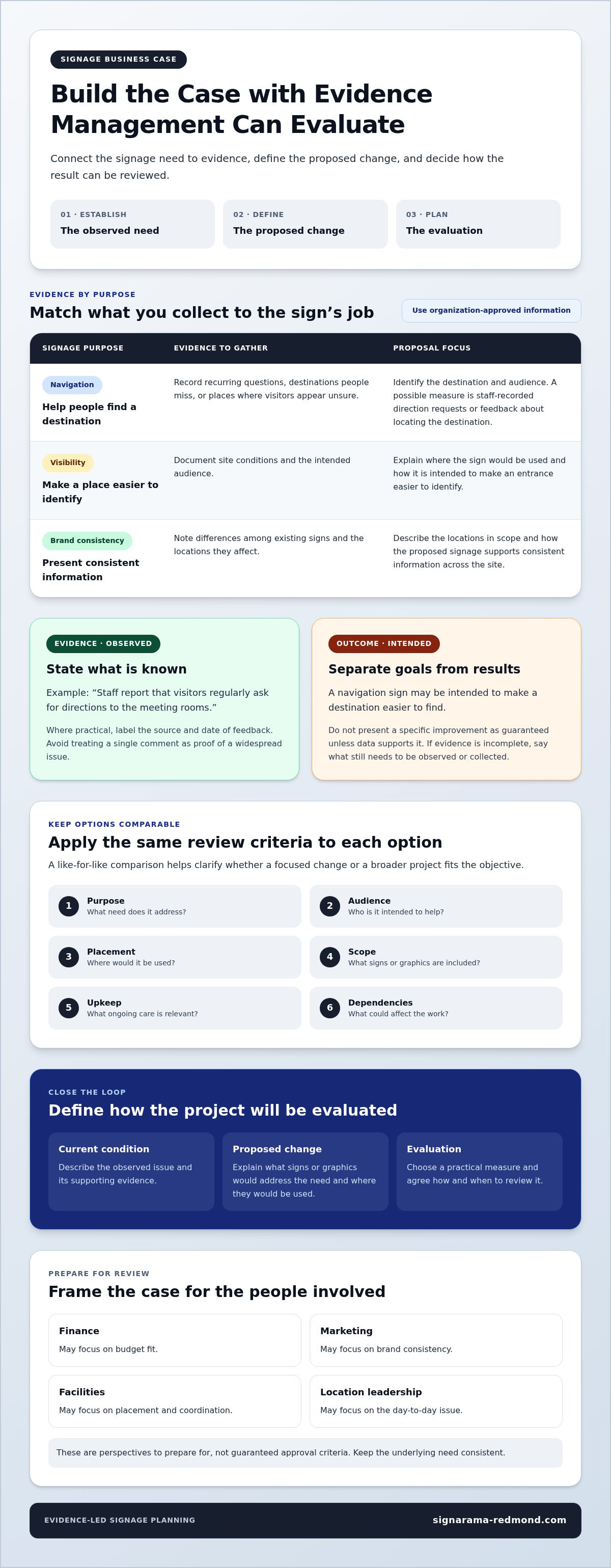
Build a Signage Business Case with Evidence Management Can Evaluate
Once the need is clear, make the proposal easy to assess. Define the issue, collect relevant evidence, scope realistic options, and ask management for a specific decision. This keeps the discussion focused on what the organization knows, what it proposes to change, and how it will review the result.
Use information the organization already trusts, such as approved customer feedback, staff observations, site notes, or existing performance measures. Keep the evidence connected to the sign’s purpose. General comments may show that people have concerns, but specific examples tied to a location or task make the problem easier to evaluate.
Choose evidence that matches the proposed sign’s purpose
Match the evidence to the job the signage needs to do. For navigation, record recurring questions, destinations people miss, or places where visitors appear unsure. For visibility, document site conditions and the intended audience. For brand consistency, note differences among existing signs and the locations they affect. Examples of professional office signs in Redmond can help illustrate the office-signage context as you consider your own space.
Distinguish observations from assumptions. Where practical, label the source and date of feedback, and avoid treating a single comment as proof of a widespread issue. If information is incomplete, say what additional observation or approved data would help establish a baseline before the project moves forward.
Describe outcomes without promising unsupported returns
State the intended outcome without presenting it as guaranteed. A proposed navigation sign might be intended to make a destination easier to find. That is different from claiming it will reduce questions by a certain amount. Choose a practical measure the organization can track after installation, and agree on how and when to review it.
A short comparison can clarify the case:
Current condition: Describe the observed issue and the evidence supporting it.
Proposed change: Explain what signs or graphics would address the need and where they would be used.
Evaluation: Name the measure, such as staff-recorded direction requests or feedback about locating a destination.
This structure gives decision-makers a way to evaluate both the request and its follow-through. When you’re ready to develop the need into a project scope, work with Signarama Redmond on signs and graphics.
Compare Signage Options by Scope, Audience, and Long-Term Use
With the need and supporting evidence established, compare options that address the same problem. A like-for-like review helps management see whether a focused change is sufficient or a broader project better fits the objective. Apply the same criteria to each option: purpose, intended audience, placement, scope, upkeep, and dependencies that could affect the work.
Use a like-for-like comparison in the proposal
If customers have trouble identifying an entrance, compare approaches that improve visibility at that entrance, rather than weighing an unrelated interior sign against it. If the issue involves information displayed on a window, custom window decals for Redmond businesses offer a relevant example of window graphics. For each option, consider who needs to see it, where it would appear, how much of the site it covers, and what upkeep it may involve. Avoid claiming one choice will last longer or perform better unless you have evidence for that comparison.
Describe each option’s trade-offs in relation to the need. A targeted replacement may focus on one location or audience, while a wider project may address several locations or a broader consistency issue. Neither scope is automatically preferable. Explain what each would cover and which documented need could remain unaddressed if management chooses the narrower option.
Explain the complete project scope clearly
Make the request concrete enough for reviewers to understand what they’re considering. List the signs or graphics included, the locations involved, and the intended audience for each. Include design, production, or installation needs when relevant, and identify dependencies such as content decisions or coordination with another project.
Focused scope: Identify the specific sign or location and the core need it addresses.
Broader scope: Describe the additional signs, locations, or consistency goals included, and why they matter.
Open decisions: Note assumptions that could change the scope, such as final placement or approved messaging.
This detail makes alternatives easier to compare and keeps a broad request from obscuring the central business need. Present each option with clear boundaries so decision-makers can weigh fit, coverage, and upkeep before reviewing project-specific estimates.
Prepare a Clear Signage Budget Request and Present It with Confidence
Turn the need, evidence, and options into a focused request that makes the decision clear. Put the business problem and the approval you’re seeking near the beginning. Then show how the recommended scope addresses the issue, what alternatives you considered, and how the budget was developed. Reviewers should be able to see what they’re approving and what remains undecided.
Create a concise approval-ready proposal
Organize the proposal in a practical sequence:
Problem and evidence: Summarize the issue and the observations or approved data that support it.
Recommended scope: List the signs or graphics, locations, and audience covered.
Alternatives: Briefly explain other reasonable scopes and what each would address.
Budget basis: Use project-specific estimates, with relevant components and assumptions clearly stated.
Decision needed: State the approval requested, the date a decision is needed, and the next action if approved.
Base the budget on the proposed project rather than generic market figures. If the scope includes multiple elements, show how the estimate relates to them and identify assumptions that could affect it. A visual mockup, annotated photograph, or simple location reference can make the proposal easier to assess. For an example related to sign installation, see professional sign installation in Redmond.
Adapt the presentation to management’s concerns
Lead with the evidence and business priority most relevant to the people in the room. Finance may want to understand the budget basis, facilities may focus on location and coordination, and marketing may ask how the proposed signs fit existing brand use. Prepare clear answers about scope, timing assumptions, alternatives, and how the organization could review outcomes. Explain what the project is intended to address and what measure could be reviewed afterward, without overstating results.
Present the request as a decision, not a demand. For example: “We’re requesting approval for the defined signage scope, based on the attached project estimate, with a decision by [date] so we can begin [next step].” Leave room for questions and invite feedback on scope or assumptions. A calm, collaborative approach helps reviewers engage with the proposal and clarify what they need to decide.
A clear structure helps management evaluate the request. To develop a project-specific scope for signs or graphics, see this example of professional sign installation in Redmond.
Address Budget Objections and Turn Signage Approval into Next Steps
A question or objection doesn’t always mean management has rejected the idea. It may show that the proposal needs stronger evidence, a narrower scope, another option, or a plan for reviewing results. Listen for the specific concern and respond to it rather than repeating the full case.
Respond to common concerns without overclaiming
If the request is seen as discretionary spending, return to the documented problem and the business priority it affects. Keep the explanation grounded in evidence, and distinguish the reason for the request from the outcome you hope to achieve. If results are uncertain, suggest a practical way to evaluate the change, such as tracking feedback or recording how often staff are asked for directions. Present this as a review method, not a promised return.
For scope concerns, separate essential elements from those that could wait. A focused phase may address the most immediate location or audience, while a later phase could consider other areas. Make clear what the smaller scope would and wouldn’t cover. If it no longer addresses the core need, revise the proposal rather than treating a reduced budget as an automatic solution.
Move from approval to a defined project plan
Once management approves the request, document the decision while the details are fresh. Confirm the approved scope, budget basis, responsible stakeholders, open questions, and next decision point. This shared record keeps expectations aligned and gives the project a clear starting place.
Then identify the practical discussions needed to move forward. Depending on the approved scope, these may include clarifying sign or graphic content, locations, design decisions, production requirements, and installation planning. Assign an owner to coordinate each next step and agree on when the group will review progress. If approval is deferred, record what additional evidence or revision management needs and set a date to revisit the request.
Getting approval also means making the follow-through as clear as the request itself. Signarama provides signs and graphics to help turn an approved need into a project scope. Discuss your signage project with Signarama Redmond.
Turn Your Signage Proposal into a Clear Next Step
A persuasive signage request begins with a real business need, supported by evidence decision-makers can review. Keep the proposal focused: explain the problem, show how the recommended scope responds to it, compare practical alternatives, and make the approval decision clear. Use project-specific estimates and describe how the organization can assess the intended outcome without promising unproven results.
If management raises concerns, treat them as a chance to clarify the case. Adjust the scope if a smaller phase still addresses the core need, and agree on who will take the next step and when the request will be revisited. Practical follow-through is an important part of getting approval for a new signage budget.
When you’re ready to develop an approved need into a project scope, Signarama can help with signs and graphics. Discuss your signage project with Signarama Redmond and take the next step with a clear plan.
Frequently Asked Questions
How do I justify a new signage budget to management?
Connect a documented signage problem to an existing business priority. Explain who is affected, where the issue occurs, and what evidence supports it, such as customer feedback, staff observations, or approved performance data. Then describe the proposed scope and how the organization could evaluate the change. This keeps the case focused on business needs rather than design preference.
What should a signage budget proposal include?
Include the problem, supporting evidence, recommended scope, alternatives, project-specific budget estimate, and the decision management needs to make. Identify the signs or graphics and locations involved, along with relevant assumptions or open questions. A visual mockup or location reference can help reviewers picture the proposal. Close with the decision date and the next step after approval.
How can I show the ROI of new business signs?
Set a baseline before the signage changes, then track a measure connected to the sign’s purpose. For navigation, that might mean recording how often staff give directions or reviewing relevant visitor feedback. For visibility, consider an existing business measure related to the intended audience. Compare results before and after, while noting other factors that may affect them. Treat expected benefits as projections, not proven returns or guaranteed outcomes.
What if management says signage is not a priority?
Ask what information or concern is behind the decision, then respond with relevant evidence rather than repeating the original request. Reconnect the signage need to an existing priority and clarify who is affected. If budget or scope is the main concern, consider a smaller phase only if it still addresses the core problem. If management needs more evidence, agree on what to gather and when to revisit the request.
Should I present multiple signage options to management?
Yes, if each option addresses the same documented need. Compare them using consistent criteria, such as purpose, audience, placement, scope, upkeep, and relevant project dependencies. Include a focused option and a broader one when both are practical, and explain what each covers or leaves unresolved. Avoid overwhelming reviewers with unrelated possibilities or unsupported performance claims. Recommend the option that best fits the business need and explain why.
How do I estimate a signage budget before requesting approval?
Define the project scope before estimating: list the signs or graphics, locations, and relevant design, production, or installation needs. Use project-specific estimates based on that scope rather than general market figures. State assumptions and identify open decisions that could affect the estimate. If the proposal includes alternatives, show each scope separately so management can compare them fairly. Keep the estimate tied to the work being requested, not unsupported outcome projections.
When should I ask management to approve a signage project?
Bring the request forward once you can explain the business need, support it with relevant evidence, and outline a workable scope and project-specific estimate. Allow time for the organization’s review and planning process, and state when a decision is needed and why. If key information is missing, identify what needs to be gathered first. Clear, early communication gives stakeholders time to review the request and raise questions before the next project step.

Signarama Redmond, WA
Summer Hours (July - August) - MON-THUR: 8.00AM - 6.30PM, FRI - SUN: CLOSED
contact
Signarama Redmond, WA