Your Consultative Signs and Graphics Partner for Eastside Businesses


Commercial Sign Safety Inspection in Redmond: A 2026 Guide
Oct 5, 2026 by Signarama Redmond
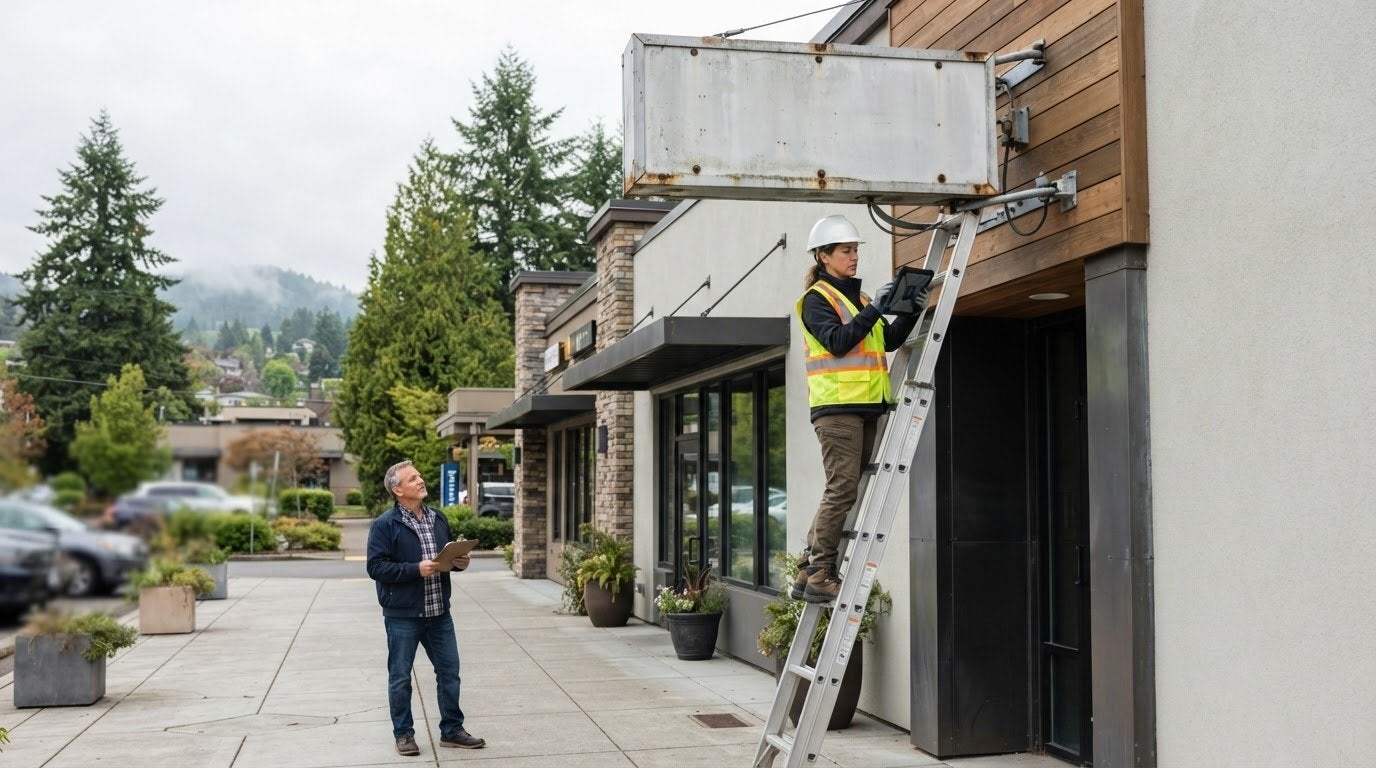
A sign above your entrance may look fine from the sidewalk while a mount is loose or damage is hidden from view. A commercial sign safety inspection Redmond businesses arrange can help identify visible concerns before they cause harm. It’s understandable to be unsure how often to check signs, which warning signs matter, or whether responsibility rests with the property owner, the business, or the installer.
Regular visual checks and clear maintenance records support a more responsible approach to sign safety. They document what was observed, when action was taken, and which concerns still need attention. After an incident, those records may help clarify the timeline, but they don’t determine liability on their own.
This guide explains what to look for, how to record concerns and follow-up work, and when to involve a qualified sign professional, insurer, or legal adviser. It also covers how thoughtful sign planning and professional installation fit into a practical safety approach for Redmond businesses.
Key Takeaways
Recognize visible warning signs, including movement, corrosion, cracked sign faces, and exposed wiring.
A commercial sign safety inspection Redmond businesses conduct can organize observations and next steps, but it isn’t a legal certification.
Responsibility after an accident depends on the incident’s facts, site control, evidence, and relevant agreements.
Keep consistent records of a sign’s location, condition, weather, and actions taken to support clear follow-through.
Thoughtful planning, professional installation, and documented handoffs can help reduce project confusion.
Table of Contents
Why commercial sign safety inspections matter to Redmond businesses
What sign defects can lead to accidents or installation damage?
Who may be responsible for a sign accident or installation damage?
A safer sign project starts with clear planning and follow-through
Why commercial sign safety inspections matter to Redmond businesses
A sign can look secure from the ground while a mounting point is loosening or materials are deteriorating. A commercial sign safety inspection Redmond businesses can use as part of routine property care is a documented visual review of a sign’s condition. It records visible concerns and helps guide follow-up; it isn’t a legal certification or a guarantee that a sign is safe.
Signs face changing conditions throughout their service life. Weather can contribute to corrosion, water intrusion, or worn materials. Traffic or vehicle impact may shift a sign or damage its supports. Loose components can fall, while electrical problems in illuminated signage can create hazards. Building codes set minimum standards for safety and structural integrity. The general purpose of building code standards helps explain why sign condition and installation deserve attention.
Preventive checks differ from responding to a reported hazard or incident. Routine observations can help identify visible changes before they become urgent. If someone reports movement, exposed wiring, or impact damage, treat it as a specific concern: keep people away from the affected area when safe to do so, document what’s visible, and arrange appropriate professional follow-up. Inspection notes may help establish what was observed and what actions followed, but they don’t determine legal liability. That depends on the facts, evidence, agreements, and circumstances of the incident.
Which commercial signs and locations deserve attention?
Include building signs, monument signs, projecting signs, and freestanding displays in a property review. Consider what each sign is exposed to, including wind and rain, passing traffic, growing landscaping, and routine building work that could disturb nearby components or finishes. Pay particular attention to public-facing signs above entrances, sidewalks, or other pedestrian routes. A problem in those locations may put people directly below or nearby at risk.
What does a sign inspection establish?
A visual review records the sign’s visible condition, apparent mounting, nearby surroundings, and whether the area can be viewed safely. It can flag concerns that need closer attention, but it can’t confirm hidden structural conditions or diagnose electrical faults. Those questions may require assessment by a qualified sign professional or another relevant specialist. Don’t climb, open electrical components, or touch unstable parts to get a closer look. Record what you can observe from a safe position and escalate concerns that can’t be assessed visually.
What sign defects can lead to accidents or installation damage?
Small visible changes can be useful warnings, but they don’t confirm what’s happening inside a sign or its supports. Watch for a sign that shifts or sways, rust or corrosion near mounting points, cracked or separating faces, water entering an enclosure, and loose or exposed wiring. A cracked face may need attention, while movement in an overhead sign could indicate a more urgent concern. Don’t diagnose structural or electrical failure from a photo or a quick look.
Installation work can also affect the building around a sign. Drilling or fastening may damage exterior finishes, interfere with concealed utilities, or disrupt building elements. These issues might not be obvious immediately. Record damage or changes noticed during or after work, and have the relevant qualified professional assess them. For workplace tasks, applicable OSHA regulations can help inform worker-safety practices. Requirements depend on the work and circumstances.
How weather and site conditions affect signs in Redmond
Rain, wind, and temperature changes can put stress on sign materials and mounting points. Local exposure varies by site: a sign may face open wind, collect water near a wall, or be repeatedly brushed by landscaping. Note recurring puddling, drainage problems, branches or plants contacting the sign, and evidence of vehicle impact. Dates and photos taken from a safe place can help a qualified professional understand whether a concern is recurring or has changed.
When should a concern be escalated?
Act promptly if a structure is leaning, overhead parts appear loose, wiring is exposed, or you see sparking. Keep people clear of the area without approaching or touching the sign. If there’s an immediate danger, contact emergency services. For suspected electrical or structural problems, arrange assessment by a suitably qualified professional. A commercial sign safety inspection Redmond businesses document can flag visible concerns and support follow-up, but it can’t certify hidden components as sound.
For planned sign work, clear site information and careful coordination can help reduce avoidable damage. If you’re considering a new sign, explore signs and graphics for a commercial project.
Who may be responsible for a sign accident or installation damage?
There isn’t one automatic answer. Responsibility after a sign-related injury or property damage depends on the incident’s specific facts, available evidence, contracts, and who controlled or maintained the site. A property owner, business operator, installer, maintenance provider, or sign manufacturer could be relevant to the inquiry, but a role alone doesn’t establish fault.
For example, an owner may oversee building-wide maintenance, while a tenant may handle day-to-day observations under a lease or other agreement. An installer’s work, a maintenance provider’s records, or information about a product defect may also matter. These are questions to investigate, not conclusions. A documented commercial sign safety inspection Redmond businesses keep can show what was observed and when, but the notes don’t decide who is legally responsible.
How ownership, maintenance, and site control affect the picture
Responsibility questions can differ at leased premises, shared properties, or sites where a business owns its sign. Review leases, service agreements, installation documents, and maintenance records to understand each party’s stated role and actions. These records may help explain who had notice of a concern or control over relevant work. They’re evidence to consider, not automatic proof that a party caused an incident.
Insurance coverage also depends on the specific policy and circumstances. After an incident, preserve relevant records and share the facts with your insurer. For questions about legal duties, claims, or potential responsibility, consult qualified legal counsel. This guidance is general information, not a legal determination.
How Redmond and Washington requirements fit in
Applicable sign and building requirements depend on the project and the rules in effect for its location. The International Code Council develops model codes, including the International Building Code (IBC), but model-code materials don’t, by themselves, establish which requirements apply to a particular Redmond sign. Check current City of Redmond requirements and applicable Washington State rules through authoritative sources, or seek qualified guidance for a specific project.
Keep two questions separate: whether the sign and its installation meet applicable requirements, and whether the sign is currently in good physical condition. Permit records may help document project approvals, while a sign can still deteriorate or become damaged later. Conversely, an observed defect doesn’t by itself establish that a code was violated. After an incident, bring together relevant permits, plans, contracts, inspection notes, maintenance history, and photographs for review by your insurer and legal adviser.
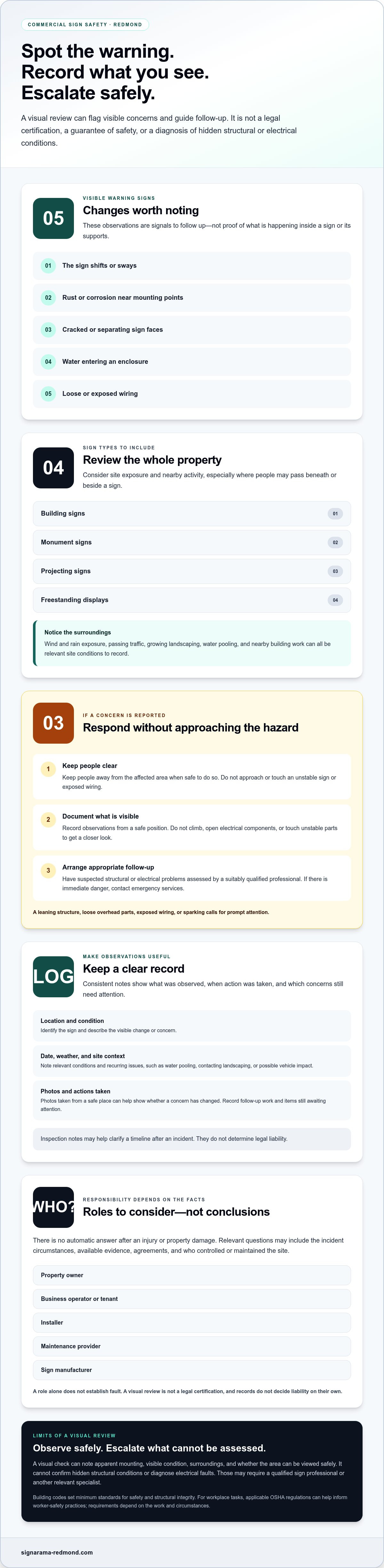
Inspect, document, and respond to commercial sign concerns
A consistent process makes observations easier to compare and follow up. For a commercial sign safety inspection Redmond businesses carry out, start from a safe distance. Don’t climb, open electrical enclosures, touch loose components, or approach a sign that appears unstable. If you spot an immediate hazard, keep people clear and arrange appropriate help before continuing the review.
Record the date, exact location, sign type, visible condition, weather context, and any action taken. Photos can show where a defect appears and help track changes over time. Take them only from a safe position, and don’t move parts or disturb anything that could affect evidence. Set a review schedule based on the sign’s condition, its surroundings, changes in exposure, and guidance from a qualified professional. There’s no one interval that suits every sign.
What should a commercial sign inspection checklist include?
Use the same prompts each time, and compare new notes with the previous review. A simple checklist can include:
Sign face: Note cracks, separation, fading, or visible water intrusion.
Supports and fasteners: Record visible movement, corrosion, missing parts, or changes in alignment without touching them.
Base and surroundings: Look for standing water, impact marks, landscaping contact, or new obstructions.
Wiring: Note exposed or damaged wiring from a safe distance. Don’t open enclosures.
Access and limits: Record areas you couldn’t safely assess and whether access was restricted.
Log template: Date and time | Location | Sign type | Weather | What was visible | Photos taken | Area not assessed | Immediate actions | Person notified | Follow-up needed. A checklist supports consistent records, but it doesn’t replace specialist structural or electrical assessment.
What should you do after an incident or damage?
Put people first. If there’s immediate danger or someone is injured, contact emergency responders. Otherwise, prevent access to an apparent hazard without approaching or altering the sign. Notify the property owner and other appropriate parties, including your insurer, as soon as practical. Preserve relevant photos, incident notes, repair records, and communications. Avoid disturbing the scene unless action is necessary to protect people or prevent further harm, and record any steps taken.
Planning a sign project? Explore signs and graphics for a commercial project as part of a considered approach to site information and coordination.
A safer sign project starts with clear planning and follow-through
Good coordination begins before installation. A clear project scope helps everyone understand what sign is planned, where it will go, and what site conditions could affect the work. Share relevant building information and access constraints early, then document decisions and changes as the project moves forward. These steps can reduce avoidable confusion and make future maintenance responsibilities easier to understand.
What information helps a sign project move smoothly?
Start with the sign’s intended use and proposed location. Share details about the building surface, nearby pedestrian or vehicle areas, access limitations, and any known site conditions that may affect planning or installation. Keep a written record of the agreed scope, approvals, changes, installation handoff, and who is expected to report or address future concerns. Clear records support communication without serving as a safety certification.
For more context on installation, read Professional Sign Installation in Redmond. Thoughtful sign planning and professional installation are practical parts of managing risk, but they don’t eliminate the need to watch for changes over time.
How to keep safety in view after installation
Choose a site contact who knows how to report visible damage or changes, such as new movement, impact marks, or water intrusion. Keep sign plans, installation documents, maintenance notes, and follow-up records together so they’re easier to find if questions arise. A documented commercial sign safety inspection Redmond businesses maintain can help connect observations with actions taken, while qualified professionals can assess concerns that go beyond a visual review.
Signarama offers signs and graphics for businesses. Keeping site details, installation records, and follow-up responsibilities clear can help organize a project and future maintenance.
Make sign safety part of your next project
Consistent visual checks can help Redmond businesses notice changing sign conditions, while clear records preserve what was observed and how concerns were addressed. A commercial sign safety inspection Redmond businesses document supports responsible follow-through, but it doesn’t certify a sign or decide legal liability. When a concern goes beyond what’s visible, involve a qualified professional, insurer, or legal adviser as appropriate.
For a new sign, thoughtful planning and clear handoffs can help keep site details, installation work, and future maintenance responsibilities organized. Signarama offers signs and graphics for commercial projects. You can also read the related Redmond sign-installation article for additional project context.
Ready to plan a commercial sign project in Redmond? Explore signs and graphics with Signarama Redmond.
Frequently Asked Questions
How often should a commercial sign be inspected?
There isn’t one inspection interval that fits every sign. Set a regular visual review schedule based on the sign’s condition, age, exposure to weather or traffic, and any guidance from a qualified sign professional. Check again after a collision, severe weather, nearby building work, or a report of damage. A commercial sign safety inspection Redmond businesses document can track changes over time, but a visual review isn’t a specialist assessment.
Who is liable if a commercial sign falls and injures someone?
Liability depends on the facts and evidence, so sign ownership alone doesn’t determine who is responsible. Relevant details may include who controlled the site, what maintenance or installation agreements say, whether a concern was reported, and what actions followed. Property owners, business operators, installers, maintenance providers, or manufacturers may be considered depending on the circumstances. Preserve records and contact your insurer and qualified legal counsel for advice about a specific incident.
What should I do if I notice a loose or damaged business sign?
Keep people clear of the area if the sign appears unstable or could fall, and don’t touch it, climb to inspect it, or open electrical components. Contact emergency responders if there’s immediate danger. From a safe distance, note the location, visible condition, time, and any relevant weather or impact. Notify the property owner or responsible site contact and arrange an appropriate qualified assessment. Don’t attempt a repair that could put people at risk.
Can a business owner be responsible for sign installation damage?
Possibly, but responsibility isn’t automatic. It depends on the project facts, evidence, contracts, site control, and each party’s role. For example, records may help clarify who approved the scope, provided site information, carried out installation work, or managed the affected area. Keep plans, agreements, photos, and communications together. If damage has occurred, notify the relevant parties and insurer, and consult qualified legal counsel rather than relying on a general guide to determine fault.
Does a sign permit mean the sign is safe?
No. A permit relates to authorization for sign work and applicable project requirements; it doesn’t guarantee that a sign will remain in good condition or that no damage will occur. Signs can deteriorate, loosen, or be struck after installation. Keep permit and project records, but also pay attention to visible changes and seek qualified assessment when a concern goes beyond what can be safely observed from the ground.
What should a commercial sign safety inspection checklist include?
Record the review date, sign location and type, weather, visible condition, and actions taken. From a safe position, note concerns involving the sign face, supports, visible fasteners, base area, exposed wiring, and nearby obstructions. Compare findings with earlier notes, and identify anything you couldn’t safely assess. Photos can help show visible changes over time. A checklist supports consistent documentation, but it doesn’t replace a qualified structural or electrical assessment.
Do Redmond businesses have specific sign safety inspection requirements?
Redmond’s sign rules are addressed in the Redmond Zoning Code, including section 21.44. Verified city information requires permits for new, altered, or relocated signs, but that is separate from a recurring safety inspection schedule. The available information doesn’t establish a universal periodic inspection interval for commercial signs. Check current City of Redmond and Washington State requirements for your project, and use condition-based reviews to record visible changes and concerns.

Signarama Redmond, WA
Summer Hours (July - August) - MON-THUR: 8.00AM - 6.30PM, FRI - SUN: CLOSED
contact
Signarama Redmond, WA