Your Consultative Signs and Graphics Partner for Eastside Businesses


Understanding Sign Fabrication Timelines in 2026: What to Expect
Oct 10, 2026 by Signarama Redmond

What if the biggest factor in your sign’s schedule isn’t fabrication time, but the decisions and approvals that come before it? If an opening, promotion, or event is approaching, understanding sign fabrication timelines in 2026 can help you set a realistic deadline and avoid last-minute surprises. A sign project rarely moves from artwork straight to installation in one step.
It’s reasonable to want a clear answer to “How long will it take?” The schedule depends on the sign’s scope, how quickly artwork is approved, whether permits are needed, and how fabrication and installation fit together. Revisions, incomplete information, or delayed approvals can shift the plan. Build time into your schedule for each milestone instead of focusing only on production.
This guide explains the main factors that shape a sign project’s schedule, where delays can arise, and what details to prepare before discussing your project. You’ll also learn how to distinguish fabrication from installation and plan approvals with fewer surprises. Signarama Redmond offers signs and graphics and can help you organize the details of your project.
Key Takeaways
Understanding sign fabrication timelines in 2026 starts with recognizing that each project’s schedule depends on its scope, design decisions, approvals, and installation needs.
Use the project stages as a planning guide, not a fixed timeline or promise of how every sign project will proceed.
Prepare artwork, project details, and approval contacts early to help reduce avoidable pauses and revisions.
Share your intended in-use date and any fixed opening, promotion, or event milestones at the outset so you can plan backward from your deadline.
Signarama Redmond offers signs and graphics to support your project from the initial brief through the next planning steps.
Table of Contents
Understanding Sign Fabrication Timelines: Why No Two Projects Follow the Same Schedule
Comparing Sign Projects: Which Variables Can Change the Schedule?
How to Plan a Sign Fabrication Timeline Around Your Deadline
Plan Your 2026 Sign Fabrication Project with Signarama Redmond
Understanding Sign Fabrication Timelines: Why No Two Projects Follow the Same Schedule
A sign-fabrication timeline is the sequence of decisions and milestones that moves a project from an initial brief toward a finished sign. It includes more than the time spent making the sign. Defining the scope, preparing artwork, reviewing the design, completing fabrication, and coordinating installation can all shape the overall schedule.
That distinction matters because a fabrication estimate alone may not account for the work needed before production or the coordination required afterward. A simple sign with approved artwork and straightforward placement has different planning needs from a custom project with design decisions and installation details to resolve. For a general overview of signage and its many forms, see Signage.
Project timing depends on scope, decisions, approvals, and coordination. A single turnaround estimate would overlook these differences. When understanding sign fabrication timelines in 2026, identify the project’s dependencies rather than assuming every sign follows the same schedule.
What does a sign fabrication timeline include?
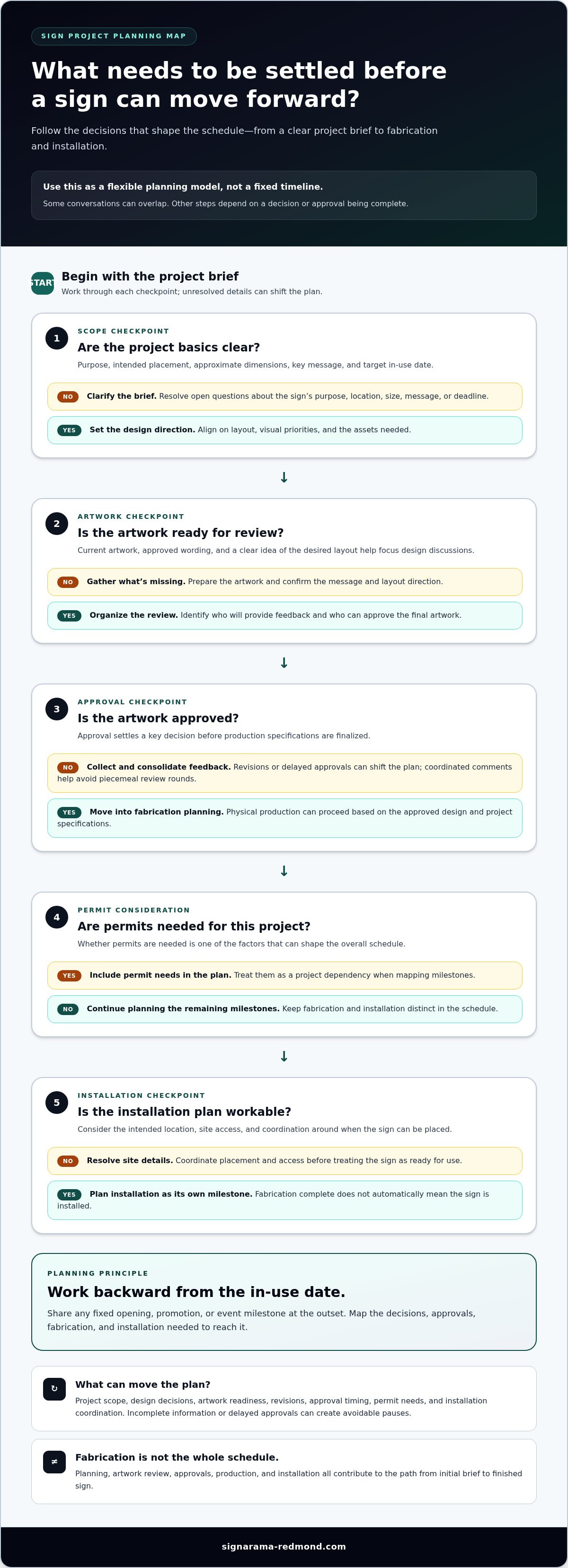
Think of the timeline as a planning map, not a guaranteed sequence or fixed workflow. Early planning clarifies what the sign needs to communicate and where it will be used. Artwork then needs to be ready for review and approval before the project can move into physical fabrication. Installation is a separate milestone to plan for, since placement and site coordination affect when the finished sign can be put to use.
Some steps may overlap. For example, you can discuss certain planning details while artwork is being refined. Other steps depend on a decision being complete: if the design is still changing, production-ready artwork may not be settled. Mapping these relationships shows which choices can move forward in parallel and which require approval first.
Why do sign projects have different schedules?
The sign type and project scope determine how much design and production coordination may be involved. A straightforward request with a clear purpose and approved artwork generally has fewer open decisions than a project requiring more customization. That doesn’t establish a specific duration, but it explains why one project’s schedule can’t reliably predict another’s.
Artwork readiness matters, too. A current logo, approved wording, and a clear idea of the desired layout can focus design discussions. If details are missing or reviewers request revisions, the artwork may need another round of attention before approval. Each revision is a decision point, so identify who will review the design and gather feedback to keep communication organized.
Installation brings its own considerations. The proposed location, site access, and coordination around when the sign can be placed may create dependencies beyond fabrication. For example, a sign intended for a storefront opening needs both a completed sign and a workable installation plan. Treating these as connected but distinct milestones makes the schedule clearer.
Define the sign’s purpose, scope, and intended location.
Gather existing artwork and confirm who will approve design decisions.
Include fabrication and installation as separate planning milestones.
Sign Fabrication Stages That Shape a Project’s Timeline
A clear project sequence helps you see what needs to happen before a sign is ready for use. Treat the stages below as a flexible planning model. Depending on the project, some conversations may overlap, while other decisions need to be settled before the next step can move ahead.
Define the scope. Clarify the sign’s purpose, intended placement, approximate dimensions, key message, and target in-use date. These details establish the brief and help identify open questions early.
Finalize the design direction. Align on layout, visual priorities, and the assets needed. A sign intended to identify a storefront, for example, may need different messaging and placement considerations than one created to share a temporary promotion.
Review and approve artwork. Gather feedback from the people involved and consolidate it where possible. Clear, coordinated comments are easier to manage than conflicting requests arriving in separate rounds.
Fabricate the sign. Once the design and project specifications are approved, physical production can proceed based on those decisions. Material selection is part of planning; the FHWA Guide to Sign Materials describes sign-material properties and classifications in a transportation context.
Coordinate installation. Production being complete doesn’t automatically mean the sign is installed. Work at the intended location requires its own planning and coordination.
How design and approval decisions affect timing
Early agreement on purpose, placement, dimensions, and essential wording gives design discussions a useful focus. Before review begins, decide who will provide feedback and who can approve the final artwork. When several stakeholders are involved, one person can collect their comments and send a consolidated response. This helps avoid repeated, piecemeal revision cycles.
Approval is a meaningful project checkpoint. A late change to the message or layout may affect decisions that rely on the approved design, such as production specifications. The impact depends on the change and the work already underway, so raise questions during review rather than assuming they can be addressed later without affecting dependent steps.
Where fabrication and installation fit
Fabrication follows the finalized specifications and approved design. It’s separate from installation, which involves coordinating work at the sign’s actual location. For practical context on that final stage, see the Redmond sign installation guide.
Design approval, fabrication, and installation are separate milestones, and each depends on decisions or coordination that may affect what comes next. That distinction is central to understanding sign fabrication timelines in 2026: a project plan should account for the connected stages, not treat production as the whole schedule. If you’re outlining a sign or graphics project, start with a clear brief and the decisions you already know.
Comparing Sign Projects: Which Variables Can Change the Schedule?
Two sign projects can have the same intended use date and still need different plans. A single sign with approved artwork may involve fewer decisions than a coordinated group of signs, a custom layout, or an event display. Understanding sign fabrication timelines in 2026 means looking at the factors that shape the work, rather than assigning every project a standard turnaround.
Project variable | Possible scheduling effect | What you can prepare |
|---|---|---|
Scope and quantity | A single sign may require fewer design and coordination decisions than multiple signs that need to work together. | List each sign’s purpose, location, and how the pieces should relate. |
Design complexity | Custom dimensions, multiple components, or an evolving visual direction can create more decisions before artwork is approved. | Share brand assets, preferred messaging, and any existing design references. |
Artwork readiness | Missing files or unresolved brand choices can hold up design review and approval. | Gather current logos, copy, and feedback from the people who need to approve the design. |
Materials and production approach | Choices depend on the sign’s purpose and specifications, and can affect how the project is planned. | Describe where the sign will be used and what it needs to communicate. |
Site and installation needs | Access and coordination at the intended location are separate considerations from making the sign. | Share location details and any known scheduling constraints. |
How sign format and project scope affect planning
A repeatable sign requirement with an approved design may involve fewer open questions than a project requiring several custom decisions. A coordinated multi-sign project also needs attention to consistency across pieces, such as keeping messages and visual elements aligned. In comprehensive store environments, retail design firms like hilde-brands.com often plan spatial branding and signage together to ensure coherent visual impact. Each additional component can introduce details to review, so a complete list of what’s needed helps define the scope early.
Event displays bring a firm date into the planning picture. The display may need to work as a coordinated set, and its content, format, and placement all need consideration. If you’re planning for a trade show, the Redmond trade show displays guide offers event-specific context to help you think through your display needs.
How artwork, revisions, and site requirements influence timing
Artwork review can stall if a logo is outdated, key wording is undecided, or multiple reviewers provide conflicting direction. Gather assets and agree on who will consolidate feedback before the design is reviewed. This won’t eliminate every revision, but it can make decisions easier to communicate.
Site access and installation coordination deserve their own place in the plan. The sign’s intended location may have practical constraints, and site-specific requirements depend on the project and location. Treat these as planning questions, not universal rules. Clear information about the site helps keep fabrication and installation considerations distinct as you build a realistic schedule.
How to Plan a Sign Fabrication Timeline Around Your Deadline
A sign needed for a grand opening, promotion, or event has to be ready for a particular moment. Start planning from the date it must be in place, then map the decisions and coordination that need to happen before then. When understanding sign fabrication timelines in 2026, share that deadline early, along with any event milestones that can’t move.
What to prepare before discussing a sign project
A clear brief helps turn an idea into a workable plan. Gather the information you have and flag anything that still needs a decision. You don’t need every detail resolved before starting a conversation, but knowing what’s settled and what’s open makes it easier to plan next steps.
Purpose and location: Explain what the sign needs to communicate and where you expect it to be used.
Size and scope: Share approximate dimensions and whether you’re planning one sign or several coordinated pieces.
Messaging and assets: Prepare draft wording, current logos, brand guidelines, and visual references that show the direction you have in mind.
Site information: Include relevant details about the intended location and any known access or scheduling considerations.
Review plan: Identify who will review artwork, who can approve it, and who will gather feedback into one clear response.
These preparations help distinguish confirmed requirements from open questions. Reviewers can focus on the design, while unresolved choices can be identified before they become late changes.
How to build a realistic deadline plan
Work backward from the date the sign needs to be in place, not simply from the date you hope production will be finished. Allow room in the plan for design review, approval, fabrication, and installation coordination. The time each step needs depends on the project, so don’t assume another sign’s schedule will apply to yours.
Mark fixed dates. Note the opening day, event start, or promotion launch, plus any earlier setup or access milestones.
Separate firm commitments from preferences. Label which dates are immovable and which are desired targets. This helps clarify where the plan has flexibility.
Identify decision points. Decide who provides consolidated feedback and how approval will be communicated, so artwork review doesn’t linger without an owner.
Discuss dependencies early. Raise questions about the location, project scope, and installation coordination at the outset. If one decision depends on another, make that relationship visible in the plan.
Share your intended in-use date and any non-negotiable milestones when you first discuss the project. Signarama Redmond offers signs and graphics and can help you shape a clear project brief. Discuss your sign project with Signarama Redmond with your deadline and prepared details.
Plan Your 2026 Sign Fabrication Project with Signarama Redmond
A useful sign timeline doesn’t begin with a guessed production duration. It begins with clear goals, prepared project information, and timely decisions. Once you know what the sign needs to do and when it needs to be in place, you can discuss the steps and dependencies that matter for your project.
Understanding sign fabrication timelines in 2026 means planning the full path, from early project details and artwork decisions through fabrication and installation coordination. Signarama Redmond offers signs and graphics to help you shape a project brief. A clear starting point makes the schedule easier to discuss without assuming that every project follows the same pace.
What to share when starting a sign project
Bring the information you already have, even if some choices are still open. A useful first discussion can cover the sign’s purpose, intended location, desired in-place date, and key requirements. If the sign supports a specific opening, promotion, or event, share that context too. It can help clarify which milestones are firm and where the plan may have flexibility.
Available materials can make the conversation more focused. Gather current artwork, brand guidance, draft messaging, and visual references. Relevant site details can also help frame the project, particularly if there are known access considerations or scheduling constraints. You don’t need every answer settled; distinguishing known details from open questions is a practical way to move forward.
Finally, identify the people who will review the design and make decisions. If several colleagues need to weigh in, decide who will collect their comments and provide one consolidated response. That keeps feedback organized and gives everyone a clearer route to approval.
Keep the schedule clear as the project moves forward
After the project discussion, keep agreed milestones and approvals in one shared schedule. This can be a simple working document that records target dates, decision owners, and the current status of each step. Update it as decisions are made so the team can see what’s complete and what still needs attention.
Record approvals: Note what has been reviewed and approved, and who made the decision.
Communicate changes promptly: A scope or design change may affect decisions that depend on the earlier plan. Raise it as soon as possible so its impact can be discussed.
Track production and installation separately: Keep fabrication completion and installation coordination visible as related but distinct milestones.
Revisit fixed dates: If an opening or event milestone changes, update the schedule and communicate the new priority to everyone involved.
Good planning is a partnership. A shared view of the goals, approvals, and next steps helps Signarama Redmond and your team work from the same brief, with expectations grounded in the needs of the project. Start with your desired in-place date and the details you’ve gathered. Discuss your sign project with Signarama Redmond.
Turn Your Sign Goals into a Confident Plan
A sign project can help mark an important business moment, whether you’re preparing for a new opening or refreshing how your business presents itself. Rather than treating the deadline as a countdown alone, use it as a shared point of reference for making thoughtful decisions and keeping the project moving. That’s the practical value of understanding sign fabrication timelines in 2026: a clear plan supports purposeful choices without relying on a one-size-fits-all estimate.
Bring your goals and requirements to Signarama Redmond and approach the conversation as a partnership. A focused starting point can help turn your vision into a project plan that reflects what matters to your business and when you need it. Start planning your sign project with Signarama Redmond. With a clear goal and a collaborative plan, you can move toward your next milestone with confidence.
Frequently Asked Questions
How long does sign fabrication usually take?
There isn’t one standard fabrication duration that applies to every sign. The schedule depends on the sign’s scope, how settled the design is, and the decisions or coordination still ahead. A straightforward sign with approved artwork has different needs from a project with several custom elements. For a useful estimate, discuss the full project and target in-use date rather than relying on a general turnaround figure.
Can I speed up sign fabrication by providing finished artwork?
Finished artwork can make design review more focused, especially if it reflects the current brand and includes approved wording. It doesn’t guarantee a shorter overall schedule, since the artwork may still need review against the project requirements, and fabrication and installation planning remain separate considerations. Before sharing files, gather any related brand guidance and confirm internally that the content is final to reduce avoidable revisions.
What can delay a custom sign project after it starts?
Changes to the scope, late artwork revisions, slow approval decisions, or missing project details can affect work that depends on those decisions. Material availability or site coordination may also affect planning. If the project requires permits, the review process can add another dependency, but requirements vary by location and project. Keep a clear record of decisions and flag changes promptly so their possible effect on the next steps is visible.
Does sign fabrication timing include installation?
Not necessarily. Fabrication refers to making the sign, while installation is the separate step of placing it at its intended location. A sign can be physically complete while site access or installation coordination is still being arranged. If you’re comparing schedules, clarify whether the date refers to production completion or the sign being in place and ready to use. That distinction is especially helpful for opening and event plans.
Can multiple signs be planned for one opening or event?
Yes. Multiple signs can be considered as one coordinated project, which helps keep their purpose, messaging, and visual direction aligned. Make an inventory of each piece and note where it will be used, who will approve its content, and whether any items have separate deadlines. For an event, identify which signs are essential for setup and which support later activities, so priorities are clear if plans change.
How early should I plan signage for a business opening?
Start planning as early as you can, especially if your opening date is fixed or the sign’s design and placement are not yet settled. Early planning gives you room to define what’s needed, make decisions, and account for project-specific approvals or coordination. Share the opening date at the first discussion, along with any earlier setup milestones. This helps distinguish the date you hope to meet from a firm commitment.
Can a design change after approval affect the schedule?
Yes. A change after approval can affect decisions or work based on the approved design, though the impact depends on what changes and how far the project has progressed. For example, revising wording may require updated artwork, while changing dimensions could affect project specifications. Raise the change as soon as it comes up, before assuming it can be added without affecting the remaining schedule.

Signarama Redmond, WA
Summer Hours (July - August) - MON-THUR: 8.00AM - 6.30PM, FRI - SUN: CLOSED
contact
Signarama Redmond, WA