Your Consultative Signs and Graphics Partner for Eastside Businesses


Preventing Moss and Mildew on Outdoor Signs in Washington
Oct 3, 2026 by Signarama Redmond
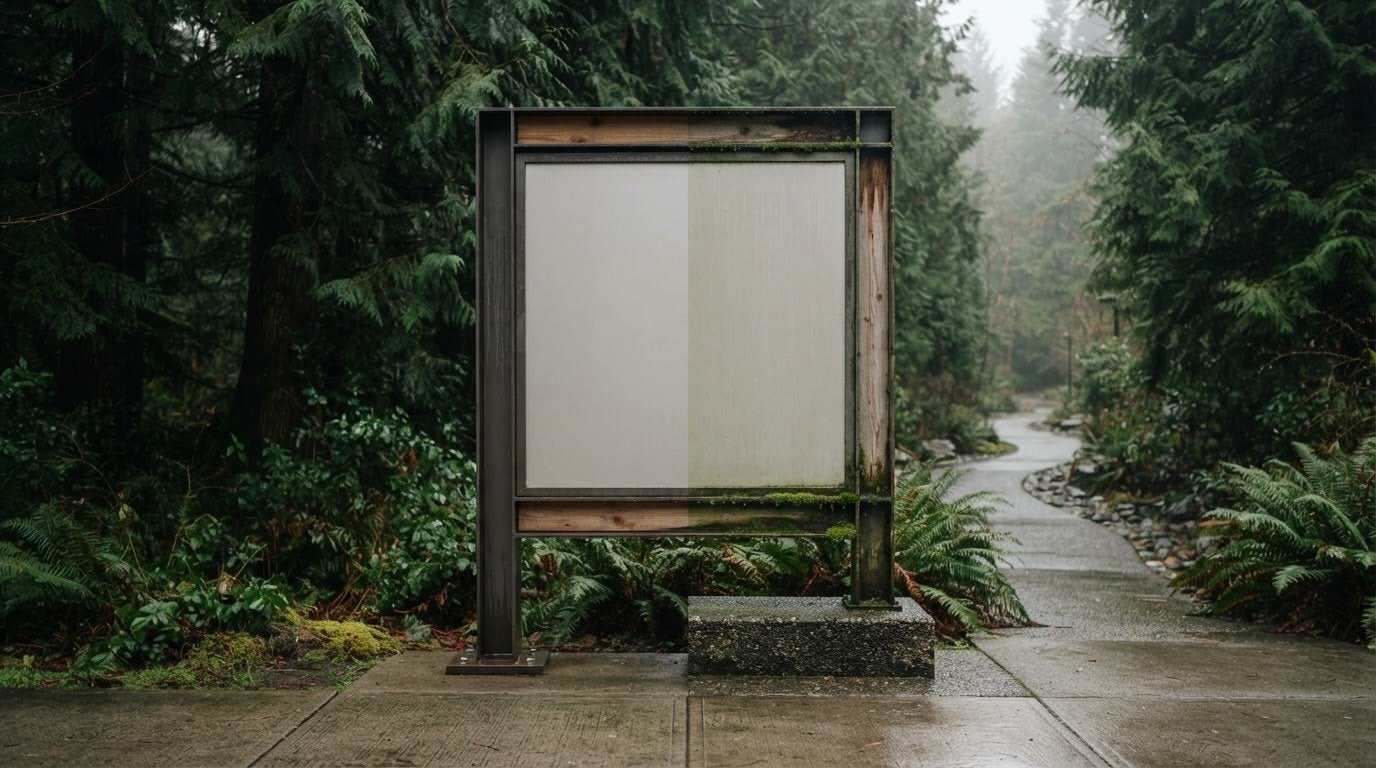
What if the best way to deal with moss and mildew on an outdoor sign is to stop giving them the damp, shaded conditions they thrive in? In Washington, recurring wet weather and limited sunlight can leave signs looking stained or make important graphics harder to read. Preventing moss and mildew on outdoor signs in Washington starts with managing moisture and choosing care that suits the sign’s surface.
It’s understandable to want to scrub away visible growth quickly, but rough tools or high-pressure washing can damage sign faces, finishes, and graphics. A safer plan is gentle and consistent. This guide explains why buildup appears, how to clean different sign materials without unnecessary wear, and what to check during routine inspections. You’ll also find practical ways to reduce moisture and keep your sign presentable and readable through Washington’s damp seasons.
Key Takeaways
Learn to tell moss, mildew, algae, and ordinary staining apart so you can choose an appropriate response.
Check how shade, lingering moisture, debris, and drainage may contribute to buildup around an outdoor sign.
For preventing moss and mildew on outdoor signs in Washington, focus on reducing moisture and matching care to the sign’s surface.
Start with the least aggressive cleaning approach, and test a discreet area when the sign’s care guidance allows.
Use a repeatable seasonal check to catch buildup early and help keep your sign readable and presentable.
Table of Contents
Gentle Cleaning Methods for Moss and Mildew on Outdoor Signs
A Washington Outdoor Sign Maintenance Checklist for Every Season
Plan an Outdoor Sign That Is Easier to Maintain in Washington
Why Outdoor Signs in Washington Develop Moss and Mildew
Outdoor signs collect more than rain. Moss is a small, green plant that can grow in damp, shaded places; learn more in What is Moss? Mildew is a surface-growing fungus that can appear as pale or dark patches. Algae may form a green film, while dirt and staining can look similar without being living growth. Telling them apart helps you choose a suitable response instead of treating every mark the same way.
Washington’s rainy periods can keep outdoor surfaces damp, especially where sunlight and airflow are limited. Conditions vary by location. A sign exposed to open sky may dry quickly, while one tucked beneath trees or beside a building can stay wet longer. Persistent surface moisture is the central factor behind organic buildup: the longer a sign stays damp, the more opportunity moss, mildew, or algae have to establish.
Which Washington site conditions increase sign buildup?
Look at the sign’s surroundings, not just its face. North-facing placements may receive less direct sunlight, and tree cover or nearby landscaping can block sun and airflow. Leaves, pollen, and dirt can settle on sign surfaces or ledges, hold moisture, and slow drying. Notice where shade falls, whether runoff reaches the sign, and whether air can move around it. These observations help you tailor maintenance to the site.
Where can moss and mildew appear on an outdoor sign?
Inspect the sign face, edges, seams, frame, and sheltered lower sections, where water or debris may linger. Growth and residue can collect unevenly, so a clean-looking face doesn’t always mean the full sign is clear. Outdoor signs can combine different surfaces and components, each with its own care needs. Buildup may cloud graphics, obscure lettering, or make a sign look neglected, affecting readability and the impression it makes on visitors.
For preventing moss and mildew on outdoor signs in Washington, start by identifying where moisture gathers and how quickly each part dries. A shaded seam or debris-catching ledge may need closer attention than an exposed face. Check the sign after wet weather for recurring damp patches, trapped leaves, or residue near the frame. This simple site assessment helps distinguish a one-time mark from conditions that may invite buildup to return.
How Moss and Mildew Affect Outdoor Sign Materials
Moss, mildew, algae, and the damp debris they trap can make a sign look patchy, dull, or neglected. Even a thin film on the sign face may lower contrast and make lettering or graphics harder to read. Buildup alone doesn’t mean the sign is damaged, though. The effect depends on the surface, its finish, its age, and how long moisture remains in contact with it.
As Washington State University Extension explains in its guidance on moss and lichens, moss can be associated with shaded conditions. Its presence is a reason to examine the sign’s exposure and surface, not automatic proof of deterioration.
How buildup behaves on common sign surfaces
Painted, metal, plastic, and printed surfaces can respond differently to moisture and cleaning. A smooth face may show residue clearly, while textured areas, seams, and joints can hold dirt and stay damp longer. Persistent moisture may also make existing wear easier to spot. Match cleaning pressure and products to the sign surface.
Look closely to separate removable growth or dirt from signs of surface deterioration. Peeling paint or graphics, cracks, corrosion, or changes around joints call for more caution than a surface film that lifts with gentle cleaning. Avoid assuming every dark patch is mildew or that every instance of moss has harmed the sign.
Why sign graphics and components need extra care
Abrasive scrubbing can scratch or dull some finishes, and solvents or heat may affect certain paints, plastics, or printed graphics. Forceful water can also push moisture into seams or openings. These risks vary by sign, so a method that works on one surface may not suit every part of another sign.
Illuminated signs need an added precaution: keep water away from electrical elements, connections, and openings. Before using any cleaner, follow the applicable manufacturer care instructions for the surface and components. If guidance is unavailable or the material is already peeling, cracked, or corroded, don’t escalate to a stronger method until the condition is assessed.
For preventing moss and mildew on outdoor signs in Washington, material-aware care helps protect appearance and readability. If you’re planning an outdoor sign or graphics project, consider how the location and surface may affect ongoing care. Plan an outdoor sign with visibility and practical maintenance in mind.
Gentle Cleaning Methods for Moss and Mildew on Outdoor Signs
Start with the least aggressive approach. A sign may need only loose debris removed, while firmly attached growth or a delicate finish calls for more caution. Before damp cleaning, check the sign’s care instructions and consider its graphics, seams, frame, and any electrical components. There’s no single cleaner or method that suits every outdoor sign.
When is gentle hand cleaning appropriate?
If care guidance permits, first lift away loose leaves and dirt with a soft brush or cloth. If residue remains, try a clean, lightly damp cloth and a compatible cleaner only when the manufacturer’s instructions allow it. Test a discreet spot and watch for color transfer or a change in sheen. Use minimal water and rinse gently without directing it toward seams, joints, openings, or electrical parts.
When should pressure washing or chemicals be avoided?
Avoid high-pressure washing on sign faces and graphics unless the sign’s care instructions specifically allow it. Forceful water can lift edges, damage finishes or sealants, and drive moisture into vulnerable openings. Bleach, solvents, and unverified biocides can discolor or weaken some materials. Don’t assume a product is safe for a sign because it works on another outdoor surface.
Stop immediately if color transfers, the surface changes, water enters an opening, or a component loosens. A professional assessment is a suitable next step when growth is persistent, the material is uncertain, or the sign shows existing damage. For preventing moss and mildew on outdoor signs in Washington, careful method selection helps protect graphics and surface condition while removing buildup.
Method | Appropriate situation | Cautions | When to stop |
|---|---|---|---|
Dry debris removal | Loose leaves, dust, or surface debris on an accessible sign | Use a soft brush or cloth; don’t scrape or grind grit into the face | If debris is stuck or removal affects the finish or graphics |
Gentle hand cleaning | Light residue when care guidance permits damp cleaning | Test a discreet area; use only compatible products and minimal water | If color transfers, the surface changes, or water reaches openings |
Professional assessment | Persistent growth, uncertain materials, existing deterioration, or complex components | Cleaning choices still need to respect the sign’s materials and care guidance | Pause cleaning until the sign’s condition and safe approach are clear |
After cleaning, check that the surface is clear and the sign remains intact. If a method isn’t working, don’t repeat it with more force.

A Washington Outdoor Sign Maintenance Checklist for Every Season
A simple routine helps catch moisture problems before heavy buildup obscures lettering or graphics. There’s no single inspection schedule for every site. Check more often during persistently wet periods, especially if the sign is shaded or surrounded by vegetation, and adjust based on how quickly it dries.
What should a routine outdoor sign inspection include?
Use the same sequence each time so small changes are easier to notice:
Inspect: Check the sign face, edges, seams, fasteners, supports, and nearby drainage path. Look for recurring damp patches, growth, discoloration, loose parts, or changes in the surface.
Remove loose debris: Clear leaves and other material gently, without scraping or pulling at graphics or finishes.
Assess moisture: Note where water stands, runoff flows, or shade delays drying. Record the location and date of recurring wet spots.
Clean gently: If buildup remains, follow the sign’s care guidance and use the least aggressive suitable method.
Recheck: After cleaning, confirm the surface is clear and that no parts have loosened or changed.
A brief log, such as a dated note or photo, can show whether a particular seam, lower edge, or shaded side repeatedly collects moisture. That record helps focus attention where the sign needs it, rather than cleaning every surface unnecessarily.
How can you adapt care to shade and wet seasons?
Prioritize sheltered and shaded areas after rain, since they may take longer to dry. Check shade, standing moisture, and debris first; these three clues can reveal where sign buildup is most likely to return. During persistently wet weather, observe the sign more frequently, then settle into a routine that reflects its exposure and condition instead of relying on a fixed schedule.
Where it’s safe and practical, remove nearby leaf litter and trim vegetation that blocks airflow or keeps the sign shaded. If runoff repeatedly reaches the sign, consider whether it can be redirected without affecting the sign’s supports or surrounding site. Keep the routine low impact and consistent. Addressing damp spots and loose debris early is easier than waiting for visible growth to spread.
For preventing moss and mildew on outdoor signs in Washington, let regular observation guide your next step: clean only when needed, use care suited to the sign, and recheck afterward. When planning a new outdoor display, account for its exposure and visibility needs. Explore outdoor sign options with the site conditions in mind.
Plan an Outdoor Sign That Is Easier to Maintain in Washington
Good maintenance starts before a sign is installed. The core principle is simple: reduce places where moisture and debris can linger, then care for each surface according to its material and finish. Site exposure, visibility needs, and access for inspection all shape the plan. A sign that stays readable and presentable supports a clear first impression while helping avoid unnecessary wear.
What should you consider when planning an outdoor sign?
Look at the intended location throughout the day and after rain. Shade from buildings or trees, nearby vegetation, runoff paths, and airflow can affect how quickly a sign dries. Consider whether its position allows routine inspection of the face, edges, seams, and supports. Placement should also preserve visibility, so reducing shade or exposure to runoff shouldn’t come at the cost of being easy to see.
Consider the site and expected conditions when planning an outdoor sign. For more on placement, read about professional sign installation in Redmond. Choose surfaces and finishes with both their environment and care needs in mind, then follow their applicable care guidance. Glass graphics are a different application from an outdoor sign exposed to rain and debris. For storefront glass, explore custom window decals for Redmond businesses as an option suited to that surface.
When is it time to reassess a sign’s condition?
Removable surface buildup may respond to careful cleaning, but persistent staining, peeling, cracking, corrosion, loose parts, or lettering that remains hard to read point to a broader condition or visibility issue. Don’t keep scrubbing a mark if the surface changes or the sign’s finish appears compromised. Record where the problem occurs and when you notice it. Recurring trouble spots can help guide a maintenance decision or a sign update.
For preventing moss and mildew on outdoor signs in Washington, connect the care plan to the sign’s actual location, materials, and condition. Reduce avoidable moisture where practical, inspect shaded or sheltered areas, and use only surface-appropriate care. If you’re planning a new display or considering updated graphics, explore sign and graphics solutions that fit your space, visibility goals, and maintenance needs.
Keep Your Outdoor Sign Clear and Ready to Be Seen
Long-lasting sign care starts with understanding the conditions around it. In Washington, shade, lingering moisture, and trapped debris can encourage moss and mildew, but a simple routine can help you catch buildup before it affects readability. Inspect the sign and its surroundings, remove loose debris gently, and choose cleaning methods that suit the surface and its care instructions.
For preventing moss and mildew on outdoor signs in Washington, focus on reducing moisture where practical and checking shaded or sheltered areas more often during persistently wet periods. Watch for changes such as peeling, cracks, corrosion, or loose components, and don’t mistake every stain for organic growth. A careful, consistent approach helps protect the sign’s appearance without adding avoidable wear.
If you’re planning a new display or updating existing graphics, explore sign and graphics solutions for your business with visibility, site exposure, and practical care in mind. Plan your next sign or graphics project with Signarama.
Frequently Asked Questions
Why do outdoor signs get moss and mildew in Washington?
Outdoor signs can develop moss and mildew when their surfaces stay damp and receive limited sunlight. Rainy periods, shade from trees or buildings, trapped leaves, and poor drainage can slow drying, though conditions differ from site to site. Growth may appear on sign faces, edges, seams, frames, or sheltered lower sections. Dirt and staining can look similar, so inspect the surface before deciding how to clean it.
How do I prevent moss from growing on an outdoor sign?
Reduce the conditions that let moisture linger, and check the sign regularly. Remove loose leaves and debris, observe where runoff collects, and note shaded areas that dry slowly. Where safe and practical, clear nearby leaf litter or vegetation that blocks airflow. For preventing moss and mildew on outdoor signs in Washington, match any cleaning to the sign’s material and care instructions instead of relying on one treatment for every surface.
Can I pressure wash an outdoor sign?
Usually, avoid pressure washing unless the sign’s manufacturer care instructions specifically allow it. Forceful water can damage some finishes or graphics, loosen vulnerable edges, and drive moisture into seams or openings. A soft brush or cloth to remove loose debris is a gentler first step. If the sign has electrical components, peeling graphics, cracks, or loose parts, don’t direct pressurized water at it.
What is the safest way to clean mildew off a sign?
The safest approach depends on the sign’s surface and care guidance. Start by removing loose debris with a soft brush or cloth, then consider gentle hand cleaning only if the instructions permit it. Test a discreet area first and use only a compatible cleaner. Keep water away from seams, openings, and electrical parts. Stop if color transfers, the finish changes, or components loosen.
How often should I inspect outdoor signs in Washington?
There’s no single inspection interval that suits every sign or location. Check more often during persistently wet periods, especially if the sign is shaded or surrounded by trees. Look over the face, edges, seams, fasteners, supports, and nearby drainage path. Record the date and location of recurring damp patches or buildup. These notes help you adjust observation to the sign’s exposure and condition.
Does moss damage outdoor signs?
Moss doesn’t automatically mean an outdoor sign is damaged. It can affect appearance or make lettering and graphics harder to see, while trapped moisture and debris may draw attention to existing wear. Inspect for separate signs of deterioration, such as peeling, cracking, corrosion, loose parts, or persistent staining. If you see these changes, avoid aggressive scrubbing and follow the care guidance for the sign’s material.
Can I use bleach to remove moss or mildew from a sign?
Don’t assume bleach is safe for a sign. Its effects can vary across painted, metal, plastic, and printed surfaces, and it may alter some finishes or graphics. Check the manufacturer’s care instructions before applying any cleaner, and test a discreet area if the guidance permits. Avoid mixing cleaning products, and stop if the surface changes or color transfers. Use a less aggressive method when suitability is unclear.
What should I do if moss keeps returning to the same part of a sign?
Look for a recurring source of moisture or debris at that spot. Check whether shade, runoff, a seam, or nearby vegetation is slowing drying, then record the location and when the growth returns. Remove loose debris and address site conditions where it’s safe and practical. Clean only with a method suited to the sign. If growth persists or the surface appears damaged, pause and reassess rather than scrubbing harder.

Signarama Redmond, WA
Summer Hours (July - August) - MON-THUR: 8.00AM - 6.30PM, FRI - SUN: CLOSED
contact
Signarama Redmond, WA