

Why Customers Miss Outdoor Signs: Landscaping, Parked Cars, and Sightline Problems in Brookfield, CT
Nov 16, 2026 by Signarama Danbury
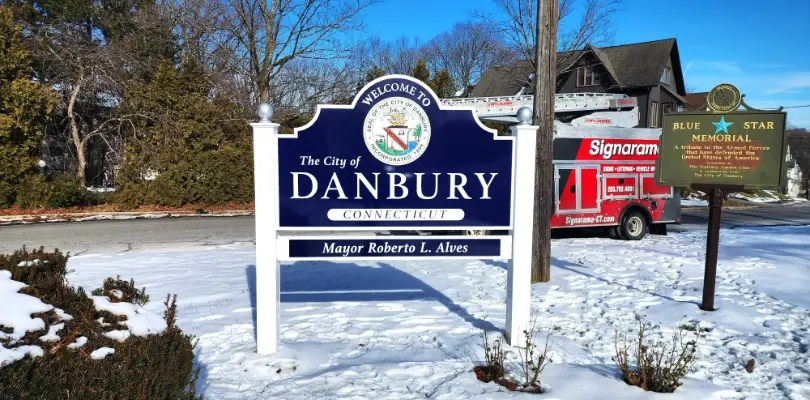
A business can have a professionally designed sign and still be surprisingly easy to miss. The problem is not always the sign itself. In many cases, the surrounding property changes what drivers and pedestrians can actually see.
For Brookfield, CT, businesses, outdoor signs often compete with landscaping, parked vehicles, utility poles, neighboring signs, building setbacks, and seasonal foliage. A sign that looks clear from the parking lot may disappear from the road for several seconds during a customer’s approach. That short obstruction can be enough for a driver to pass the entrance before recognizing the business.
Sign visibility therefore starts with a practical question: What does a customer see from the road, and when do they see it? Evaluating that real-world viewing path can reveal problems that are easy to miss when a sign is considered only from the property itself.
Why Outdoor Signs Can Be Hard to See Even When the Design Is Clear
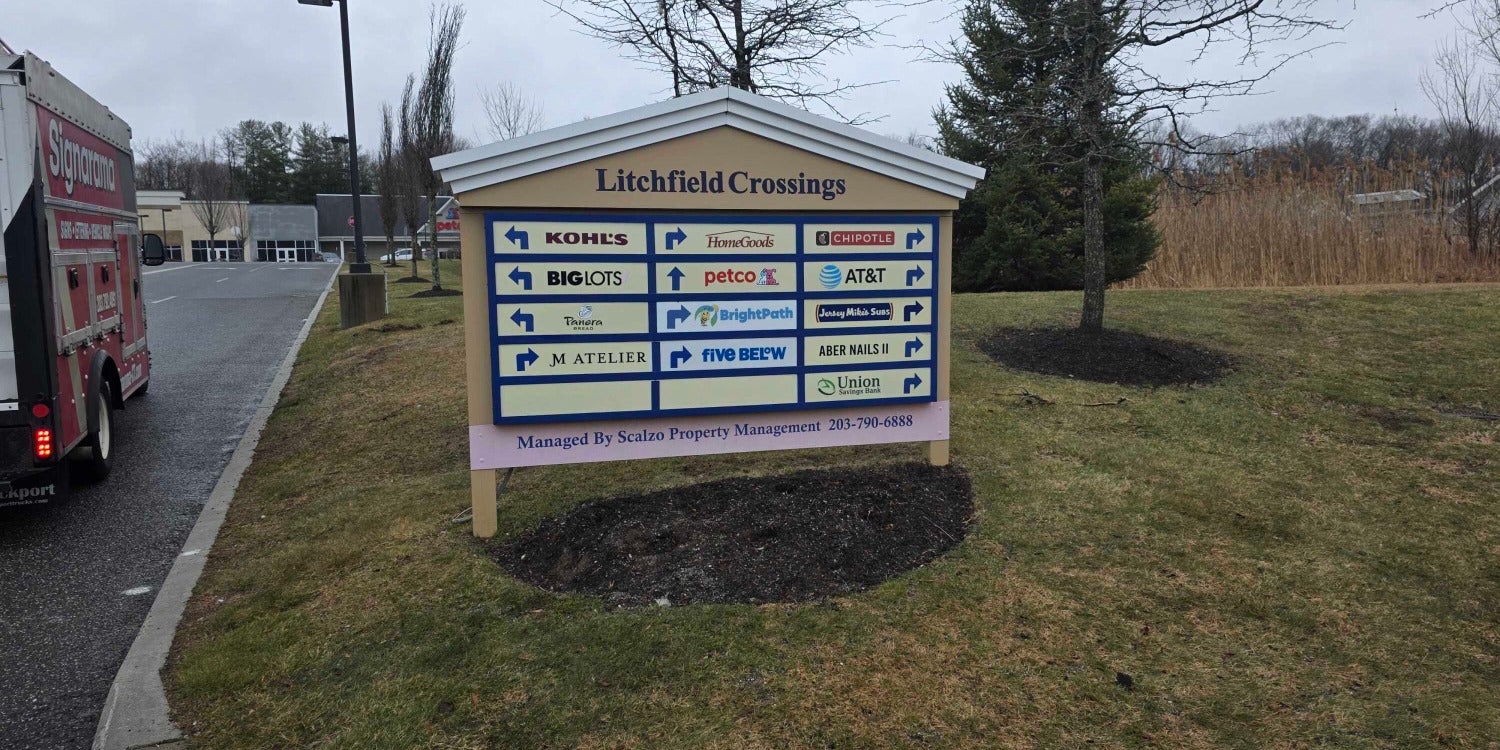
Visibility depends on more than the dimensions of a sign face. Placement, viewing angle, distance, traffic movement, and objects between the viewer and the sign all affect whether the message enters a customer’s field of view at the right moment.
This distinction matters for Brookfield properties. A sign can be readable once someone looks directly at it, yet still performs poorly because the customer does not get a clear view early enough. That is a sightline problem rather than a typography or material problem.
The goal is not simply to make outdoor signs visible from one ideal position. Businesses should evaluate whether customers can find and recognize them along the actual approach to the property.
How Landscaping Obstructions Change Sign Visibility
Trees and Shrubs Can Create Moving Blind Spots
Landscaping can improve a commercial property, but mature plantings can gradually interfere with roadside signage. A young tree that posed no problem at installation may develop a wider canopy. Shrubs can grow above the bottom edge of a monument sign. Branches may cover only a logo or business name, but that can still weaken recognition.
Seasonal Foliage Can Change the View
A sightline that works in winter may not work in late spring or summer. Deciduous trees can create a much denser visual barrier after leaf-out. In fall, lower sun angles and colorful foliage can add more visual competition around the sign.
A visibility review should therefore account for changing conditions across seasons, not just conditions on the day of the inspection.
Landscaping Maintenance Should Include the Sign Zone
Routine trimming can help preserve a clear viewing corridor, but maintenance should be planned carefully. The objective is not to remove landscaping simply because it is near a sign. It is to understand which branches, shrubs, or planting areas interrupt important sightlines and manage them appropriately.
If major landscaping changes are being considered, property owners should also account for site requirements and any applicable approvals before altering established features.
Why Parked Cars Create a Different Visibility Problem
Parking visibility is dynamic. Unlike a tree or utility pole, a parked vehicle may block a sign only during certain hours. That can make the problem harder to diagnose.
A low freestanding sign may look perfectly visible early in the morning when spaces are empty. At lunchtime or during a busy retail period, SUVs, pickup trucks, vans, or delivery vehicles may create a continuous wall between the road and the sign.
The business may evaluate the property when traffic is light and conclude that the sign has a clear sightline, while customers may arrive during the periods when parking occupancy is highest.
Utility Poles, Street Features, and Fixed Objects Can Break the Viewing Window
Utility poles are narrow, but their effect can be larger than expected. As a driver moves, a pole can align with a business name or logo for a critical moment. Multiple poles, traffic signs, signal equipment, hydrants, utility cabinets, or roadside infrastructure can create a visually crowded corridor.
Fixed objects also matter when a sign is set farther back from the road. The greater the setback, the more opportunities there may be for foreground objects to cross the line of sight as the viewing angle changes.
Neighboring Signs Can Compete Without Physically Blocking Yours
Not every visibility problem is a literal obstruction. In a commercial area, neighboring signs can occupy the same visual field. A customer approaching a driveway may see several property identifiers, tenant panels, directional signs, and roadside messages at once.
Businesses should evaluate outdoor signs in context rather than in isolation. Take note of what appears behind, beside, and in front of the sign from the road. A clean view from the property line can become cluttered when seen from farther away.
Setbacks Can Make Small Obstructions More Important
A sign located close to the road and a sign located deeper on a property do not share the same viewing conditions, and pylon sign height in Danbury, CT, is one example of how placement shapes visibility. With a larger setback, the viewer's line of sight crosses more of the site before reaching the sign.
That can increase the effect of parked vehicles, landscaping, other structures, and changes in grade. It can also make approach direction more important because the apparent position of foreground objects shifts as the customer moves.
Approach Direction Changes What Customers See
One of the most common mistakes in a sign visibility review is checking only one direction.
A roadside sign may have an open sightline for northbound traffic but sit behind a tree, utility pole, or neighboring sign for southbound traffic. A building sign may face the road yet become difficult to see for drivers approaching at an angle. Even the driveway entrance itself may be more obvious from one direction than the other.
Brookfield businesses should map the primary customer approaches before making conclusions about sign performance. That includes drivers traveling in both directions, customers turning from intersecting roads, and pedestrians where relevant.
The point at which a customer first sees the sign matters, but so does continuity. A sign that appears briefly and then disappears behind an obstruction may not provide enough time for recognition and a safe decision about where to turn, the same reason a car wrap needs to be readable in 3 seconds.
How to Check Sign Visibility at a Brookfield Property
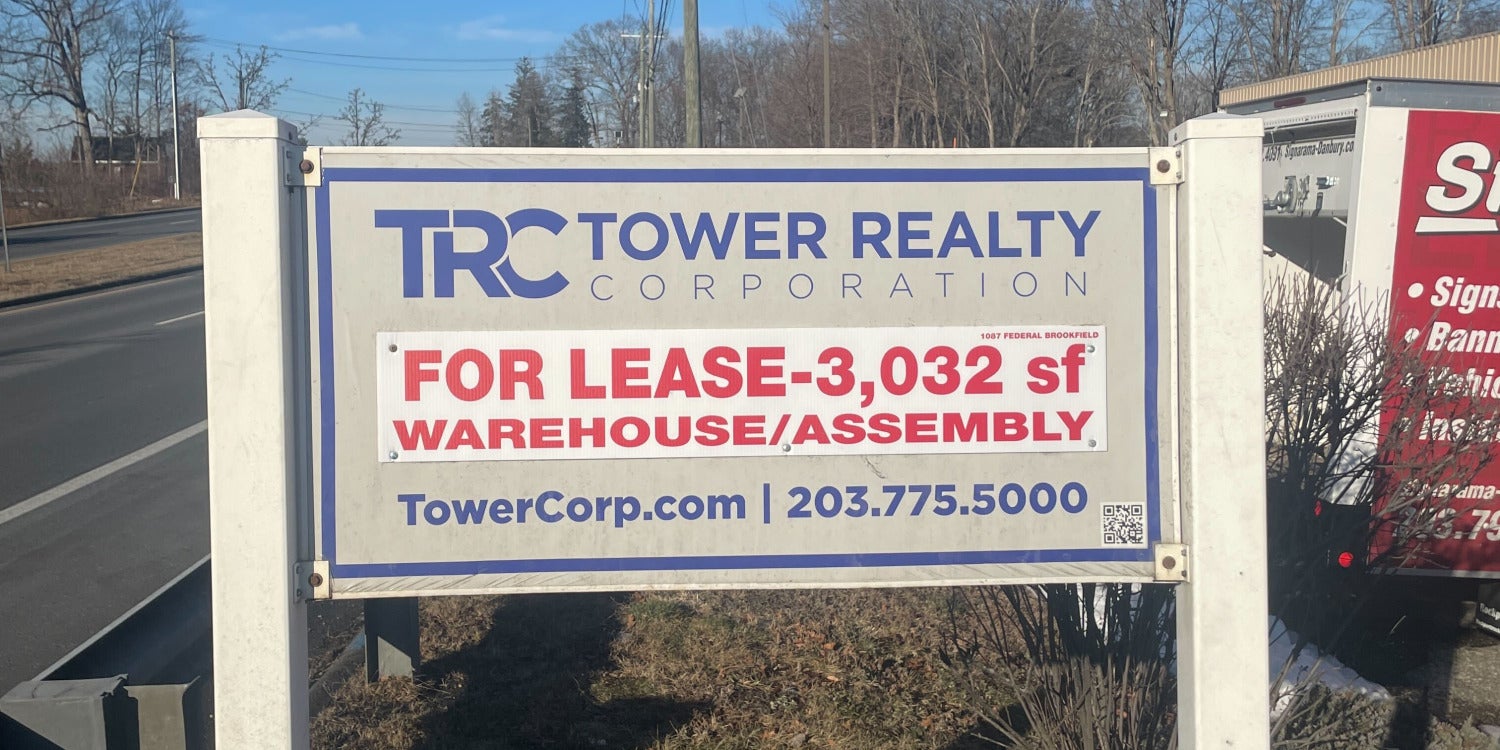
Step 1: Identify the Main Customer Approaches
Start by listing the directions from which customers normally arrive. Include both sides of the road, nearby intersections, and the approach to the driveway or parking entrance.
Step 2: Observe the Sign From the Road
Evaluate the sign from realistic viewing positions rather than from directly in front of the property. If possible, have someone else drive while you observe. Do not photograph, measure, or assess signage while operating a vehicle.
Step 3: Mark Every Obstruction
Note trees, shrubs, parked cars, utility poles, street signs, neighboring signage, buildings, grade changes, and other objects that enter the sightline. Record whether each obstruction is permanent, seasonal, or dependent on parking and deliveries.
Step 4: Check More Than One Time of Day
Return when the parking lot is busy. Compare morning, midday, and late-afternoon conditions when practical. Different occupancy levels and traffic patterns can expose parking visibility problems that an empty lot hides.
Step 5: Recheck During a Different Season
If landscaping is a concern, compare leaf-on and leaf-off conditions. Also consider where snow is normally stored after plowing so a winter pile does not become an unexpected obstruction.
Step 6: Review the Entrance and the Sign Together
A visible sign is most useful when customers can connect it to the correct entrance. Check whether the sign remains understandable as the driver approaches the driveway and whether other property signs create confusion.
Step 7: Discuss Practical Corrections Before Replacing the Sign
Some problems may be addressed through landscaping maintenance, parking management, sign relocation where allowed, or additional directional signage. Others may require a different sign concept. A site review separates placement from design issues before investing in changes. Evaluate fleet graphics similarly, such as weighing seasonal vs. permanent fleet graphics first.
Brookfield Sign Placement and Sightlines
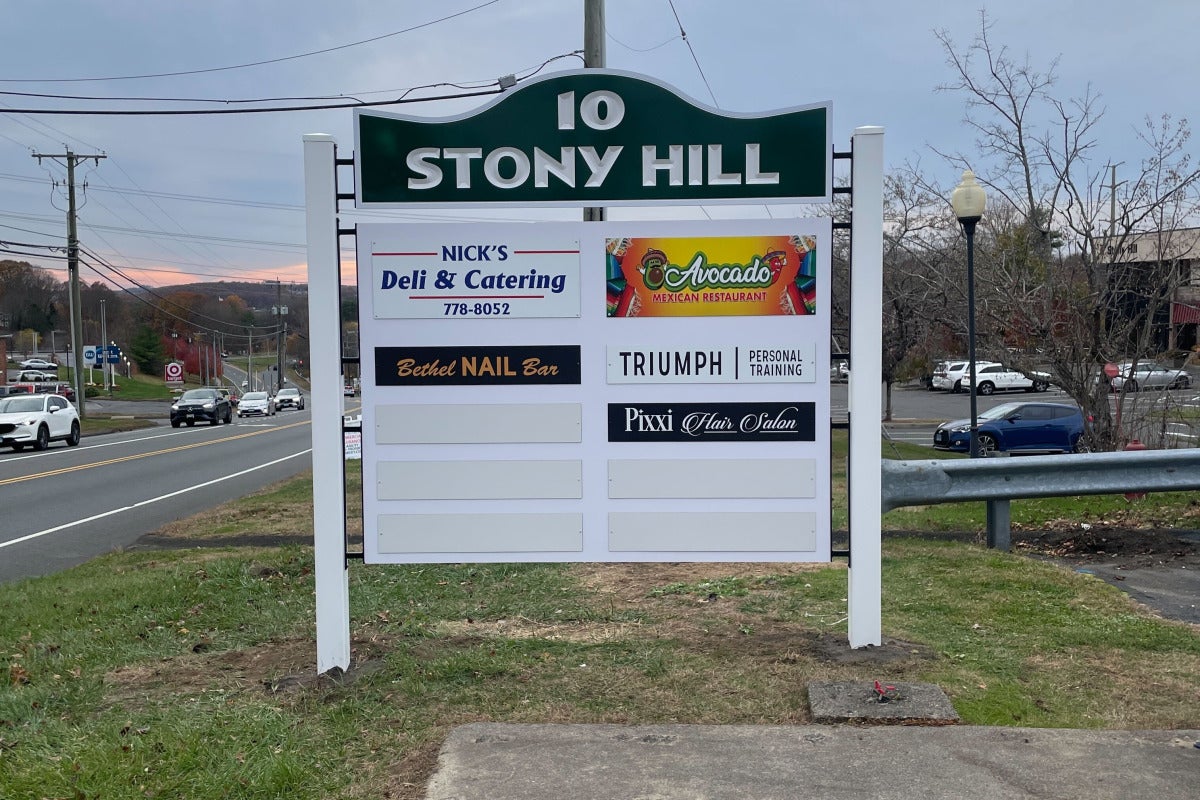
Local requirements should be part of any placement decision. Brookfield’s zoning regulations indicate that the town’s sign standards are intended in part to support traffic safety and prevent hazards. The current regulations also provide permitting and placement requirements for signs, and the town notes that the Zoning Enforcement Officer may require readjustment or relocation in certain circumstances to protect vehicular and pedestrian safety.
That does not mean every visibility problem has a regulatory solution. It means businesses should avoid treating sign placement as a purely visual decision. Before installing, enlarging, or relocating a sign, confirm the current requirements with the Town of Brookfield and account for property lines, rights-of-way, traffic safety, and the specific sign type.
Frequently Asked Questions
Can a business sign be legally visible but still hard for customers to notice?
Yes. Compliance with placement or dimensional requirements does not guarantee strong visibility from every customer approach. Traffic direction, setbacks, surrounding objects, and viewing time can still affect how easily the sign is recognized.
Can delivery vehicles temporarily block an outdoor sign?
Yes. Delivery vans, trucks, and other large vehicles can create temporary sightline problems, particularly when a sign sits behind parking or loading areas. Visibility should be reviewed during the times when vehicle activity is highest. If your own fleet makes those deliveries, keeping vehicle wraps consistent across vans, pickup trucks, box trucks, and trailers helps customers recognize your brand on the road.
Does road direction affect how long customers can see a sign?
Yes. A sign may remain visible longer from one direction than the other because foreground objects and viewing angles change as drivers approach. Businesses should evaluate both directions of travel rather than relying on a single viewpoint.
Can directional signage help when the main business sign is difficult to see?
It can. Directional signage may help customers connect the business with the correct driveway or entrance when the main sign is affected by placement, setbacks, or surrounding obstructions. Any additional signage should still follow applicable property and local requirements. Vehicles can extend that visibility too, and a partial vs. full car wrap is one way to keep the brand visible beyond the property.
Should sign visibility be reviewed before redesigning or replacing the sign?
Yes. A visibility review can help determine whether the problem comes from the sign design itself or from landscaping, parking, placement, sightlines, or other site conditions. Identifying the actual cause first can help avoid unnecessary changes.
Plan Outdoor Signs Around Real Customer Sightlines
Outdoor signs work in a changing environment. Trees grow, parking lots fill, delivery vehicles arrive, foliage changes, and neighboring properties add visual competition. A sign that performs well in one viewing condition may be easy to miss in another.
For Brookfield businesses, the most useful visibility review starts from the customer’s approach. Evaluate both directions of travel, busy parking conditions, seasonal landscaping, fixed roadside objects, setbacks, and the relationship between the sign and the entrance. That process can show whether the real issue is the sign, its placement, or the environment around it.
Signarama can help businesses evaluate custom signage and placement options based on the property’s practical viewing conditions while keeping applicable local requirements in mind.
Related Posts

Signarama Danbury, CT
contact
Signarama Danbury, CT