Your Consultative Signs and Graphics Partner for Eastside Businesses


Wayfinding Signs: A Practical Guide to Directing Visitors Effectively
Mar 7, 2026 by Alex Fong
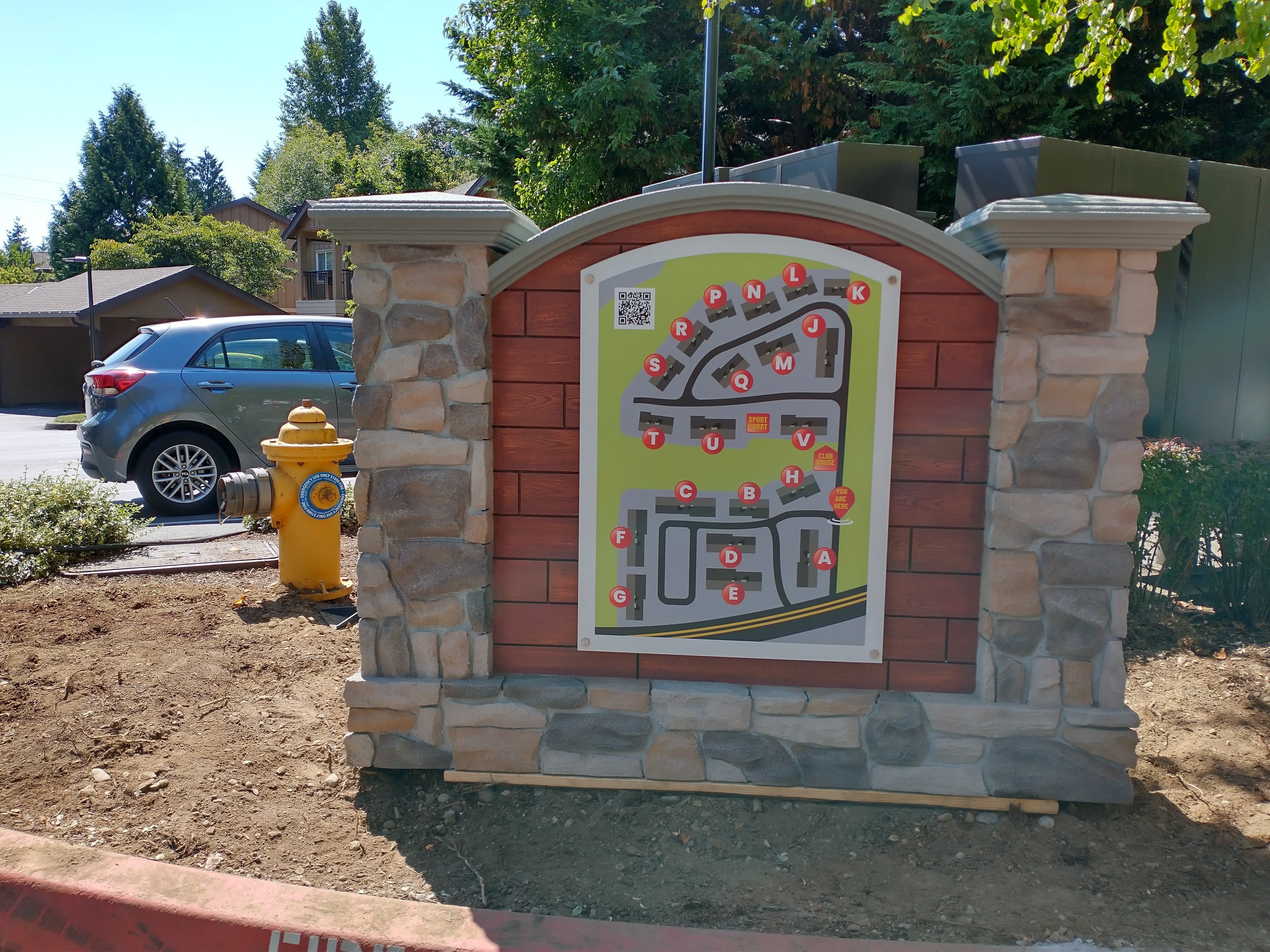
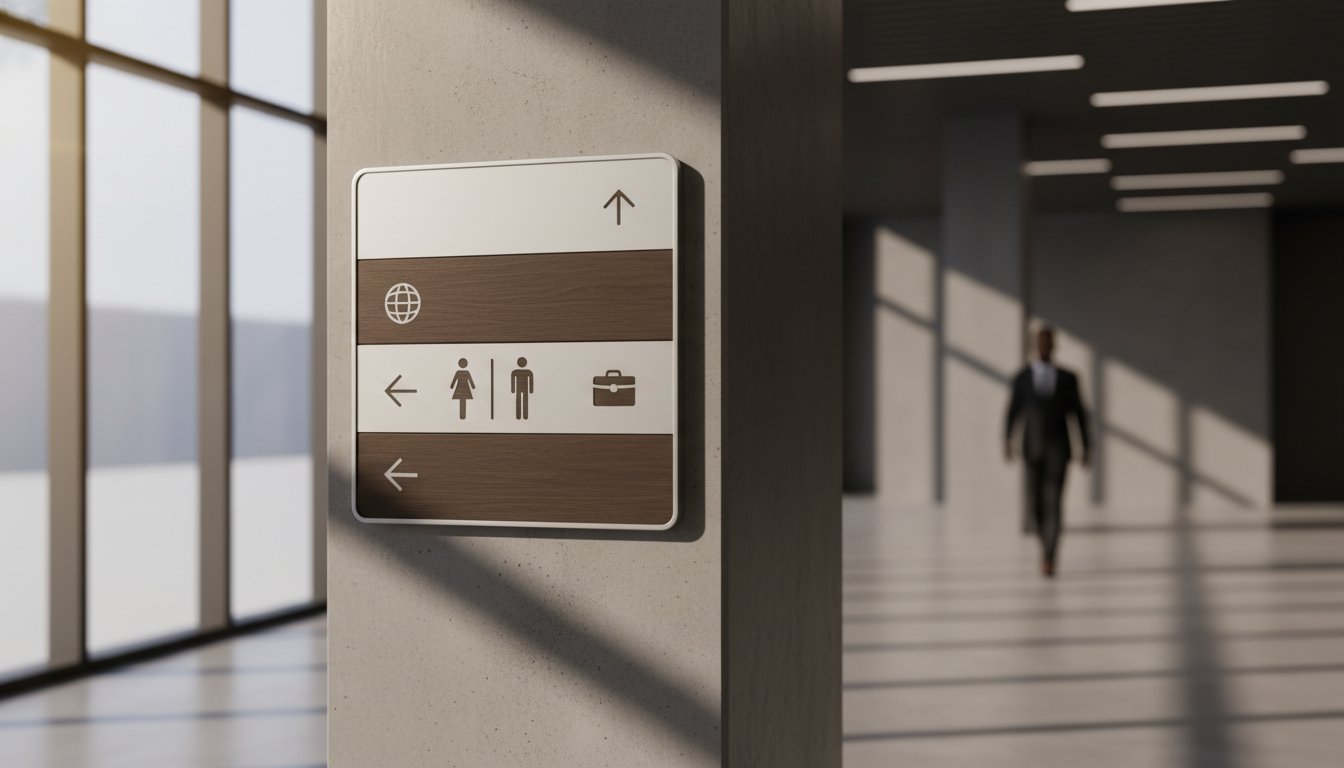
Is "I'm lost, can you help me?" a phrase you hear a little too often in your building? When visitors and new employees struggle to find their way, it creates a stressful first impression and disrupts your team's workflow. An inconsistent or confusing mix of signs can make even the most professional space feel disorganized. The solution is a deliberate, well-planned system of high-quality wayfinding signs designed to guide people seamlessly from point A to point B.
Effective directional signage is about more than just arrows and room numbers; it’s a critical part of the visitor experience. A great system improves traffic flow, projects an image of competence, and reinforces your brand identity at every turn. It transforms your facility into a welcoming, easy-to-navigate space where everyone feels confident they're heading in the right direction.
In this practical guide, we’ll remove the guesswork from the process. You'll learn how to plan and implement a clear, professional wayfinding system that eliminates confusion, meets ADA compliance, and ensures every visitor’s journey through your space is a smooth and positive one.
What Are Wayfinding Signs? More Than Just Arrows
When you hear the term wayfinding, you might picture a simple arrow pointing down a hallway. But in reality, it’s a far more comprehensive and strategic process. Wayfinding is the complete system of visual cues-from signs and directories to architectural landmarks-that helps people navigate a physical environment with confidence. To understand the full scope of what is wayfinding, it’s best to see it not as a collection of signs, but as a silent, helpful conversation between your space and its visitors.
The primary goal is to guide people from point A to point B seamlessly. A well-designed system anticipates a visitor's questions and provides clear answers at every turn. This is the crucial difference between a planned wayfinding strategy and a collection of random, mismatched signs. One creates a professional, stress-free experience that improves safety and reflects positively on your brand; the other causes confusion and frustration before a customer even reaches their destination.
Why Effective Wayfinding Matters for Your Business
For any organization, a professional wayfinding system isn't a luxury-it's a fundamental part of your operational and brand strategy. It delivers tangible benefits by:
- Enhancing the visitor experience from the moment someone arrives, making them feel welcome and oriented.
- Increasing employee efficiency by freeing up staff from constantly providing directions so they can focus on their core tasks.
- Reinforcing your brand identity through the consistent use of your company’s colors, fonts, and logos on every sign.
- Improving accessibility and ensuring ADA compliance, which demonstrates a commitment to creating an inclusive space for everyone.
The Psychology of Navigation
Effective wayfinding works because it aligns with how people naturally process their surroundings. When entering a new space, we instinctively create a mental map using landmarks (like a reception desk), pathways (main corridors), and key decision points (intersections or elevators). High-quality wayfinding signs provide crucial information precisely at these decision points, confirming a person's path and building their confidence. This proactive guidance prevents confusion before it starts, making the entire journey feel intuitive and effortless.
The 4 Core Types of Wayfinding Signs in Every System
A truly effective wayfinding system is more than just a few arrows pointing down a hallway. It’s a carefully planned network of signs, each with a specific job, working together to guide visitors seamlessly. A successful strategy in any environment, from a bustling hospital to a multi-level office building, requires a balanced mix of four core sign types. As your expert sign partner, Signarama Redmond helps you design and implement a comprehensive system that answers every question before it’s asked.
These four functional categories of wayfinding signs form the foundation of any clear and stress-free navigation experience.
Identification Signs: 'You Have Arrived'
The simplest and most crucial type, identification signs confirm that a person has reached their destination. They eliminate doubt and provide a sense of arrival and relief. From a stunning lobby sign that establishes your brand identity to a simple room number plaque, these signs answer the visitor’s question: 'Am I in the right place?'
- Examples: Department names (e.g., 'Radiology'), suite numbers, conference room names, and branded lobby signs.
- Our Products: Custom dimensional logo signs, engraved room plaques, and vinyl door lettering.
Directional Signs: 'Go This Way'
Directional signs are the active guides in your system. They appear at key decision points-like hallway intersections, lobbies, and elevator banks-to keep people moving along the correct path. They are the workhorses of wayfinding, answering the question: 'How do I get there from here?'
- Examples: Wall-mounted signs with arrows, overhead directories, and projecting signs that are visible from a distance.
- Our Products: Modular sign systems, ceiling-suspended directional signs, and custom wall graphics.
Informational Signs: 'Here's What You Need to Know'
While directional signs show the path, informational signs provide the broader context. They give people the "big picture" or specific details they need to navigate effectively and use the space. These signs help orient visitors and answer questions like, 'Where is everything?' or 'What can I do here?'
- Examples: Building directories, floor plan maps, hours of operation plaques, and Wi-Fi access signs.
- Our Products: Freestanding directory kiosks, large-format printed maps, and acrylic information panels.
Regulatory Signs: 'For Your Safety and Compliance'
Regulatory signs are non-negotiable. They communicate rules, ensure safety, and keep your facility compliant with legal standards like the Americans with Disabilities Act (ADA). These signs are essential for creating a secure and accessible environment for everyone, answering the final question: 'What are the rules here?' Proper implementation is a key part of creating accessible wayfinding systems that serve all visitors and staff equally.
- Examples: Exit signs, fire safety notices, no smoking signs, and ADA-compliant restroom signs with tactile text and Braille.
- Our Products: Complete ADA sign packages, emergency exit signs, and custom safety signage.
How to Plan an Effective Wayfinding System: A 5-Step Approach
Implementing an effective wayfinding system is more than just putting up a few signs. A thoughtful, strategic plan prevents confusion, saves money on costly revisions, and ensures your visitors have a positive experience from the moment they arrive. For facility and office managers, following a structured process is the key to success. This is the same methodical approach our experts use to deliver clear, reliable results for our partners.
Follow this five-step checklist to move from initial concept to a fully functional system that enhances your space.
Step 1: Analyze Traffic Flow & Decision Points
Put yourself in your visitor's shoes. Start at the main entrances and walk the common paths through your facility. Identify key destinations like reception desks, elevators, restrooms, and specific departments. Pay close attention to every intersection or hallway where a person must make a choice of direction-these are your critical decision points and the foundation of your wayfinding plan.
Step 2: Create a Signage Blueprint
Using a floor plan of your building, map out the location for each sign you identified in step one. Think in layers: start by placing large directional signs to guide people to major zones, then add identification signs for specific rooms or offices. This blueprint ensures you have comprehensive coverage without creating unnecessary clutter, making your investment in wayfinding signs both efficient and effective.
Step 3: Design for Clarity and Brand Consistency
Your signs must be instantly understandable. We recommend using clean, legible fonts, high-contrast color combinations, and simple, universally recognized icons. This is also a crucial opportunity to reinforce your brand identity. Ensure your logo, brand colors, and typography are used consistently across every sign to create a professional and cohesive environment. Need design help? Our experts can create a cohesive look.
Step 4: Select Durable, Appropriate Materials
The material you choose impacts both the look and longevity of your signs. Consider the environment for each sign:
- Outdoor signs require weather-resistant materials like aluminum.
- High-traffic indoor areas benefit from durable options like acrylic or modular systems.
- Vinyl graphics are a versatile choice for walls and doors.
Matching the material quality to your brand’s image and budget ensures your system looks great for years to come.
Step 5: Professional Installation & Review
Proper installation is the final, critical step. Professional installers ensure signs are mounted securely, at the correct height, and in compliance with ADA regulations. After installation, perform a final walk-through to confirm every sign is in its planned location and that the entire system provides a seamless, intuitive path through your facility.

Common Wayfinding Mistakes and How to Avoid Them
Even the most well-intentioned wayfinding systems can fall short. The good news is that most issues stem from a few common, avoidable mistakes. Viewing these pitfalls as learning opportunities is the first step toward creating a truly effective navigation experience. With expert planning and a focus on clarity, ensuring your visitors feel confident and cared for is easier than you think.
Mistake 1: Too Much Information (Sign Clutter)
In wayfinding, less is truly more. A sign cluttered with text, arrows, and logos can overwhelm visitors, causing confusion rather than providing clarity. People need to glance at a sign and instantly understand their next move. Overloading them with information defeats the purpose of your wayfinding signs.
The Solution: Prioritize simplicity and scannability.
- Limit each sign to no more than 3-5 key pieces of information.
- Use universally recognized icons (e.g., restroom symbols, elevators) to replace text.
- Group destinations logically to guide people in stages, not all at once.
Mistake 2: Inconsistent Design and Placement
Imagine walking through a facility where some signs are blue and modern, others are brown and traditional, and they’re all mounted at different heights. This lack of cohesion creates a chaotic and unprofessional atmosphere, undermining trust in the directions. Consistency is key to building a reliable visual language that visitors can depend on.
The Solution: Establish and follow a clear standard.
- Develop a single, consistent design family for all signs, using your brand’s colors and fonts.
- Mount signs at a predictable height throughout your space for easy visibility.
- Ensure all signs use the same terminology for the same locations.
Mistake 3: Forgetting ADA Compliance
Effective wayfinding is inclusive wayfinding. Overlooking Americans with Disabilities Act (ADA) requirements isn't just a compliance risk; it’s a failure to serve every visitor. ADA-compliant signs ensure that people with visual impairments can navigate your space safely and independently, making your environment welcoming to all.
The Solution: Make accessibility a priority from the start.
- Incorporate tactile lettering and Grade 2 braille on relevant identification signs.
- Use non-glare finishes and ensure high color contrast between text and background.
- Adhere to strict guidelines for mounting height and location.
Navigating ADA regulations can be complex. As your end-to-end signage partner, we remove the guesswork and help you create a fully compliant system. If you're ready to develop professional and effective wayfinding signs, our team at Signarama Redmond is here to help.
Your End-to-End Wayfinding Partner in Redmond
Understanding the principles of effective wayfinding is the first step. The next is bringing that strategy to life. Implementing a comprehensive directional system involves complex logistics, from initial planning and design to navigating local regulations, fabrication, and final installation. This is where a professional partner makes all the difference, removing the guesswork and ensuring a high-quality, durable result.
As a trusted, local sign company serving Redmond, Bellevue, Kirkland, and the greater Seattle area, Signarama Redmond is your one-stop solution for creating clear and effective wayfinding signs that guide visitors and enhance your brand experience.
From Site Survey to Professional Installation
Our turnkey process begins with a professional site survey to assess traffic flow, identify key decision points, and ensure compliance with ADA regulations. From there, our expert team handles every detail: creative design that aligns with your brand, navigating the permitting process, and fabricating your signs with durable, high-quality materials. We finish every project with a clean, professional installation that guarantees your signs look great and are built to last.
Why Choose a Full-Service Sign Company?
Partnering with an end-to-end provider like Signarama Redmond offers significant advantages for your business and peace of mind for your team. We manage the entire project, allowing you to focus on what you do best.
- A Single Point of Contact: Forget juggling multiple vendors. You’ll have one dedicated project manager overseeing every stage, ensuring a seamless process, clear communication, and on-time delivery.
- Guaranteed Brand Consistency: We maintain strict quality control from design to production, ensuring every sign-from monument signs to interior directories-perfectly reflects your brand's colors, fonts, and quality standards.
- Peace of Mind and Compliance: Our team has deep expertise in local codes and ADA requirements. We handle the complexities of compliance and logistics, so you can be confident your wayfinding system is both effective and legally sound.
Ready to create a navigation system that elevates your space and eliminates confusion? Request a free consultation to discuss your wayfinding project.
Your Partner for Clear and Effective Wayfinding
As we've explored, effective wayfinding is about much more than pointing arrows. It’s a comprehensive system that enhances the visitor experience, builds brand trust, and ensures safety. By understanding the core sign types and following a strategic planning process, you can create an intuitive environment that eliminates confusion and welcomes every guest.
Implementing a professional system of wayfinding signs can feel complex, but you don’t have to navigate it alone. As your trusted, local sign partner serving Redmond, Bellevue, and the Greater Seattle area, we provide expert project management and handle everything from concept to installation. Our end-to-end service includes design, permitting, fabrication, and installation, ensuring a seamless process for you.
Ready to guide your visitors with confidence? Get a free consultation with our wayfinding experts. Let's work together to create a clear, welcoming, and seamless journey for everyone who walks through your doors.
Frequently Asked Questions About Wayfinding Signs
What is the difference between wayfinding signs and directional signs?
While the terms are often used together, it's helpful to think of directional signs as a key component of a larger wayfinding system. A directional sign gives a specific instruction, like an arrow pointing to the "Lobby" or "Restrooms." A complete wayfinding system is the strategic, comprehensive network of all signs-including directories, maps, and identification signs-that work together to guide a visitor seamlessly from their starting point to their destination. It’s the entire navigational experience.
How do I make my wayfinding signs ADA compliant?
Ensuring your wayfinding signs are ADA compliant is crucial for accessibility and is a legal requirement. Key standards include non-glare finishes, high-contrast colors, specific fonts, tactile text, and Grade 2 Braille. Signs must also be installed at precise heights and locations to be easily reachable. As your expert sign partner, we remove the guesswork by managing all ADA guidelines, ensuring your signs are fully compliant, expertly designed, and professionally installed to meet every regulation.
What are the best materials for durable indoor wayfinding signs?
For durable, high-quality indoor wayfinding signage, we often recommend materials like acrylic, engraved plastics, and aluminum. Acrylic offers a sleek, modern look and can be customized with subsurface printing for protection. Engraved plastics are excellent for ADA-compliant tactile signs due to their durability and contrast options. For a premium feel, metals like aluminum provide a sophisticated and long-lasting solution. Our team helps you select the ideal material based on your building’s aesthetic, traffic, and budget.
How long does it take to design and install a complete wayfinding system?
The timeline for a complete wayfinding system varies based on project scope, the size of your facility, and design complexity. A small, straightforward project might take a few weeks from consultation to installation. Larger, more complex systems for facilities like hospitals or corporate campuses can take several months, factoring in strategy, design, fabrication, and permitting. We provide a clear, detailed project timeline upfront so you always know what to expect from your trusted signage partner.
Can you incorporate my company's logo and brand colors into the signs?
Absolutely. Integrating your brand identity is a fundamental part of our design process. We ensure your wayfinding system is not only functional but also a seamless extension of your brand experience. Our expert designers will precisely match your company's logo, color palette, and typography to create a cohesive and professional look throughout your facility. This reinforces your brand identity at every turn, creating a memorable and positive impression on every visitor.
What is the first step to getting started with a wayfinding project for my building?
The best first step is to schedule a free consultation and site survey with our team. During this initial meeting, we'll walk through your facility to understand your goals, identify key navigational challenges, and discuss your brand requirements. This allows us to develop a comprehensive strategy and provide an accurate quote for an end-to-end solution. This collaborative process ensures your final wayfinding system is effective, on-brand, and perfectly suited to your space.


Signarama Redmond, WA
Summer Hours (July - August) - MON-THUR: 8.00AM - 6.30PM, FRI - SUN: CLOSED
contact
Signarama Redmond, WA