Your Consultative Signs and Graphics Partner for Eastside Businesses


UV-Resistant Vehicle Wraps for PNW Sun: A Buyer’s Guide
Oct 12, 2026 by Signarama Redmond
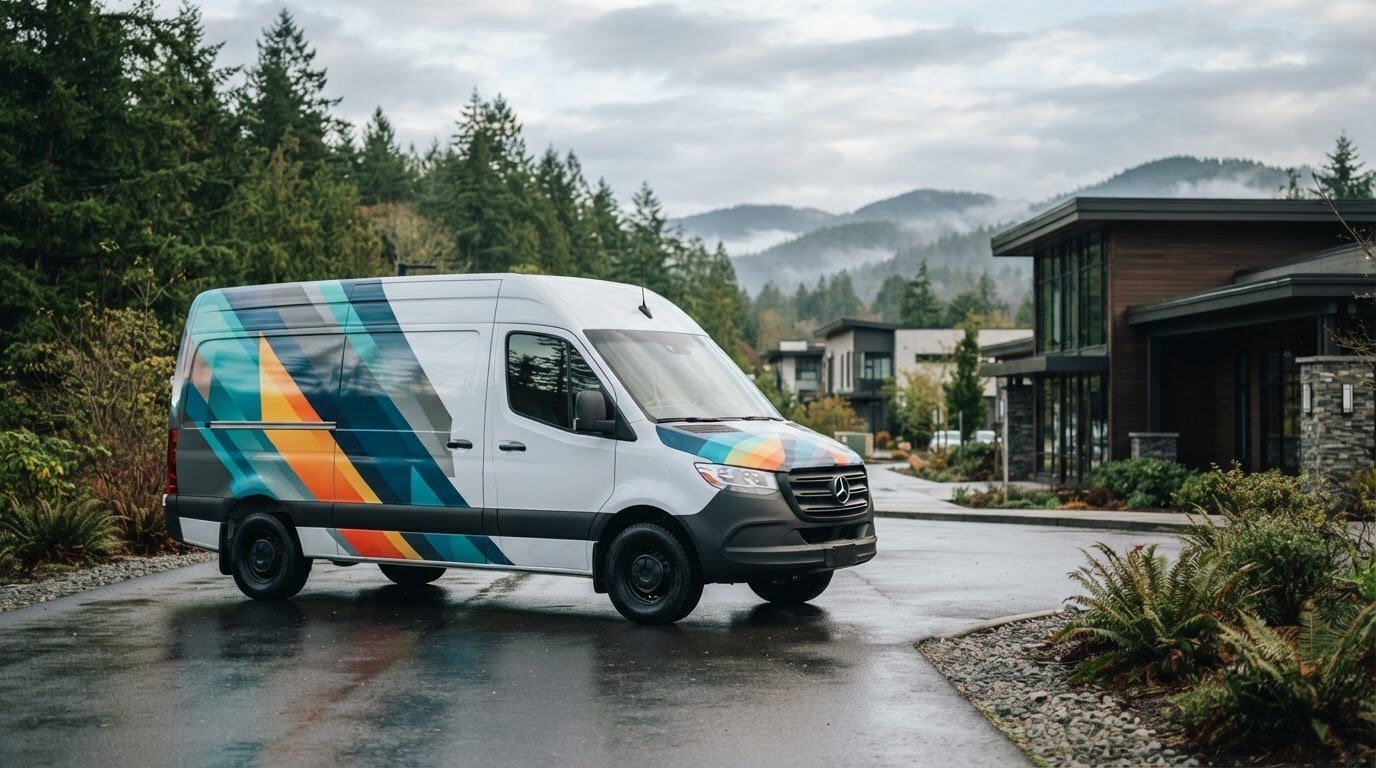
A wrap’s durability depends not only on how hot a day feels, but also on how much sun a vehicle receives over time. Even in the Pacific Northwest, UV exposure can contribute to fading, including on cloudy days. Choosing UV-damage resistant vehicle wraps for PNW sun means looking beyond appearance and considering the vehicle’s use, coverage needs, and material information.
It’s reasonable to wonder whether sunlight could dull colors or wear down a wrap. No wrap should be treated as immune to sun exposure, but thoughtful project planning can help you make an informed choice. This guide explains how sunlight and vehicle use relate to wrap appearance, what material information to review, and how full wraps, partial wraps, and vinyl lettering differ.
Signarama Redmond takes a consultative approach to vehicle graphics, considering your vehicle, brand, available space, and budget. Use the guidance below to identify the questions that matter and plan an approach that fits how you use your vehicle.
Key Takeaways
Note where and how your vehicle is parked and driven to understand the exposure its graphics may face.
Compare manufacturer documentation for the specific material rather than relying on broad “UV-resistant” wording.
Match full wraps, partial wraps, or vinyl lettering to the coverage and brand-message space your vehicle needs.
Clarify outdoor parking, vehicle use, brand priorities, and desired coverage before planning the design.
Discuss your vehicle, brand, budget, and project needs with Signarama Redmond to plan vehicle graphics, including options for UV-damage resistant vehicle wraps for PNW sun.
Table of Contents
Full Wrap, Partial Wrap, or Vinyl Lettering for Seattle-Area Vehicles?
A PNW Vehicle Wrap Buying Checklist for Sun and Everyday Use
How PNW Sun Exposure Can Affect Vehicle Wraps
A wrap can look different after extended outdoor use, but not every visible change has the same cause. UV-related fading means the printed or colored surface loses vibrancy over time. A dull or chalky appearance, small cracks, and lifting edges can also appear. These changes deserve attention, but appearance alone doesn’t establish whether UV exposure, dirt, abrasion, installation, or another factor is responsible.
Ultraviolet radiation is distinct from the visible light that makes a day look bright or cloudy. Ultraviolet radiation can cause chemical changes in exposed materials, contributing over time to fading or deterioration in exterior graphics.
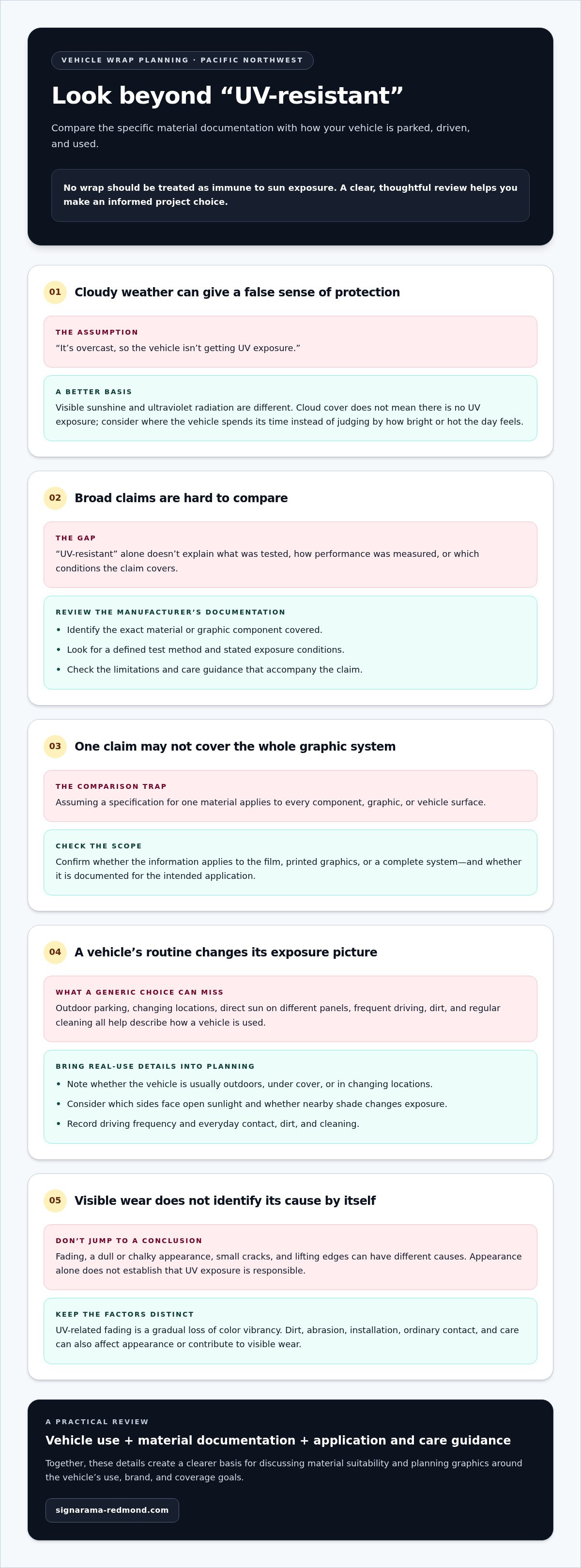
That distinction matters around Greater Seattle. A gray sky doesn’t tell you how much UV reaches a particular vehicle, and cloud cover doesn’t mean there is no exposure. If you’re considering UV-damage resistant vehicle wraps for PNW sun, start by thinking about where the vehicle spends its time, not just whether the weather feels hot.
Does cloudy PNW weather protect a vehicle wrap from UV exposure?
No single visual cue can tell you that an outdoor vehicle is free from UV exposure. Visible sunshine and ultraviolet radiation are different parts of the spectrum, so an overcast day can still involve UV reaching the vehicle. The amount varies with conditions, but a vehicle parked outside in Seattle, Bellevue, or Redmond remains exposed to the environment. Cloudy weather is not a substitute for understanding material information.
Which vehicle conditions can increase visible wrap wear?
A vehicle’s routine affects its exposure. One that stays outdoors at home and at work may spend more time in daylight than one usually parked in a garage or covered space. Its orientation and nearby shade can also affect which panels receive direct sun. Roofs, hoods, and outward-facing sides may experience different conditions depending on where and how the vehicle is parked.
Regular driving adds more than sunlight to the picture. A frequently used vehicle encounters road dust, dirt, rain, and ordinary contact during cleaning or loading. These factors can contribute to surface wear or make a wrap look dull, while UV-related fading is a gradual color change. Lifting edges or cracking are other visible concerns, but they shouldn’t automatically be attributed to sunlight alone.
Note whether the vehicle is usually parked outdoors, under cover, or in changing locations.
Consider which sides face open sunlight during its regular parking routine.
Record how often it’s driven and what everyday contact or dirt it encounters.
These details give you a clearer basis for reviewing material information and planning graphics around the vehicle’s real use. Exposure is one part of wrap durability, alongside material, installation, and care.
Which Vehicle Wrap Material Details Matter in PNW Sun?
“UV-resistant” sounds reassuring, but the phrase alone doesn’t explain what was tested, how performance was measured, or what conditions the claim covers. To compare options for UV-damage resistant vehicle wraps for PNW sun, look for manufacturer documentation for the specific material being considered. Use it to understand stated performance, not as a promise that a wrap will never fade or show wear.
What evidence supports a UV-resistance claim?
Start with the manufacturer’s published specifications. Look for a defined test method, exposure conditions, and the material or component covered. Check whether the information applies to the film, printed graphics, or a complete system. Without a clear scope or supporting details, it’s difficult to compare a claim fairly with one that explains how it was assessed.
Read limitations and care guidance alongside any performance statement. A specification describes performance under stated conditions; it doesn’t guarantee the same result on every vehicle in everyday use. Real-world exposure, application, and care can differ from a controlled test.
As you review documentation, separate concrete information from broad marketing language. Look for answers to questions such as:
Which exact material or graphic component does the claim cover?
What test conditions or method does the manufacturer describe?
What limitations and care instructions accompany the stated performance?
If the information doesn’t answer these questions, it provides less detail for comparing materials. Avoid interpreting words like “durable” or “UV-resistant” as evidence of a particular lifespan or complete protection from fading.
How should vehicle use shape material selection?
Use the vehicle’s routine to frame the project discussion. A vehicle that parks outdoors regularly has different exposure patterns from one usually kept under cover. A branded vehicle that travels daily also encounters routine use and cleaning. Neither pattern alone determines how a wrap will look over time, but both help clarify which project details matter to you.
Material suitability also depends on the surface and intended application. For a large branded graphic, consider how the selected material is documented for that use rather than assuming one general claim applies to every graphic or vehicle surface. Keep the manufacturer’s stated application and care guidance with your project notes so they can inform planning and maintenance.
Bring together the vehicle’s parking habits, use, desired graphics, and the documentation you’ve reviewed. Signarama Redmond’s consultative approach connects those details with your brand and coverage goals. To start the conversation, plan vehicle graphics with Signarama Redmond.
Full Wrap, Partial Wrap, or Vinyl Lettering for Seattle-Area Vehicles?
Coverage is a design decision, not a durability ranking. Full wraps, partial wraps, and vinyl lettering offer different amounts of space for your brand message. None is automatically more resistant to UV exposure because it covers more or less of the vehicle. Compare the visual result you want with the vehicle’s shape, how it’s used, and the information customers need to notice.
Option | Visual coverage | Brand-message space | Often fits |
|---|---|---|---|
Full wrap | Broad coverage across the vehicle’s exterior | Room for a unified design across multiple panels | Businesses seeking a highly branded overall appearance |
Partial wrap | Selected panels or sections | Space focused on key brand elements or messages | Businesses that want graphics concentrated in chosen areas |
Vinyl lettering | Specific areas for text or simple brand identification | Focused space for a name, contact detail, or concise message | Vehicles that need clear, direct identification |
When might a full vehicle wrap suit a business?
A full wrap can bring colors, logos, and other brand elements together across much of the vehicle for a coordinated appearance. Before choosing broad coverage, consider the vehicle’s body shape, the proportions of your brand assets, and where people are likely to see it, such as in a parking area or on local roads. A design should work with the vehicle’s panels rather than treat them like a flat page.
When are partial wraps or vinyl lettering worth considering?
Partial wraps focus graphics on selected surfaces, while vinyl lettering keeps the message more specific and text-led. Think about what the vehicle needs to communicate at a glance: a logo and business name, or a fuller branded design? The best fit depends on the message, available surface area, and how the vehicle supports your business, not an assumed difference in UV resistance.
For example, a service vehicle may need its business name and a concise identifier to be easy to find, while a vehicle representing a brand across different settings—an approach frequently utilized in mobile advertising campaigns by agencies like TexWood Media—may call for a broader visual treatment. Sketching the message and noting the panels you want to use can help clarify the choice. Keep readability in mind: adding more content doesn’t always make a design easier to understand.
Whichever format you’re considering, material documentation and project execution remain relevant to the finished graphics. Coverage alone doesn’t promise a particular lifespan or protection from fading. When comparing UV-damage resistant vehicle wraps for PNW sun, consider coverage and material performance as separate decisions, then bring both into project planning.
Signarama Redmond offers full wraps, partial wraps, and vinyl lettering, with a consultative approach to matching coverage and design to your vehicle and brand. The Vehicle Wraps Redmond guide can help you explore the options for your Seattle-area vehicle.
A PNW Vehicle Wrap Buying Checklist for Sun and Everyday Use
A useful wrap plan starts with the vehicle’s real working conditions, then moves through coverage, design, and material review. Use this checklist to organize details before discussing UV-damage resistant vehicle wraps for PNW sun. The goal is to base decisions on your vehicle and priorities, not assumptions about protection or lifespan.
What should buyers prepare before planning a wrap?
Gather the vehicle’s make and model, note its current surface condition, and take clear photographs from several angles. Collect your logo and other brand assets, then define the main message the graphics should communicate. Note where the vehicle is usually parked, how often it’s driven, and whether its routine includes regular outdoor parking. These details help make the project discussion more practical.
Which wrap details should be compared before deciding?
Compare the coverage you want with the design and message the vehicle needs to carry. Review manufacturer documentation for the material being considered, including its stated performance scope, limitations, and care guidance. Keep documented specifications separate from broad claims or expectations about sun protection and service life. A claim is most useful when its supporting details make clear what it applies to.
Assess the vehicle. Record its make, model, surface condition, and any existing damage or features that may affect the design. Include photos showing each side and the areas you hope to use.
Describe its routine. Note typical parking locations, how often the vehicle is driven, and the kinds of everyday use it sees.
Set brand priorities. Gather logos and brand colors, then identify the primary communication goal, such as business identification or a broader branded presentation.
Choose desired coverage. Consider whether a full wrap, partial wrap, or vinyl lettering best suits the vehicle’s surfaces and the message space you need.
Review design and material information. Compare the proposed graphic layout with manufacturer documentation and care guidance for the material selected.
Use this planning table to turn general preferences into decisions for the project conversation:
Buyer priority | Question to resolve during planning |
|---|---|
Outdoor parking | Where does the vehicle usually sit, and which surfaces are most exposed? |
Everyday use | What work does the vehicle do, and what routine contact or cleaning does it receive? |
Brand communication | What should people understand from the graphics at a glance? |
Material information | What performance, limitations, and care instructions does the manufacturer document? |
Bring your notes, photos, and brand assets to a collaborative project conversation. Signarama Redmond can discuss your vehicle, brand, budget, desired coverage, and project needs. Book a free 30-min on-site consultation to plan your vehicle graphics, or request a free site survey or quick quote.
Plan a Sun-Conscious Vehicle Wrap with Signarama Redmond
Choosing vehicle graphics involves more than selecting a look. The vehicle’s shape, your brand, desired coverage, budget, and day-to-day use all help define a practical project. If you’re researching UV-damage resistant vehicle wraps for PNW sun, bring your material questions and exposure concerns into the conversation. Signarama Redmond uses durable materials, but a project’s specific UV performance should be understood through relevant material information, not assumed from a general description.
Available vehicle graphics options include full wraps, partial wraps, and vinyl lettering. The right direction depends on how much of the vehicle you want to use for branding and what the graphics need to communicate. Collaborative planning connects those choices with the vehicle and your business priorities.
How does a vehicle wrap project move from idea to installation?
The project conversation starts with practical context: the vehicle, its condition and use, your brand assets, the message you want to share, and the coverage you have in mind. Budget and project needs help shape the design discussion. Manufacturer information and care guidance can inform material planning, keeping expectations grounded in documented details rather than assumptions about sun protection or service life.
A site survey or quote can help frame the project by connecting the vehicle and its requirements with the proposed graphics. Signarama Redmond provides sign design, fabrication, and installation. As the plan takes shape, the team works with you to consider how the design fits the vehicle’s surfaces and supports your communication goals.
Share the context: Bring vehicle details, photos, brand assets, intended use, and parking patterns.
Discuss the direction: Compare full wraps, partial wraps, and vinyl lettering against your desired coverage, message, and budget.
Review project details: Consider the design, relevant material documentation, care guidance, and project needs together.
To take the next step, request a free site survey or quick quote. It gives you a way to discuss the vehicle and project requirements as you turn an idea into a more defined plan.
Where does Signarama Redmond serve vehicle wrap customers?
Signarama Redmond serves vehicle wrap customers in Redmond, Bellevue, Kirkland, Seattle, Bothell, Woodinville, and Renton, as well as the Greater Seattle Metro area. Whether the vehicle represents a local business around the Eastside or travels across the region, planning can begin with a discussion of your brand, vehicle, budget, and desired coverage. Book a free 30-min on-site consultation
Make Your Vehicle’s Next Chapter Count
A vehicle wrap is part of how your business shows up every day. Start by deciding what you want people to notice, how the vehicle supports your work, and what matters most in the finished design. That focus can turn concerns about UV-damage resistant vehicle wraps for PNW sun into a practical conversation about your vehicle and branding goals.
You don’t need to have every design detail settled before you begin. Bring your ideas, questions, and priorities to a planning conversation, then shape the direction together. A free site survey or quick quote can help frame the project as you consider the right approach for your vehicle.
Start planning your vehicle graphics with Signarama Redmond. Book a free 30-min on-site consultation to discuss your vehicle, brand, and desired coverage.
Frequently Asked Questions
Can vehicle wraps fade in the PNW even when the weather is cloudy?
Yes. A vehicle wrap can receive ultraviolet exposure on a cloudy day because visible brightness and UV radiation aren’t the same thing. Cloud cover doesn’t establish that a parked vehicle is shielded. To keep a useful visual record, photograph the same vehicle panels periodically in similar lighting. That makes it easier to notice gradual color changes without mistaking differences in weather or camera conditions for fading.
How can I tell whether a vehicle wrap material has documented UV resistance?
Look for manufacturer information that identifies the material covered and describes the conditions or method behind the stated UV performance. Check whether the documentation applies to the film, printed graphic, or another component, and read any limitations and care guidance. Keep the relevant product information with your project records. A broad “UV-resistant” phrase without supporting details gives you little basis for comparing claims.
Does a UV-resistant vehicle wrap prevent all fading?
No. UV-related resistance shouldn’t be read as a promise that a graphic will never change in appearance. A material claim applies within its documented scope, while a vehicle’s actual conditions and care can vary. If a manufacturer describes a test or performance level, use it to understand the material information, not as a guarantee for every vehicle. The phrase UV-damage resistant vehicle wraps for PNW sun describes a buying goal, not zero-fade assurance.
Can I wrap only part of my vehicle instead of choosing a full wrap?
Yes. Signarama Redmond offers partial wraps as well as full wraps and vinyl lettering for business vehicles. A partial wrap can focus the design on chosen panels if those surfaces suit your brand message. Think about what information needs to appear and how the vehicle is typically seen. The amount of coverage is a design choice, not a measure of UV protection.
What should I prepare before planning a business vehicle wrap?
Bring the vehicle’s make and model, clear photos, and notes about its current surface condition. Gather your logo and brand assets, then decide what the graphics should communicate, such as business identity or a specific service. A note about where the vehicle is usually parked and how it’s used adds useful context. You don’t need a finished design; clear priorities are enough to begin the discussion.
How do full wraps, partial wraps, and vinyl lettering differ?
Full wraps provide broad visual coverage, while partial wraps place graphics on selected portions of the vehicle. Vinyl lettering focuses on text or concise identification in specific areas. A business may want an extensive, coordinated brand presentation or may only need its name and contact details displayed. Compare the message, available surfaces, and overall look you want. None of these coverage formats automatically offers better resistance to fading.
Does parking a wrapped vehicle outdoors affect its appearance over time?
Outdoor parking contributes to the conditions a wrap experiences, though parking alone can’t predict how a particular vehicle will look over time. Consider whether the vehicle spends long periods in open areas or moves between shaded and exposed locations. Keep dated photos and note where the vehicle is usually parked. If you see a change, compare color shifts with surface dirt, scratches, or edge changes rather than assuming sunlight is the sole cause.

Signarama Redmond, WA
Summer Hours (July - August) - MON-THUR: 8.00AM - 6.30PM, FRI - SUN: CLOSED
contact
Signarama Redmond, WA