Your Consultative Signs and Graphics Partner for Eastside Businesses


Restaurant Chain Sign Consistency Program on the Eastside: A Buying Guide
Oct 13, 2026 by Signarama Redmond
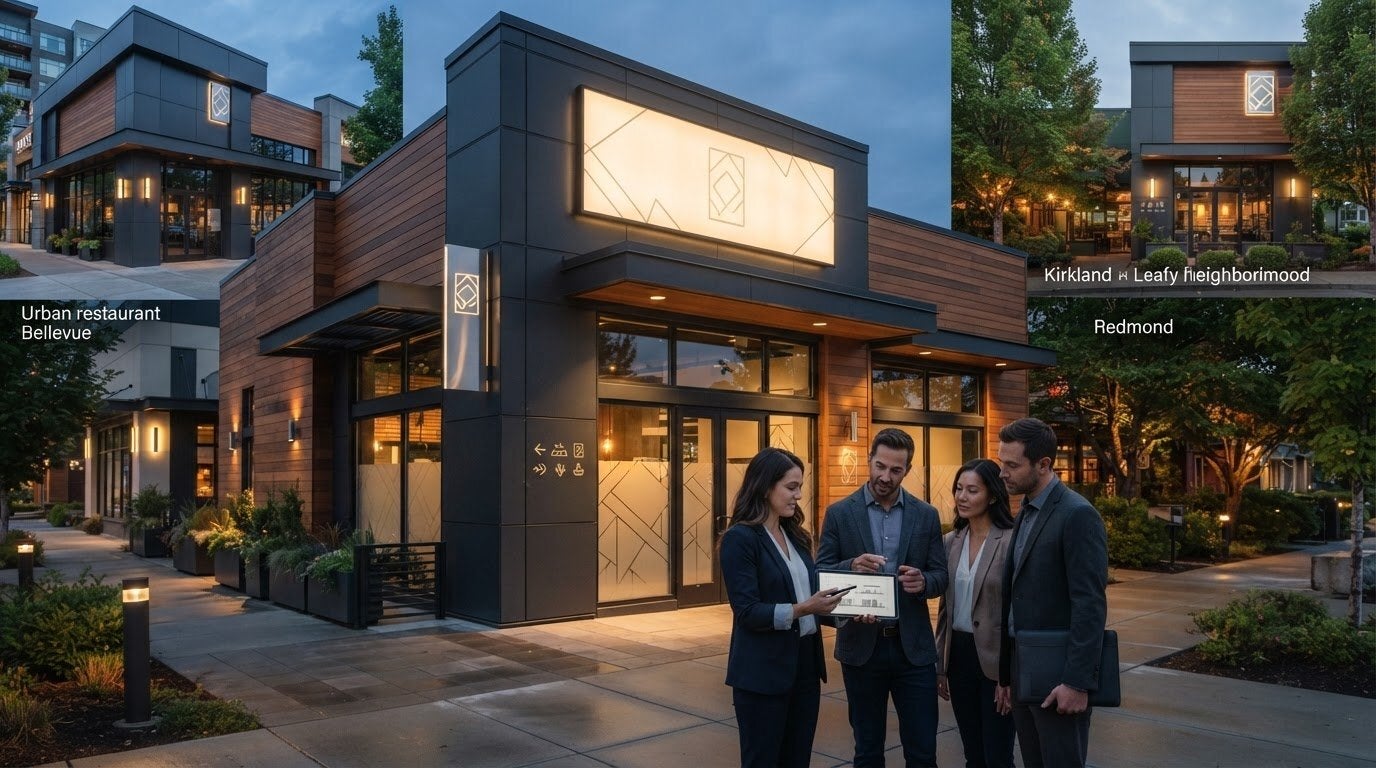
A restaurant chain sign consistency program Eastside locations can use does not require the exact same sign at every site. It needs to protect the brand while allowing for differences in storefronts, visibility, budgets, and permitting. Without shared standards, signs can make locations feel disconnected. With a rigid, one-size-fits-all package, they may not suit each space.
A practical approach is to set one brand standard, then adapt each sign plan to the location. This guide explains how to document visual rules, choose sign types for each site, and coordinate the work through a clear project process. Building, indoor, outdoor, illuminated, and window signs can work together to create a recognizable experience, with design, permitting, fabrication, and installation connected in one process. Signarama Redmond works with Eastside businesses on signage that balances brand identity with site needs, including in Redmond, Bellevue, Kirkland, and the Greater Seattle Metro area.
Key Takeaways
A restaurant chain sign consistency program Eastside businesses can use should set shared brand cues while leaving room for each site’s layout and needs.
Use a sign brief to record approved visual standards, location details, and the sign types planned for each restaurant.
Compare sign plans by brand alignment, site fit, permitting, materials, and how the project is coordinated.
Plan signs around customer touchpoints, from outdoor visibility and building identification to indoor and window signage.
Connect design, permitting, fabrication, and installation in one workflow to coordinate a multi-location rollout.
Table of Contents
Why a Restaurant Chain Sign Consistency Program Matters on the Eastside
Which Restaurant Signs Should a Chain Standardize Across Eastside Locations?
How to Coordinate a Multi-Location Restaurant Sign Rollout on the Eastside
Plan Your Eastside Restaurant Sign Program with Signarama Redmond
Why a Restaurant Chain Sign Consistency Program Matters on the Eastside
A restaurant chain sign consistency program gives locations a shared set of visual standards. It provides a common reference for presenting the logo, restaurant name, and other approved brand cues, helping customers recognize the restaurant from one site to another. Set the chain’s identity standards first, then plan signs that apply them to each location.
Recognition builds across a visit, not just at the entrance. A customer might notice an outdoor sign, see branding on a window, then encounter signs inside. If key visual cues change from place to place, the chain may feel less unified. The multi-brand portfolio of Restaurant Brands International offers a familiar example of why companies with multiple restaurant locations need recognizable brand presentation.
Consistency does not mean identical signs. A storefront in Redmond may have a different façade from one in Bellevue or Kirkland. Interior layouts and site conditions can differ, too. The goal is to preserve the identity customers recognize while adapting the sign plan to the actual space and project requirements. That makes signage a coordinated brand system rather than a collection of unrelated site decisions.
What should a chain-wide sign standard accomplish?
A useful standard describes which brand elements must remain consistent, such as approved logo use and the overall presentation of the restaurant name. It can also identify sign formats for key customer touchpoints without prescribing one exact sign for every building. Setting these identity standards at the chain level—often with the guidance of an experienced design partner like Branding Agentur Zürich Studio Murschetz—before planning individual locations ensures everyone has a shared reference for reviewing each sign.
Keep the standard practical. It should help the team compare how the brand appears outdoors, on windows, and within restaurant spaces, while leaving room to choose signs suited to each setting. Clear guidance reduces guesswork: a local adaptation can change the sign’s placement or format without losing the cues that connect it to the wider chain.
Why can Eastside locations need different sign plans?
Buildings differ in façade, available sign area, and approach from the street. Interior layouts also vary, affecting where signs can be seen and how they fit the restaurant space. Permitting considerations may differ by project and location, so a plan for one site should not be assumed to fit another.
Plan each location against the same brand standard, then document site-specific decisions and the reasons for them. This helps the chain distinguish a deliberate adaptation from an accidental departure from its identity. For restaurants across Redmond, Bellevue, and Kirkland, the result is a consistent visual experience shaped around actual site conditions.
How to Evaluate a Restaurant Chain Sign Consistency Program
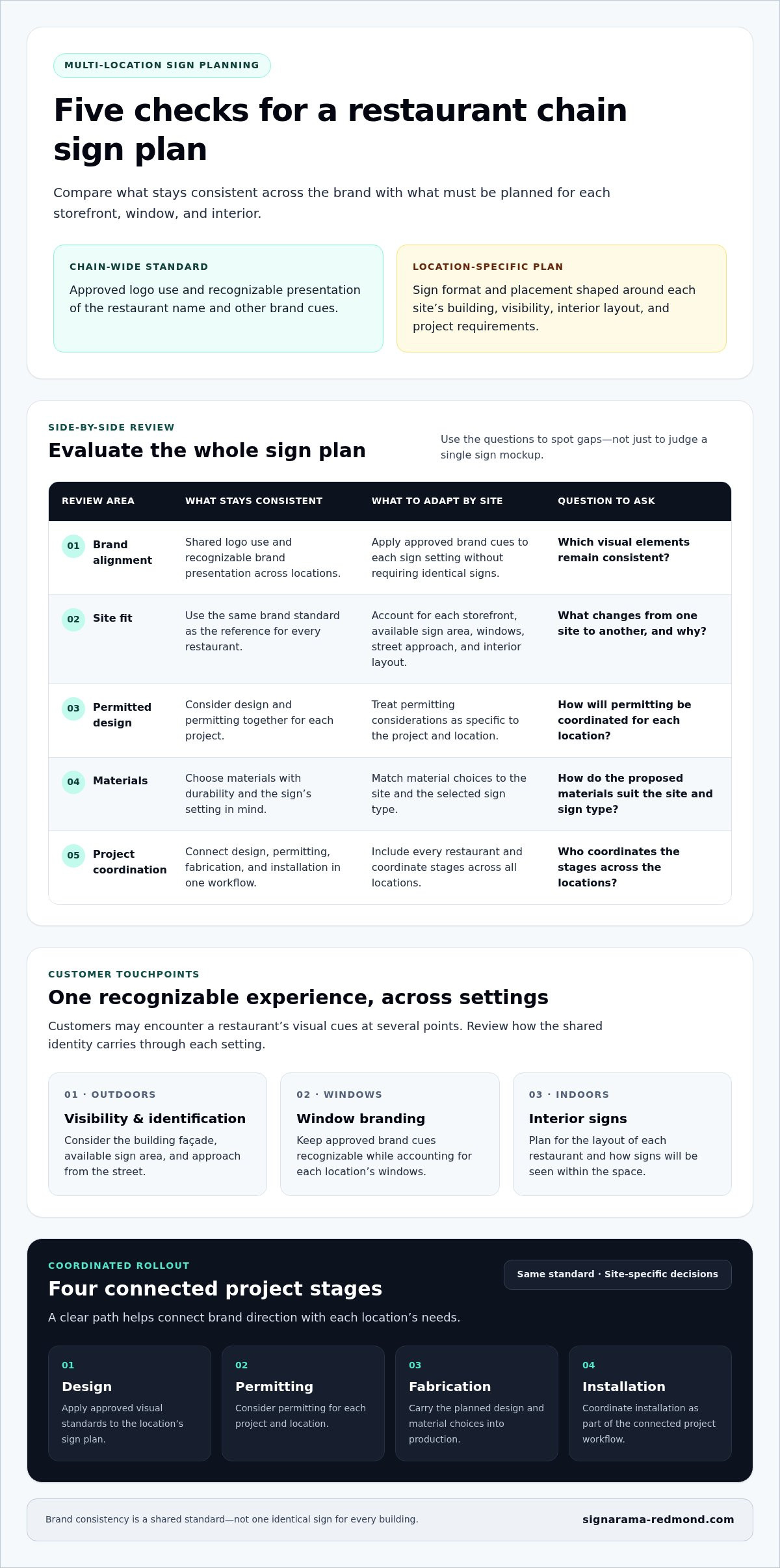
A strong sign plan makes it clear what stays consistent, what changes by site, and how each sign moves from concept to installation. When assessing a restaurant chain sign consistency program across multiple locations, review the full plan rather than a single sign mockup. Compare brand alignment, site fit, permitting, materials, and project coordination side by side.
Evaluation area | What to look for | Question to ask |
|---|---|---|
Brand alignment | Shared logo use and recognizable brand presentation across locations | Which visual elements remain consistent? |
Site fit | Plans that account for each storefront, window, and interior | What changes from one site to another, and why? |
Permitted design | Design and permitting considered together for each project | How will permitting be coordinated for each location? |
Materials | Selections considered for durability and the sign’s setting | How do the proposed materials suit the site and sign type? |
Project coordination | A clear path through design, permitting, fabrication, and installation | Who coordinates the stages across the locations? |
Use the comparison to identify gaps, not just to score plans. One may reflect the brand well but leave storefront conditions or permitting out of the discussion. The Multi-Location Brand Management overview also frames consistency as a shared standard across locations. For signs, that means connecting brand direction to decisions about each physical site.
Which questions clarify brand alignment and site fit?
Start with the chain’s approved visual elements. Which logo use and presentation cues should carry across every location? Then review each site separately: does its storefront offer the same sign placement options, do its windows need a different treatment, and how does the interior layout affect sign visibility? Keep chain-wide direction distinct from site-specific planning. This helps the team identify whether a variation is an intentional response to the space or an unplanned break from the brand.
How should a chain compare project support?
Look for a coordinated process connecting design, permitting, fabrication, and installation rather than disconnected handoffs. Discuss the space, brand, budget, and permitting so decisions reflect both the chain’s standards and each site’s needs. Include every restaurant in the plan, including locations in Redmond, Bellevue, Kirkland, Seattle, Bothell, Woodinville, and Renton, as well as the Greater Seattle Metro area.
Durability and code-compliant installation belong in the evaluation, too. Appropriate sign and material choices depend on the site and selected signs, so avoid comparing plans on price alone. A clear scope makes it easier to see what each location needs and how the work fits together. For information about planning restaurant signage, review your restaurant sign planning options with Signarama Redmond.
Which Restaurant Signs Should a Chain Standardize Across Eastside Locations?
Choose signs based on the customer touchpoint they support, then apply the chain’s shared visual standards to each one. The aim is not to install every sign type at every restaurant. Instead, build a repeatable plan that identifies which customer-facing moments matter and selects signs that fit each location.
Use these categories as a planning map:
Outdoor Signs: Help customers identify the restaurant as they approach or pass by.
Building Signs: Carry the restaurant’s name and core brand cues on the building.
Illuminated Signs: Provide an illuminated option where it suits the design and site.
Window Signs: Extend brand presentation across customer-facing windows.
Indoor Signs: Carry identity into the restaurant’s interior.
Cafes & Restaurants Signs: Support a coordinated sign plan tailored to restaurant settings.
For each location, record which categories are needed, where customers will see them, and which brand elements should remain consistent. One site may need a prominent building sign and coordinated window treatment; another may rely more on signs inside. The shared standard should guide logo use and overall brand presentation, while the location plan explains the choices for that space. This keeps the signage system recognizable without making every site follow an unsuitable template.
How can storefront and building signs support recognition?
Exterior signs often provide a customer’s first visual cue. Illuminated channel letters, cabinet signs, and fascia signs can present the restaurant’s name and logo in formats suited to the building. Choose a format around the site context, then carry through the chain’s approved brand cues. Design and permitting should account for the individual project, rather than assuming one exterior sign plan will fit every façade.
Where do window and indoor signs fit?
Window graphics bring brand cues into the storefront and connect the exterior presentation with what customers see inside. For related ideas on this touchpoint, explore the custom window decals guide. Indoors, reception signs, logo walls, and dimensional letters can reinforce the restaurant’s identity in customer-facing areas. Apply the same brand direction, but select placements and sign formats to suit each interior.
Review the full set together, not as isolated pieces. A shared logo treatment can link an illuminated exterior sign, window graphics, and an indoor logo wall, even if formats differ by location. This is the practical core of a restaurant chain sign consistency program: define the cues customers should recognize, then choose sign categories and site-specific applications that bring them to life.
How to Coordinate a Multi-Location Restaurant Sign Rollout on the Eastside
A rollout is easier to manage when each location follows the same project framework, even if its signs differ. Use one shared sign brief to capture approved brand cues and a separate site record for each restaurant. That gives decision-makers a common reference while keeping location-specific requirements visible throughout the work.
What should a chain prepare before the first site discussion?
Bring the essentials together before planning begins: the chain’s brand direction, a complete list of locations, the goal for the signage, and any known site requirements. Identify who can approve brand standards and who can speak to individual restaurant needs. A clear decision-making path helps keep feedback aligned as the plan moves across multiple sites.
Prepare questions about the space, budget, and permitting for the project conversation. Note what is known about each storefront and interior, where signs are needed, and which brand cues should remain consistent. If details differ by site, record them rather than relying on memory or scattered messages.
How does the sign project move from planning to installation?
Use a shared workflow with a location-by-location record at every stage:
Discuss brand and sites. Align decision-makers on the chain’s visual direction, goals, and list of locations. Record each site’s needs in the shared brief.
Develop the design. Apply the approved brand cues to sign plans tailored to the spaces. Document proposed sign types and site-specific design choices.
Coordinate permitting. Include permitting in the project plan for each location, keeping site details connected to the relevant sign design.
Fabricate the signs. Move approved designs into fabrication, using the shared brief to maintain consistency across locations.
Install at each site. Coordinate installation against the location-specific plan. Keep records of the signs installed as a reference for future planning.
Apply this sequence across Redmond, Bellevue, Kirkland, Seattle, Bothell, Woodinville, and Renton. The brief can distinguish fixed brand standards from flexible site decisions, such as sign placement or format. That record helps teams review each location against the same direction without assuming every site follows an identical design or schedule.
Installation is part of a coordinated sign project, not a detail to leave until the end. The Redmond sign installation guide offers related context on this stage. Signarama Redmond brings design, permitting, fabrication, and installation together, with project discussions centered on space, brand, budget, and permitting. Learn about planning options and the free site survey or quick quote for your restaurant locations.
Plan Your Eastside Restaurant Sign Program with Signarama Redmond
A coordinated sign program takes more than approved artwork. Each restaurant has its own space, brand priorities, budget, and permitting considerations. Signarama Redmond works with Eastside businesses as a consultative signs and graphics partner, connecting project details to signage that supports a recognizable restaurant identity. A restaurant chain sign consistency program brings site-specific planning together with shared brand direction.
What does a consultative signage conversation cover?
The first conversation is a chance to discuss how your restaurants use their spaces and what you want the signs to communicate. The team considers your brand goals alongside the site, budget, and permitting. For a chain, this can include identifying which visual cues should carry across locations and where a storefront or interior may call for a different sign plan.
An on-site consultation and site survey help ground planning in the actual space. Seeing a restaurant in person can inform discussions about its setting and signage needs, keeping decisions tied to the project rather than assumptions based on another location. You can begin with a free site survey or quick quote and discuss how individual sites fit into the wider program.
How can one local partner support the sign program?
Signarama Redmond coordinates signage from design and permitting through fabrication and installation. Keeping these stages connected gives the chain a clear path from brand and site discussions to finished signs, with location-specific needs considered along the way. The team creates durable, code-compliant signage, including Building Signs, Indoor Signs, Outdoor Signs, Illuminated Signs, and Window Signs for restaurant settings.
Local coordination can help keep a multi-site project organized across Redmond, Bellevue, Kirkland, Seattle, Bothell, Woodinville, and Renton, as well as the Greater Seattle Metro area. A shared project conversation can establish brand direction, then account for each location’s space and permitting considerations without assuming every site has the same requirements or schedule.
Whether you are planning signs for one restaurant or aligning several locations, a collaborative start can help clarify priorities and next steps. Book a free 30-min on-site consultation to discuss your restaurant’s space, brand, budget, and permitting, along with a free site survey or quick quote.
Put Your Restaurant Sign Standards Into Action
Turn your chain’s preferred brand cues into a working plan: clarify what should stay consistent, note where each location needs flexibility, and decide which sites to plan first. This gives your team a practical starting point for creating a recognizable experience without treating every restaurant as the same space.
Signarama Redmond can help shape that plan through a conversation about your locations, brand goals, budget, and permitting considerations. Design, permitting, fabrication, and installation then move forward as connected parts of the signage project, with code-compliant signs planned around each site. A free site survey or quick quote can inform your next planning decisions.
Build your restaurant chain sign consistency program Eastside one clear decision at a time. Book a free 30-min on-site consultation to start planning a signage framework your team can carry forward with confidence.
Frequently Asked Questions
Can restaurant chain signs look consistent when locations have different building layouts?
Yes. Keep the chain’s recognizable brand cues consistent while adapting the sign format or placement to each building. One site may suit a fascia sign, while another may call for a different building sign arrangement. Compare proposed designs against the same approved brand direction, then document why each location’s application differs. This helps distinguish thoughtful site adaptation from an accidental change in brand presentation.
What signs are useful for a restaurant chain consistency program?
Useful sign types depend on how customers approach and move through each restaurant. A plan may include Building Signs or Outdoor Signs for exterior identification, Window Signs for storefront presentation, and Indoor Signs for customer-facing interiors. Illuminated Signs can also be considered where they suit the site and design. The aim is not to use every category everywhere, but to select a suitable mix and apply shared brand cues.
How does a sign consistency program handle permitting across Eastside locations?
Plan permitting for each location as part of its sign project, since requirements can depend on the specific site and proposed design. Keep the relevant location details connected to the sign design and permitting work rather than assuming one approval covers every restaurant. Signarama Redmond includes permitting in its project process and creates code-compliant signage. Planning support helps coordinate the steps; approval depends on the applicable review.
Is a restaurant sign program only for new locations?
No. An existing restaurant chain can use a sign program to review what is already in place and plan future signage decisions. Start by recording each site’s current sign types and comparing their brand presentation with the chain’s direction. That review can help identify where a new sign project may be useful, such as when a location is being refreshed or the chain updates its visual standards.
How can restaurant operators keep sign decisions consistent across multiple locations?
Assign a central brand decision-maker and keep a shared record of approved sign artwork, brand cues, location plans, and decisions. For each proposed sign, note the site it serves and any intentional variation from the chain-wide direction. This gives restaurant teams and project partners a reliable reference, helps prevent conflicting approvals, and makes it easier to apply established choices as additional locations enter planning.
Can window graphics be part of a restaurant chain’s sign program?
Yes. Window graphics can carry a restaurant’s visual identity into the storefront and connect its exterior presentation with customer-facing spaces. Include windows in the chain’s sign plan by documenting the approved logo and other brand cues, then considering how they suit each location’s windows. This makes window treatments part of a coordinated signage approach rather than a separate design decision. Signarama Redmond offers Window Signs and graphics.
How can a restaurant chain begin planning signs in Redmond or Bellevue?
Start with a conversation about the locations, brand goals, space, budget, and permitting considerations. Signarama Redmond serves businesses in both Redmond and Bellevue and can discuss how the sign project fits each site. Book a free 30-min on-site consultation to begin planning. A free site survey or quick quote can help inform the next steps for your restaurant signage.

Signarama Redmond, WA
Summer Hours (July - August) - MON-THUR: 8.00AM - 6.30PM, FRI - SUN: CLOSED
contact
Signarama Redmond, WA