Your Consultative Signs and Graphics Partner for Eastside Businesses


Red Flags to Watch for When Hiring a Sign Installer in 2026
Sep 21, 2026 by Signarama Redmond
A cheap sign installation is often the most expensive mistake a Redmond business owner can make. You’ve worked hard to build your brand, but one structural failure or a permit rejection from the City of Redmond can turn your professional image into a legal liability overnight. It's frustrating when hidden costs surface mid-project or when a sign begins to sag because of poor mounting. You deserve a partner who respects your budget and your safety. Identifying the specific red flags to watch for when hiring a sign installer is the first step toward a stress-free experience.
We understand that you want a durable, safe sign that meets all local codes without any legal surprises. This article will help you spot unreliable contractors before you sign a contract. We'll cover why missing L&I bond proof or a lack of an (04) sign specialty electrical license are immediate deal-breakers in 2026. You'll learn how to evaluate quotes that seem too good to be true and ensure your installer follows Washington’s strict four-foot fall protection standards. By the end, you'll have the tools to choose a reliable collaborator who guarantees long-term structural integrity and compliance.
Key Takeaways
Learn why "too-good-to-be-true" pricing often signals hidden exclusions or omitted permit fees that can double your final project costs.
Spot the critical red flags to watch for when hiring a sign installer, such as a lack of active Washington L&I bonding or a refusal to provide a written installation timeline.
Understand the importance of verifying (04) sign specialty electrical certifications to protect your property from fire hazards and costly code violations.
Find out how to vet a contractor’s actual local portfolio to ensure they have navigated Redmond’s specific zoning and master sign programs before.
Discover how an all-in-one partner eliminates vendor finger-pointing by managing everything from initial permit submittals to final structural mounting.
Table of Contents
The High Stakes of Sign Installation in Redmond
Many business owners view installation as a simple final step. In reality, it's the most critical phase of your branding project. A beautiful design means nothing if the physical execution fails. This is where you'll find the most critical red flags to watch for when hiring a sign installer. If a contractor treats the mounting process as an afterthought, your business faces significant risks. These range from immediate structural failures to long-term legal fines that can drain your marketing budget. Your sign is your silent salesperson; it shouldn't be a liability.
In the Pacific Northwest, we deal with constant moisture and shifting wind loads. A commercial signage project that isn't engineered for Redmond's specific environment won't just look bad; it can become a physical hazard. Generic contractors often lack the specialized tools and knowledge required for complex sign mounting. They might treat a heavy channel letter set like a standard piece of hardware, ignoring the unique stress points of a building's exterior. Choosing a specialist means prioritizing durability over a quick, cheap fix.
Understanding the Liability of Improper Mounting
When a sign isn't rated for local wind speeds, the results are often disastrous. High winds in the Sammamish Valley can put immense pressure on large outdoor displays. If your installer uses the wrong fasteners for materials like EIFS (Exterior Insulation and Finish Systems) or masonry, they risk more than just a falling sign. Improper penetrations often lead to water intrusion, causing rot and mold inside your walls. Most importantly, uncertified work can void your building's facade warranty, leaving you responsible for thousands of dollars in repairs. It's a high price to pay for an installer's lack of expertise.
Why Local Redmond Expertise Matters
The City of Redmond enforces strict aesthetic and safety requirements under Redmond Zoning Code 21.44. For example, monument signs are generally capped at 10 feet in height. An installer who doesn't conduct a thorough site survey before manufacturing begins is one of the biggest red flags to watch for when hiring a sign installer. Local expertise ensures your sign isn't "dead on arrival" because it violates a Master Sign Program or blocks a public right-of-way. Working with a partner who understands these nuances prevents the stress of forced removals and city-imposed fines. We prioritize this collaborative approach to keep your project compliant and your brand's reputation intact.
Pricing and Timeline Red Flags: When 'Cheap' is a Warning
Budgeting for new storefront branding is a balancing act, but choosing the lowest bidder often leads to a cascade of expensive problems. One of the primary red flags to watch for when hiring a sign installer is a quote that falls significantly below the market average. While a low price is tempting, it usually signals that the contractor is omitting essential project components. If a quote lacks itemized details, you're likely looking at a bare-bones service that leaves you responsible for the most difficult parts of the job.
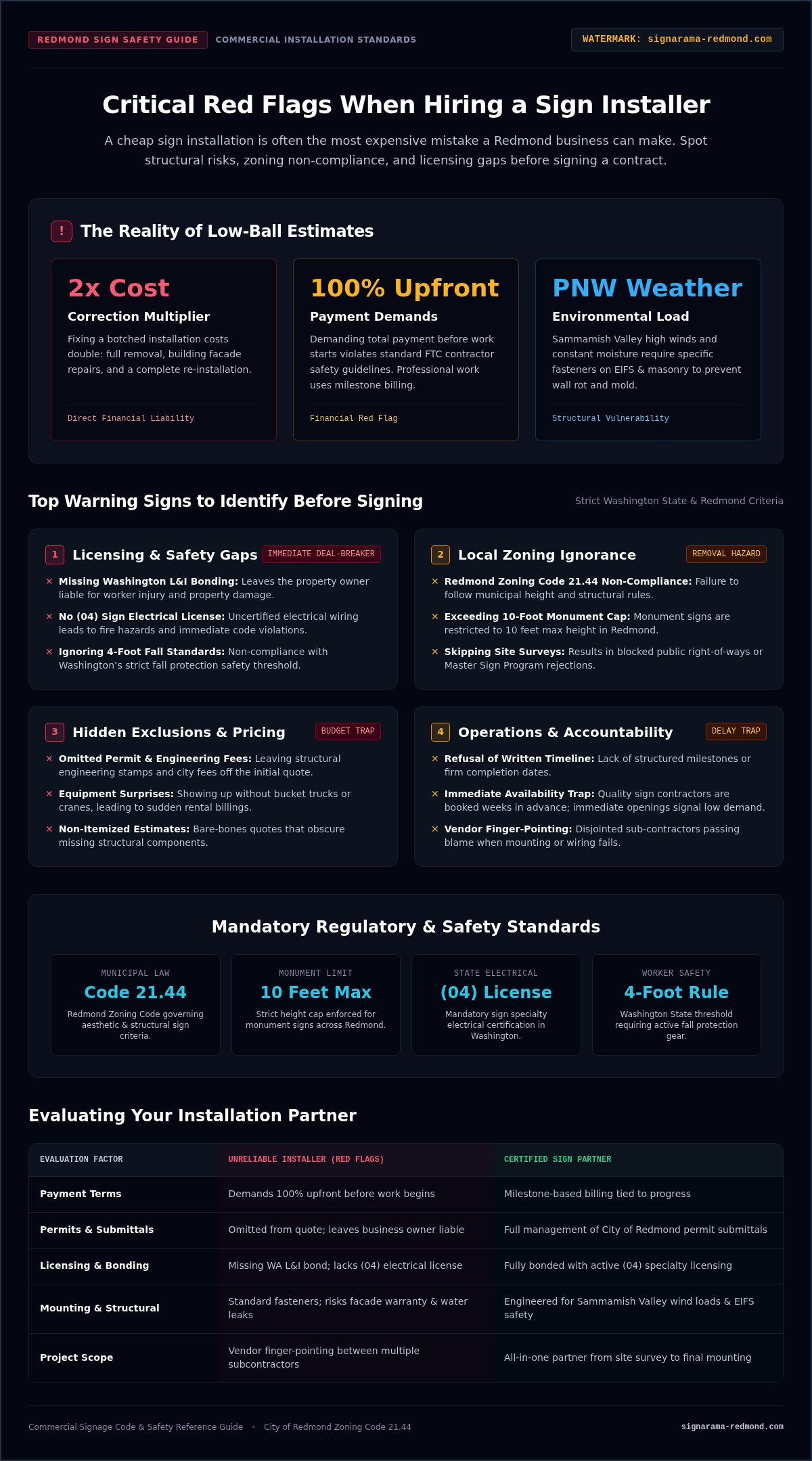
Professional installers operate with transparency. They provide clear payment terms and rarely demand 100% payment before work begins. Demanding full payment upfront is a major violation of standard business practices and aligns with many FTC contractor red flags. A reliable partner works on a milestone basis. This ensures you're satisfied with the progress before the final invoice arrives. Vague payment terms are often a sign of financial instability or a lack of professional process.
The Hidden Costs of Low-Ball Estimates
Low estimates often hide the logistical realities of a safe installation. Ask yourself: does the quote include the necessary equipment like bucket trucks or cranes? In many cases, cheap installers show up without the right tools. This leads to unsafe workarounds or surprise rental fees added to your bill later. You should also verify if permit acquisition fees and structural engineering stamps are included. If these aren't clearly listed, you might be the one facing a code violation from the City of Redmond. Fixing a botched installation usually costs twice as much as doing it right the first time. It requires removal, repair of the building facade, and a complete re-install.
Timeline Realism in the Sign Industry
Quality work takes time. A reputable sign company is usually booked several weeks out because their expertise is in demand. Falling into the immediate availability trap often means hiring someone who lacks a steady stream of clients or cuts corners to finish quickly. Custom fabrication and permit approvals have standard lead times that can't be bypassed. An installer who over-promises on speed is likely planning to skip the permitting process or rush the structural mounting. A process-driven partner will provide a realistic schedule with clear milestone updates. This keeps your project on track without compromising safety. If you want to avoid these common pitfalls, consider partnering with a local expert who prioritizes transparent project management from day one.
Licensing, Permits, and Safety Standards
Hiring an installer involves more than checking their past work; it requires verifying their legal standing. A sign is a heavy structural addition to your property, often involving electrical components and high-elevation work. If your contractor lacks the proper credentials, you aren't just risking a poor install. You're assuming total liability for any accidents or code violations that occur on your site. Understanding the regulatory requirements in Washington is the best way to identify red flags to watch for when hiring a sign installer.
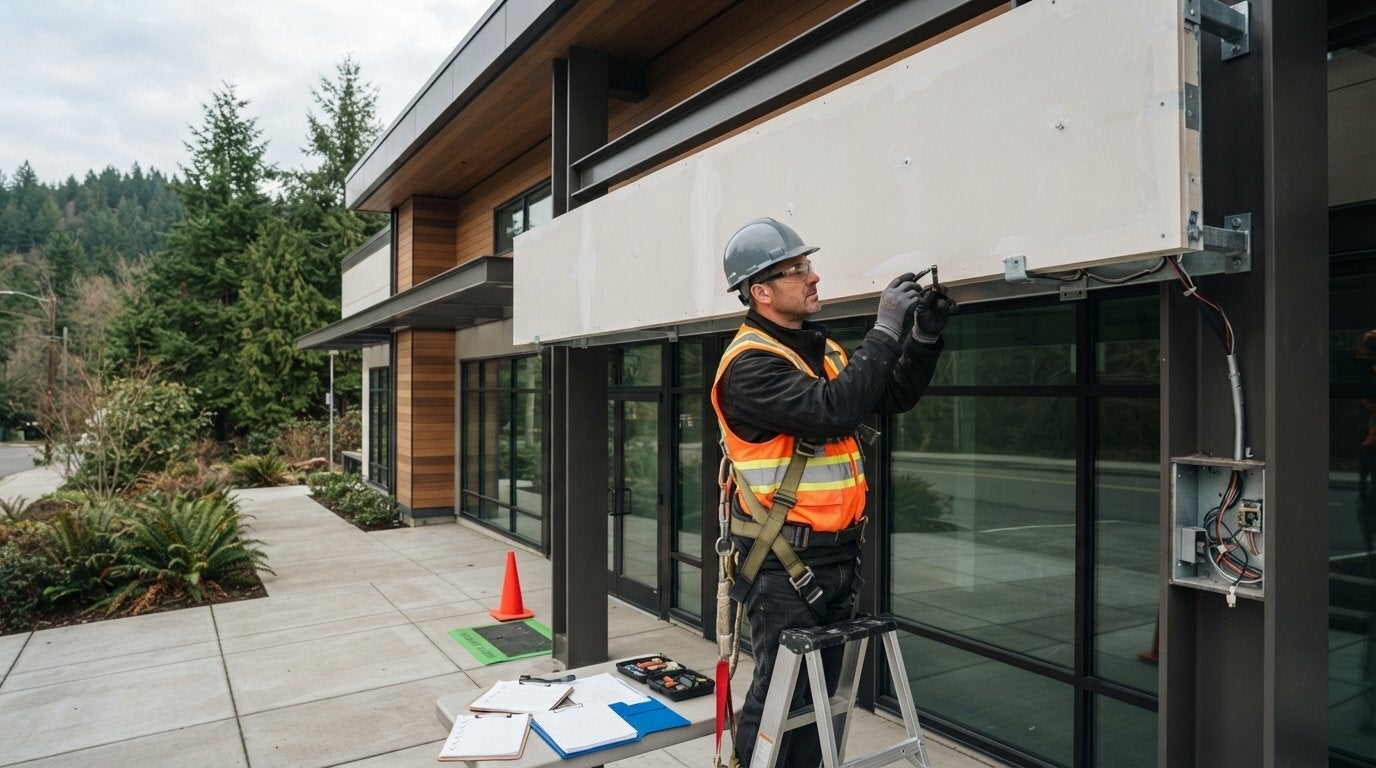
Safety standards are particularly strict in our region. For example, Washington’s Department of Labor & Industries (L&I) enforces a four-foot fall protection trigger height. This is significantly more stringent than the federal six-foot standard. An installer who operates without a written, site-specific safety plan for heights over 10 feet is putting your business at risk of a stop-work order or a massive fine. Professional teams prioritize these safety protocols to protect their workers and your reputation as a responsible business owner.
Verifying Contractor Licenses in Washington State
You should always check an installer’s status through the WA L&I website before signing a contract. In Washington, specialty contractors must carry a continuous surety bond of at least $15,000. If an installer provides outdated bond information or lacks a Unified Business Identifier (UBI), walk away. Handyman status is insufficient for commercial sign installation. Most importantly, any illuminated sign requires an installer with an (04) Sign Specialty Electrician certification. This ensures the wiring meets UL 48 standards and won't create a fire hazard that could void your property insurance.
The Permitting Red Flag
One of the most common red flags to watch for when hiring a sign installer is the claim that "no permit is needed" for your exterior sign. Under Redmond Zoning Code 21.44, almost all permanent exterior signs require a permit before fabrication begins. If an installer asks you to pull the permit yourself, it's often because they aren't licensed to work within the city. Signs installed without approval are subject to city confiscation and retrieval fees. Our team handles the professional sign installation Redmond businesses trust by managing every permit application, site plan, and engineering drawing for you. This comprehensive approach ensures your sign stays up and your business stays compliant.
Finally, verify that your installer carries Washington-specific workers' compensation. Because Washington is a monopolistic state, out-of-state private insurance doesn't cover local labor. Ensure your partner is fully covered through the L&I State Fund to avoid third-party liability claims if an injury occurs on your property.
Portfolio and Communication Gaps to Avoid
An impressive portfolio isn't always what it seems. One of the subtle red flags to watch for when hiring a sign installer is a gallery filled with generic, high-gloss images that lack local context. If you can't see the installer's work on familiar streets in Redmond or Bellevue, they might be using stock photography or brokering the job to someone else. You need to see evidence of real-world results in our specific environment. A professional partner should be proud to point out their local handiwork and provide references from nearby business owners who have seen their signs endure the Pacific Northwest seasons.
Communication during the bidding phase is a crystal ball for the rest of your project. If an installer is slow to respond to technical questions now, imagine the delays you'll face once they have your deposit. This "ghosting" behavior suggests a lack of organized management and accountability. You want a partner who treats your project as a collaborative partnership rather than a one-time transaction. Clear, brisk communication from the start is the hallmark of a dependable expert who values your business success.
How to Vet a Signage Portfolio
Don't just glance at pictures. Look for projects that match the scale and complexity of your own needs. If you require a complex illuminated monument sign, a portfolio consisting only of vinyl window decals won't suffice. Ask for specific addresses of local installs so you can visit them in person. Seeing how a sign has aged after three years of Washington rain tells you more than a day-one photo ever could. Look for consistency across different types of work, whether they are installing high-end office signs Redmond tech companies rely on or heavy-duty storefront channel letters.
The Collaborative Partnership Test
A competent collaborator won't just give you a price; they'll ask the right questions. Do they inquire about your building's substrate, like EIFS or brick? Do they ask where the primary power access is located? If they don't ask these technical questions early, they'll likely hit you with "unforeseen" costs later. Proactive installers also suggest materials that stand up to our climate, such as UV-resistant finishes or specific drainage features for illuminated letters. This proactive approach distinguishes a true guide from a mere vendor. If you're looking for a team that prioritizes this level of detail, consult with our local experts today to see our real-world Redmond portfolio.
The Signarama Redmond Approach: Installation Without the Risk
Choosing an installer shouldn't feel like a gamble. We've discussed the red flags to watch for when hiring a sign installer, but finding a partner who actually follows through is the real challenge. At Signarama Redmond, we've built our reputation on being a dependable guide for local business owners. We don't just sell signs and graphics. We manage the entire lifecycle of your project to ensure every detail meets our high standards for quality, compliance, and safety. This structured management removes the uncertainty that often plagues commercial branding projects.
A Comprehensive, All-in-One Solution
Our "concept-to-completion" model is the definitive solution to the fragmented vendor problem. When one company designs the sign and another installs it, finger-pointing is inevitable when things go wrong. We eliminate this risk by owning every stage of the process. This holistic approach ensures that the outdoor sign materials we use are perfectly suited for your specific mounting surface and our rainy climate. By keeping design, permitting, and installation under one roof, we provide a streamlined experience that prioritizes your business growth.
Why settle for a mere vendor when you can have a collaborative partner? Our team understands that a sign is a long-term asset. That's why we focus on durability and structural integrity. We follow all Washington L&I safety standards, including strict fall protection protocols for every height-based project. You can rest easy knowing that your installation is being handled by certified professionals who carry the necessary (04) sign specialty electrical licenses. We've navigated the specific code requirements of Redmond Town Center and local tech campuses many times, allowing us to anticipate hurdles before they become expensive delays.
Ready for a Professional Sign Experience?
Every great installation begins with a comprehensive site survey. We don't rely on guesswork or stock measurements. Our team visits your location to verify building substrates, electrical access points, and sightlines. During your initial consultation, we'll discuss your vision and provide a clear, documented timeline for your project. You'll receive milestone updates that remove the "ghosting" risk common with less professional contractors. We believe in transparency and professional execution from the first discussion to the final delivery.
Our proactive management style is why so many local businesses view us as a collaborator rather than just another vendor. We handle all the bureaucracy for you, from initial permit submittals to final inspections. We prioritize your success by ensuring your sign stays up and remains compliant for years to come. Schedule your professional sign consultation today to start your project with a partner you can trust.
Secure Your Brand’s Future with a Trusted Local Partner
Your sign is a significant investment in your business’s visibility and safety. By keeping a sharp eye out for the red flags to watch for when hiring a sign installer, you protect yourself from structural failures and city-imposed fines. Remember that a licensed and insured professional will always prioritize transparency, from permit acquisition to the final bolt. Don't let a low-ball quote or a lack of local references compromise your brand’s reputation in the Greater Eastside area.
We believe in a collaborative partnership that removes the stress of signage projects. Our comprehensive project management ensures every sign meets Redmond’s unique code landscape while prioritizing long-term durability. You deserve a partner who owns the entire lifecycle of the project, giving you peace of mind and a professional finish that stands out. Our local Redmond expertise means we understand the specific weather and regulatory challenges your business faces every day.
Ready to elevate your storefront? Work with Redmond's trusted sign installation experts and experience the difference that professional execution makes. We're here to help your business shine safely and legally.
Frequently Asked Questions
Do I really need a permit for a sign in Redmond?
Yes, almost all permanent exterior signs require a permit under Redmond Zoning Code 21.44. This includes wall signs, monument signs, and illuminated graphics. Installing without one is a major risk and can lead to city confiscation. The process involves submitting architectural elevation drawings and site plans to the City of Redmond Planning and Development Services to ensure compliance with local safety and aesthetic standards.
What insurance should a sign installer have?
A professional installer must carry general liability insurance and Washington-specific workers' compensation. In Washington, contractors are required to have at least $200,000 in public liability and $50,000 in property damage insurance, though most commercial property managers in Redmond require coverage between $1,000,000 and $2,000,000. Always verify their status through the Department of Labor and Industries (L&I) to ensure your business isn't liable for third-party injuries or property damage.
Why is a site survey necessary before installation?
A site survey prevents "dead on arrival" installations by verifying building substrates, power access, and exact measurements. It's one of the primary red flags to watch for when hiring a sign installer if they skip this step. Without a survey, the team might arrive with the wrong fasteners for your brick veneer or find that the sign blocks a public right-of-way. This proactive step ensures the final mounting is structural and safe.
Can a regular electrician install my illuminated sign?
While a general electrician has broad skills, Washington law requires an (04) Sign Specialty Electrician or an (01) General Journey Level Electrician for illuminated signage. These specialists understand the unique UL 48 standards required for commercial signs. Using an unlicensed individual for electrical work is a safety hazard and often voids your commercial property insurance. Professional partners handle these licensed disconnects and connections as part of a comprehensive project lifecycle.
What happens if my sign installer isn't licensed?
Hiring an unlicensed installer is a gross misdemeanor in Washington that carries civil fines up to $10,000 per violation. This lack of credentials is one of the biggest red flags to watch for when hiring a sign installer. Beyond legal penalties, an unlicensed contractor forfeits their right to file a mechanic's lien. For the business owner, it means assuming total liability for structural failures or accidents while risking immediate removal by city code enforcement.
How can I tell if an installer's portfolio is real?
Ask for the specific addresses of their local installations in the Greater Eastside area. A real portfolio will feature consistent work across Redmond and Bellevue rather than generic stock photos. You should visit these sites to see how the materials have weathered the Pacific Northwest rain. If an installer is hesitant to provide local references or specific project details, it's a clear sign that their claimed experience might be fabricated.
What is a UL listing and why does my sign need one?
A UL listing indicates that a sign has been tested and certified by Underwriters Laboratories for safety. In King County, electrical inspectors strictly require signs to bear recognized testing laboratory marks like the UL 48 listing. This certification proves the internal wiring and LED modules won't create fire hazards. Installing uncertified illuminated graphics is illegal and could lead to an immediate stop-work order during your final city inspection.
How long does a typical sign installation take in Redmond?
The physical installation usually takes four to eight hours, but the entire process from design to final mounting takes several weeks. This timeline includes the permit approval phase, which varies based on the City of Redmond’s current workload. Professional teams provide documented timelines and milestone updates so you aren't left guessing. Beware of any installer who promises a 48-hour turnaround, as they're likely skipping the mandatory permitting and engineering steps.


Signarama Redmond, WA
Summer Hours (July - August) - MON-THUR: 8.00AM - 6.30PM, FRI - SUN: CLOSED
contact
Signarama Redmond, WA