Your Consultative Signs and Graphics Partner for Eastside Businesses


Partial Car Wrap Cost vs Full Wrap: Which Fits Your Budget
Nov 11, 2026 by Signarama Redmond
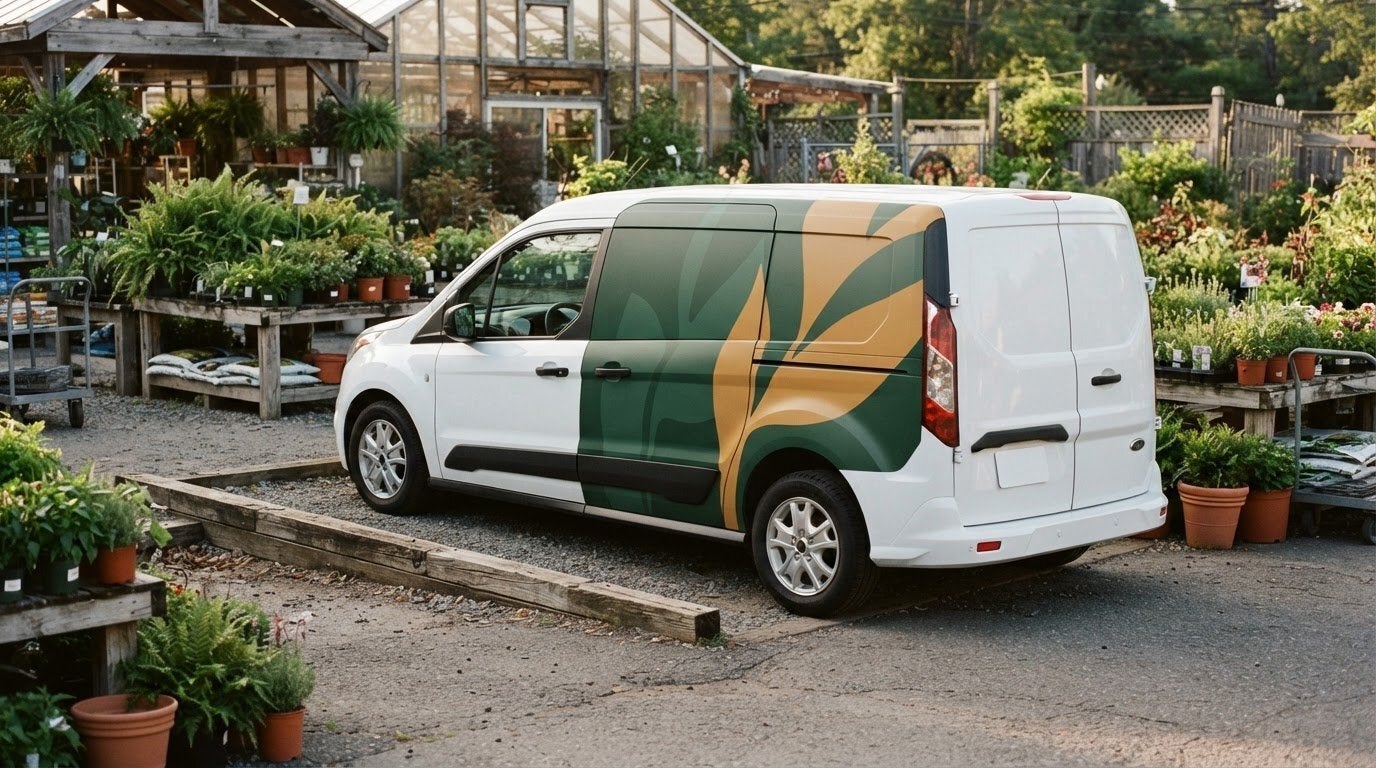
A full wrap isn't automatically the better value. Knowing when to choose a partial wrap over a full wrap for budget reasons comes down to how much coverage your design needs and whether the vehicle’s existing color works with it. A partial wrap can create a strong branded look while using less material and requiring less installation labor.
Broader coverage can make a bigger visual impact, but a well-planned partial wrap can still look cohesive and professional. It suits businesses that want clear branding on selected areas, such as doors or rear panels, without covering nearly every visible painted surface.
Coverage, materials, and installation affect a wrap’s cost and appearance. A partial wrap can fit a budget when selected panels are enough to carry the message; consider a full wrap when the design needs a larger, continuous canvas. The right choice depends on the vehicle, the design, and your priorities.
Key Takeaways
- Choose coverage based on the design and the vehicle’s existing color, not just the amount of vinyl.
- A partial wrap can look polished when its graphics work with the uncovered paint and keep the layout clear.
- Material choice and installation time both shape the budget, so compare them alongside the amount of coverage.
- Consider a full wrap when the design needs a continuous look across the vehicle; otherwise, selected panels may deliver the visibility you need.
Table of Contents
Partial vehicle wrap coverage and benefits
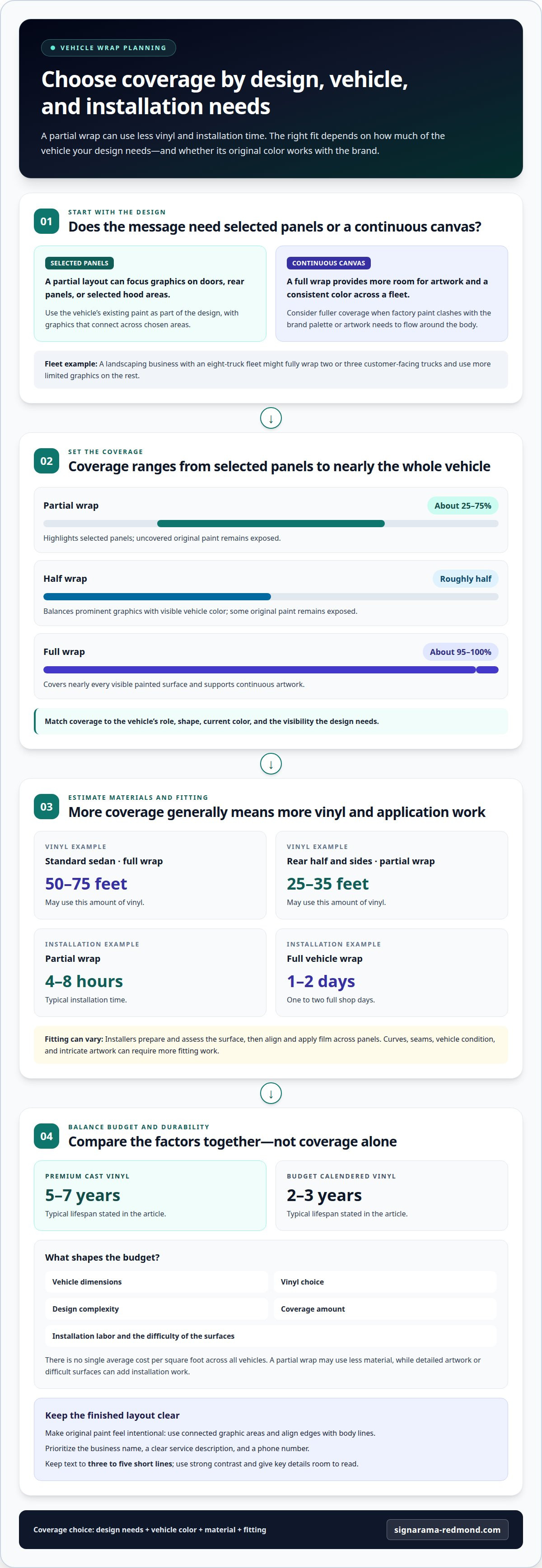
A partial vehicle wrap covers about 25-75% of a vehicle, while a half wrap covers roughly half. Common placements include doors, rear panels, and selected hood areas. This approach can put key graphics in traffic-facing locations while leaving other panels in their original paint.
Full wraps cover about 95-100% of the vehicle’s surface, creating more room for continuous artwork and consistent color across a fleet. That broader coverage can help when a vehicle’s factory color clashes with the brand palette or a photographic mural needs to flow around the body.
For a fleet, match coverage to each vehicle’s role. For example, a landscaping business might fully wrap two or three customer-facing trucks in an eight-truck fleet and use more limited graphics on the rest. A partial wrap can also help a business test vehicle advertising before extending the design to more vehicles.
| Option | Coverage | Visibility and fleet fit | Paint exposure |
|---|---|---|---|
| Partial wrap | About 25-75% | Highlights selected panels; adaptable across fleet roles | Unwrapped areas remain exposed |
| Half wrap | About half | Balances prominent graphics with visible vehicle color | Some original paint remains exposed |
| Full wrap | About 95-100% | Supports continuous artwork and consistent fleet color | Covers nearly every visible painted surface |
Choose coverage by matching the design’s visibility needs to each vehicle’s job and existing color.
Partial coverage protects only the panels beneath the material; exposed original paint continues aging and faces everyday wear. Over time, a vehicle kept for a long period may show a color difference between wrapped and unwrapped sections. High-quality wraps typically last 5 to 7 years with proper care, but that does not mean uncovered paint ages at the same rate.
Does a Partial Wrap Still Look Professional?
A partial wrap can look cohesive without covering a fixed share of the vehicle. Use connected areas, such as the doors and rear panels, and make the original paint part of the design.
Factory color can serve as a deliberate background, not a gap. For example, graphics that complement a white vehicle can create a unified look across wrapped surfaces and exposed paint. A sharp edge or color change can look intentional when it follows the vehicle’s body lines.
Readability matters more than filling every panel with copy. Keep the message brief, prioritizing the business name, a clear service description, and a phone number. Vehicle-wrap guidance recommends limiting text to three to five short lines. Drivers passing in traffic have little time to read small or crowded graphics.
- Use strong contrast between text and the original paint, especially around doors and windows.
- Give the business name and phone number clear space instead of shrinking them to fit extra copy.
- Align graphic edges with body panels; avoid layouts that stop awkwardly across a door seam.
Material and installation choices also affect the finished appearance. The film must suit the chosen surface, and accurate measuring and careful placement help graphics follow contours cleanly. Intricate artwork can take more planning and fitting than a simple layout. A poor color match, crowded text, or graphics that ignore panel lines can undermine an otherwise polished design.
Before production, plan how the design reads from the side and rear, where vehicle graphics can be viewed in traffic. Review the layout on the vehicle shape, not only as a flat image. For a coordinated vehicle graphics layout, carry the same colors and readable message across each selected panel.
Vinyl material and installation labor
A partial wrap uses less vinyl than a full vehicle wrap, but material quality still affects durability. Premium cast vinyl typically lasts 5-7 years, while budget calendered vinyl typically lasts 2-3 years. The right choice depends on how long the vehicle will carry the advertising and how much exposure it gets.
Properly installed partial and full wraps typically last 5 to 7 years with proper care. Vinyl type, outdoor exposure, and regular maintenance affect lifespan. Hand washing and pH-neutral soap help maintain the surface, while harsh chemicals can shorten the material’s useful life.
Coverage changes the material requirement. A full wrap for a standard sedan may use 50 to 75 feet of vinyl. A partial wrap covering the rear half and sides may use 25 to 35 feet. More coverage means more material to measure, print, and apply, while intricate graphics can add fitting work.
Installation takes preparation as well as application. A partial-wrap installation typically takes 4-8 hours; a full vehicle wrap can take one to two full shop days. Installers clean and assess the surface, then align and apply the film across panels. Curves, seams, and vehicle condition influence how much fitting each project needs.
DIY application may reduce installation labor costs, but misaligned graphics, trapped debris, or poorly handled edges can spoil the result and waste material. Professional installation brings experience applying graphics across vehicle contours. Precision matters when advertising needs to remain readable and consistent across multiple panels.
There is no useful single average cost per square foot for materials and installation across all vehicles. Price depends on vehicle dimensions, vinyl choice, design complexity, coverage, and labor, and is provided after a quote request. Consider these factors together: a partial wrap may use less material, while detailed layouts and difficult surfaces can require more installation work.
Comparing partial- and full-wrap budgets
Compare the complete project scope, not just the amount of vinyl. To decide when to choose a partial wrap over a full wrap for budget reasons, match coverage to your branding goals, vehicle role, and design.
Partial-Wrap Budgets
A partial vehicle wrap can suit a budget focused on branding specific panels. Covering fewer sections generally means less material and installation work, but leaves less room for continuous artwork. For a service vehicle, prioritize the panels customers see most often and keep the core message readable. Compare estimates based on the same vehicle, coverage, material, design scope, surface preparation, installation, and removal.
Full-Wrap Budgets
A full wrap covers nearly every visible painted surface, creating a larger canvas for consistent color and artwork that flows across panels. It requires more material and installation work than a partial layout. That coverage can make sense when the design depends on a continuous image or the fleet needs a uniform appearance. The budget trade-off is paying to cover areas that may not be essential to the message.
Advertising Cost-Effectiveness
A partial wrap can be a cost-effective choice for vehicle advertising when selected panels can carry a clear, visible message. A full wrap offers more design flexibility, but the extra surface adds value only if the branding uses it well. When deciding whether to choose a partial wrap over a full wrap for budget control, consider vehicle use, audience, and how much of the design needs to be seen.
Ask for a comparison based on the same assumptions: vehicle, material, design scope, covered panels, preparation, labor, and removal. Also ask how maintenance and repairs to damaged sections are handled. Partial wraps leave uncovered paint exposed; full wraps cover more of the vehicle’s surface, but both need care over time.
Plan a vehicle wrap budget comparison around your coverage goals and advertising priorities.
Signarama
Signarama helps businesses consider how graphics can support clear, consistent branding across vehicle panels. Turn to Signarama when you’re weighing a focused message against broader visual coverage, or want graphics that fit your business identity and intended audience. Share the vehicle’s role, the areas you want to highlight, and the message people should remember. These priorities can guide a practical conversation about how the graphics should work with your coverage plan, without losing sight of readability and budget. For businesses coordinating vehicle graphics with other brand visuals, signs can also help carry a consistent look across customer touchpoints. The right next step is to discuss your goals and the design direction you’re considering. Contact Signarama to talk through your graphics needs.
Set a Clear Direction for Your Vehicle Branding
Before moving forward, define what the vehicle should communicate and where its graphics need to appear. A focused brief can keep design decisions tied to your business identity, the vehicle’s role, and the impression you want to make. It also gives you a practical way to judge when to choose a partial wrap over a full wrap for budget priorities without losing sight of the intended result.
Think beyond one vehicle. If your branding may later extend to other vehicles or signs, a consistent visual approach can help those pieces work together. Signarama Redmond offers signs and graphics to support business branding. The right direction depends on your project goals.
Bring your ideas, brand details, and vehicle information into a conversation about the next step. Contact Signarama to discuss your wrap and explore a clear direction for your vehicle graphics.
Frequently Asked Questions
What Are Partial Car Wraps?
A partial car wrap is a graphic applied to selected areas of a vehicle’s exterior rather than the entire body. It can feature a business logo, service message, or contact details on chosen panels while leaving other paint visible. For example, a service van can display its identity on the side doors without a full-body color change. The layout should suit the vehicle’s shape and intended audience.
Does it make a difference for my brand or advertising?
How much does a partial vehicle wrap cost compared with a full wrap?
A partial wrap generally costs less because it uses less material and requires less installation work than a full wrap. The quote depends on vehicle size, coverage, vinyl, artwork complexity, and preparation needs. Compare estimates for the same vehicle and design scope, including production and installation. A quote request provides project-specific pricing instead of a broad estimate.
What maintenance and repair costs should be budgeted for partial and full wraps?
Budget for regular hand washing with pH-neutral soap and avoid harsh chemicals; both wrap types need ongoing care. Allow for possible repairs to damaged sections, and remember that partial wraps leave uncovered paint exposed to everyday wear. Repair and maintenance costs vary, so ask how they are handled.

Signarama Redmond, WA
Summer Hours (July - August) - MON-THUR: 8.00AM - 6.30PM, FRI - SUN: CLOSED
contact
Signarama Redmond, WA