Your Consultative Signs and Graphics Partner for Eastside Businesses


Industrial Park Directory Signs in Woodinville: A 2026 Buyer’s Guide
Oct 19, 2026 by Signarama Redmond
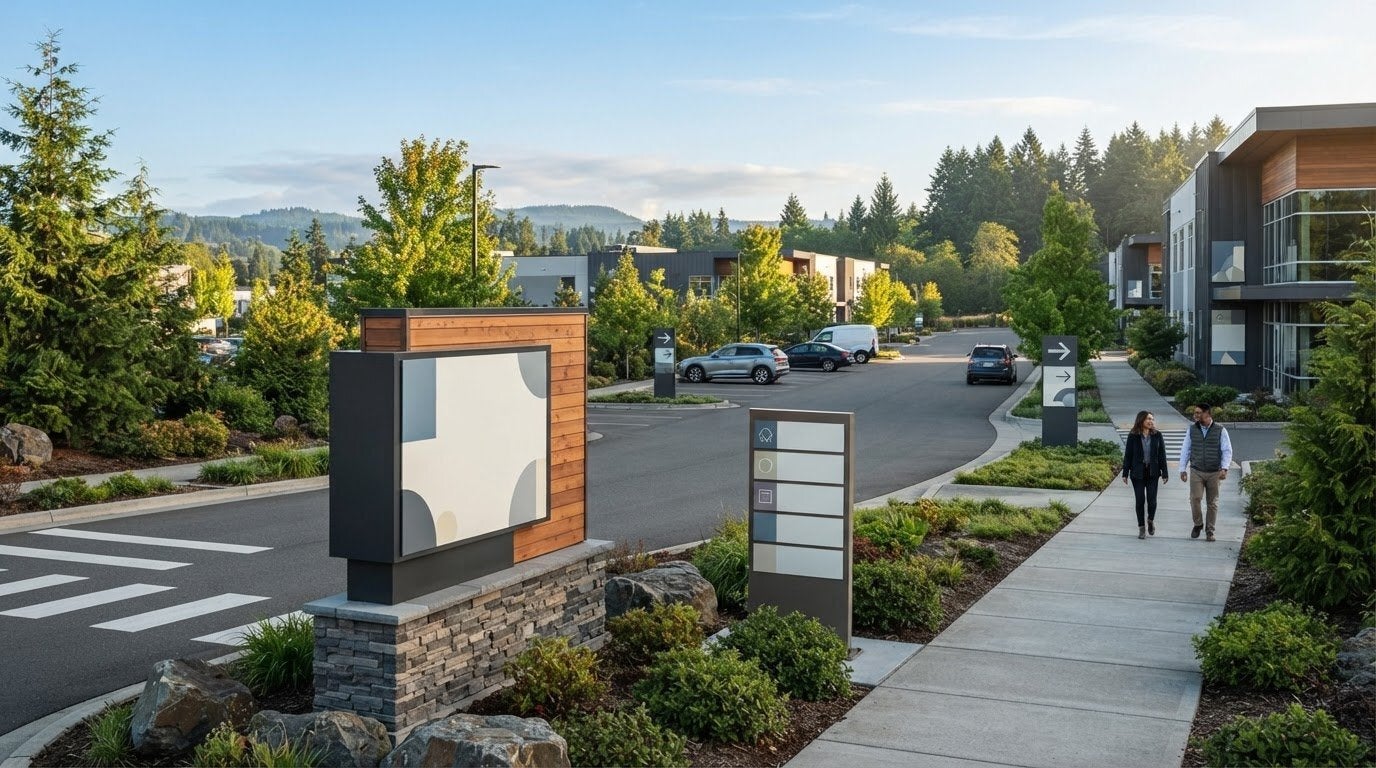
A directory at an industrial park entrance can point visitors in, but will it help them find the right building or tenant? Planning industrial park directory signs Woodinville properties can rely on means looking beyond one sign. Visitors need clear information at key decision points, from the property entrance to their destination.
A coordinated signage system can make arrivals easier to navigate and give the property a consistent look. A directory identifies tenants, a monument sign marks the entrance, directional signs guide drivers and pedestrians, and building signs confirm they’ve reached the right place.
This guide compares those sign roles and explains how to plan around tenants, site layout, visibility, and legibility. You’ll also find practical considerations for durability and project requirements, plus a sequence for moving from an initial site discussion through design, permitting, fabrication, and installation. Signarama Redmond serves Woodinville and helps property teams coordinate related signs and graphics.
Key Takeaways
Plan industrial park directory signs Woodinville visitors can use as part of a coordinated wayfinding system, not as an isolated sign.
Match each sign to its job: identify tenants, mark entrances, or guide visitors between destinations.
Assess visibility and legibility where drivers and pedestrians need to make decisions, and plan for tenant and destination updates.
Use a practical project sequence to connect site needs with sign design, permitting, fabrication, and installation.
Signarama Redmond can coordinate monument and tenant signs, directional signage, and building signs as part of a property’s sign plan.
Table of Contents
Why Industrial Park Directory Signs Matter for Woodinville Properties
What to Evaluate Before Choosing Woodinville Industrial Park Signs
Why Industrial Park Directory Signs Matter for Woodinville Properties
Visitors can reach an industrial park entrance and still be unsure where to go. Businesses may occupy separate buildings, share access roads, or sit beyond several turns. A directory helps visitors identify tenants and destinations, but it works best within a navigation system that guides people from the entrance to the right location.
Because an Industrial Park brings multiple businesses and facilities together, its signs may need to serve different audiences. First-time customers need to find a business, delivery drivers need to locate the correct tenant or service destination, and visitors moving between buildings need confirmation along the way. For industrial park directory signs Woodinville property owners are planning, start by mapping these journeys and identifying the property’s needs.
Which visitors need help navigating a Woodinville industrial park?
Map the journey from arrival to destination. Where does a driver enter? Where might they need to slow down, choose a route, or park? Where does a pedestrian need to confirm they’ve reached the right building? A site walkthrough can reveal confusing junctions, shared access points, and tenant areas that aren’t obvious from the entrance.
Consider the people who may be unfamiliar with the site:
First-time customers looking for a particular business or office entrance.
Delivery drivers distinguishing tenant locations and service destinations.
Business partners and other guests arriving for a meeting or site visit.
People moving between buildings who need to confirm they’re still on the right route.
Note where each group enters, pauses, makes a decision, and needs confirmation. This route map helps identify gaps in the visitor experience before you plan sign placement.
What belongs in a property directory sign system?
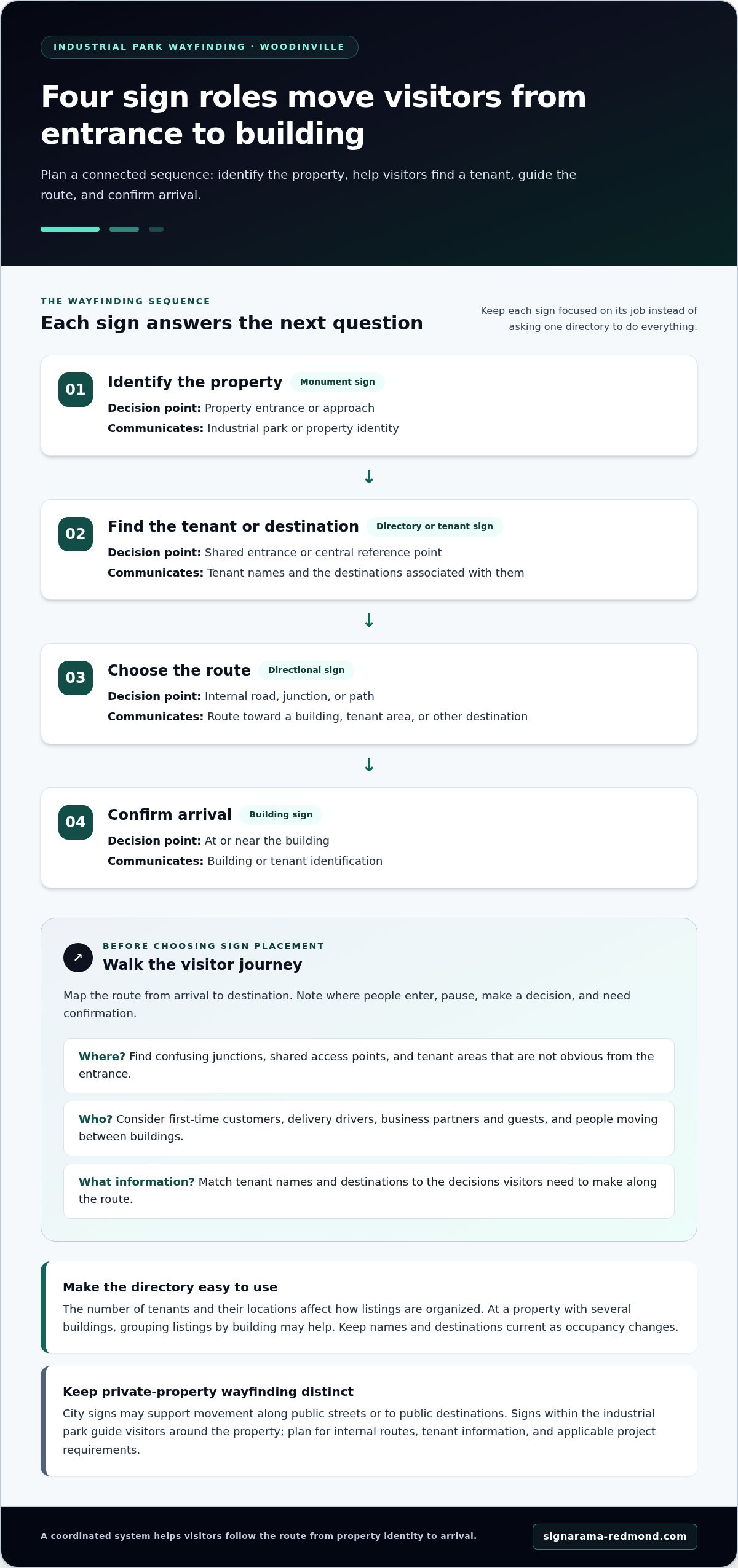
Different signs answer different questions. A monument sign can identify the property or entrance. A directory or tenant sign names businesses and can help visitors locate their destinations. Directional signage guides people along internal routes, while building signs confirm which structure or entrance they’ve reached. Keeping these roles distinct makes the information easier to follow.
A single sign rarely serves every decision point. For example, a tenant list at the entrance may name businesses without showing which turn leads to a particular building. A directional sign can point toward that building without identifying the tenant once the visitor arrives. Planning the information as a sequence helps prevent this gap.
Private-property wayfinding is separate from municipal wayfinding. City signs may support movement along public streets or to public destinations, while signs within an industrial park guide visitors around the property. Consider the property’s internal routes, tenant information, and applicable project requirements when planning the sign system.
Start with the site layout, visitor journeys, tenant names, and property identity. This gives the plan a practical foundation and helps each sign do its part without asking one directory to solve every navigation need.
How to Compare Directory, Monument, and Directional Signs
Each sign should answer a specific question where a visitor needs the answer. A directory helps someone identify a tenant or destination. A directional sign helps them choose a route. Monument and tenant signs identify the property or tenant area, while a building sign confirms arrival. For industrial park directory signs Woodinville property managers are considering, comparing these roles helps prevent one sign from carrying too much information.
Sign type | Typical decision point | Information to communicate |
|---|---|---|
Directory or tenant sign | Shared entrance or central reference point | Tenant names and the destinations associated with them |
Monument sign | Property entrance or approach | Industrial park or property identity |
Directional sign | Internal road, junction, or path | Route toward a building, tenant area, or other destination |
Building sign | At or near a building | Building or tenant identification to confirm arrival |
Think of the signs as a sequence: identify the property, locate the tenant in a shared directory, follow directions, then confirm the building. A gap can leave visitors unsure whether they chose the right route. Keep information focused on the next question instead of repeating every tenant name on every sign.
When does a tenant directory sign make sense?
A tenant directory is useful when visitors need a shared reference for finding businesses or destinations. The number of tenants and their locations affect how to organize the information. A property with several buildings might group listings by building, while a simpler layout may make tenant names easier to scan. Use consistent formatting, clear listings, and a plan for keeping names and destinations current as occupancy changes.
How do monument and directional signs complement a directory?
A monument sign can identify the property at ground level, and tenant signs can identify a business or tenant area. After the directory helps visitors select a destination, directional signage points them toward the next turn or building. A building sign confirms they’ve arrived at the right location. This division separates identification from routing, so each sign can communicate its purpose clearly.
Navigation signs also have a different job from workplace safety signs. For hazard communication, OSHA regulations for safety signs address accident-prevention signs. Plan safety signage separately so navigational information doesn’t take the place of hazard communication.
Walk the routes and match sign roles to the decisions visitors actually face. Signarama Redmond serves Woodinville and can coordinate directory planning with monument and tenant signs, directional signage, and building signs. Explore industrial park signage planning as a starting point for aligning those needs.
What to Evaluate Before Choosing Woodinville Industrial Park Signs
Before choosing sign types or drafting a directory, assess how people move through the property. The goal is to make useful information visible when someone needs to choose a route, identify a building, or confirm an arrival. Planning industrial park directory signs Woodinville properties can use starts with the site, tenant information, and visitor experience, not with a sign in isolation.
How should a property manager assess site layout and visibility?
Walk the property from common arrival points, including entrances used by visitors and delivery drivers. At each junction or building approach, note what a person can see and what they need to know next. A directory that’s easy to find at the entrance may not answer questions at an internal fork, so record each place where direction or confirmation could help.
During the walkthrough, look for:
Decision points: entrances, intersections, shared access areas, and routes that split toward different tenant spaces.
Sightlines: whether a sign location is visible from the point where a driver or pedestrian needs to act.
Approaches: how visitors move from the main route to a building entrance or tenant area.
Information gaps: places where a visitor could take the wrong turn or lack confirmation they’re still on course.
Then consider the property’s space, brand, budget, and permitting needs together. A sign plan should fit the property’s identity and layout while addressing practical navigation needs. A site survey or on-site consultation can help turn observations into a coordinated plan for directory information, directional signage, monument and tenant signs, and building signs.
What should the directory communicate to tenants and visitors?
Settle on accurate tenant names, building identifiers, and destination wording before design begins. If a tenant is known by both a formal name and a shorter everyday name, decide which version visitors are most likely to recognize, then use it consistently across relevant signs. Clear hierarchy matters too: prioritize tenant or destination names, and avoid crowding the directory with information better placed on directional or building signs.
Plan for change as well as opening day. Tenants may move, names may change, and shared areas may be assigned new uses. Treat directory updates as an information-management task: identify who maintains the approved tenant list and how changes will be communicated for future sign planning. This helps keep displayed information aligned with the property.
Permitting and code compliance belong in early project planning. Requirements can depend on the location and property criteria, so account for applicable requirements before finalizing sign details. Signarama Redmond’s process includes design, permitting, fabrication, and installation, helping property teams carry a coordinated sign plan through each project stage.
How to Plan a Directory Sign Project in Woodinville
A well-planned sign project turns site observations into a coordinated set of signs, with each piece supporting the next. For industrial park directory signs Woodinville property teams are planning, a clear sequence helps keep tenant information, visitor needs, and project requirements aligned from the first discussion through installation.
What should you prepare for the initial site discussion?
Bring a property plan or simple sketch showing buildings, entrances, shared areas, and internal routes. It doesn’t need to be a finished drawing. Pair it with a current tenant list and notes about the destinations visitors look for, places where people get turned around, and property-brand details you want the signage to reflect.
Useful preparation includes:
Site basics: building names or identifiers, entrances, shared access points, and areas visitors can use.
Navigation needs: confusing routes, important decision points, and destinations that need clearer identification.
Information priorities: preferred tenant names and wording for buildings or shared destinations.
Project considerations: available space, brand direction, budget priorities, and permitting questions to address.
With these details in hand, the site discussion can focus on the property’s needs. A free site survey or quick quote can help connect the property layout and navigation priorities to a practical signage plan.
How does design, permitting, fabrication, and installation fit together?
Once the needs and site conditions are understood, the project can move through a connected process. Signarama Redmond works with clients on design, permitting, fabrication, and installation, keeping the proposed signs connected to the property’s goals. Design organizes sign roles and information; permitting considerations are addressed against applicable requirements; fabrication follows the developed plan; and installation brings the coordinated signage to the property.
Code compliance and permitting depend on project requirements, location, and property criteria. Account for applicable requirements before finalizing sign details. Signarama Redmond includes permitting in the broader project process, rather than treating it as an afterthought.
For property teams preparing for installation, carry forward the approved plan and the intended role of each sign. Learn about professional sign installation in Redmond as part of that coordinated process.
Signarama Redmond serves Woodinville and can help bring the planning stages together. Book a free 30-min on-site consultation to discuss your site, brand, budget, and permitting needs.
Plan Industrial Park Directory Signs with Signarama Redmond
A multi-tenant property needs signs that work together, reflect the site, and give visitors useful information at the right points. Signarama Redmond works with Woodinville property managers to plan signs and graphics around those needs. A shared project conversation connects tenant identification, visitor routing, and property identity instead of treating each sign as a separate decision.
The right combination depends on the layout and what visitors need to find. A property might use a monument sign to identify its entrance, tenant signs to name businesses, directional signage to guide visitors across the site, and building signs to confirm their destination. Considering those roles together helps shape a consistent sign plan.
What makes a consultative signage partner useful for a multi-tenant property?
Planning starts with the property’s space, brand, budget, and permitting considerations. Discussing these together gives the team a clearer basis for organizing sign types and information while keeping the property’s priorities in view. It also creates a practical path from early planning through design, permitting, fabrication, and installation.
This collaborative approach is useful when tenant needs and shared property identity both matter. The project can consider how directory information relates to monument and tenant signs, directional signs, and building identification, rather than treating each piece in isolation. For complementary identification needs beyond an industrial setting, see examples of professional office signs in Redmond.
Signarama Redmond’s process covers design, permitting, fabrication, and installation. Permitting is considered as part of the project, with sign details developed around applicable requirements and property criteria. For Woodinville projects, account for requirements that apply to the specific site before finalizing the plan. This keeps the project connected from the initial discussion through installation while recognizing that requirements can differ by property.
How can Woodinville property managers take the next step?
Bring a site plan or sketch, tenant information, and notes about the places visitors need help finding. A focused site conversation can connect those details to sign roles, property brand, budget priorities, and permitting considerations. It’s a practical way to begin shaping a coordinated plan with a signage partner serving the area.
Signarama Redmond serves Woodinville and the Greater Seattle Metro area. Book a free 30-min on-site consultation to discuss your property’s signage needs. You can also request a free site survey or quick quote as you plan directory information and related property signs.
Give Your Signage Plan a Clear Next Step
A signage system can keep serving a property as tenants and visitor needs change, but the information behind it needs to stay organized. Choose a point person to maintain approved tenant names, building identifiers, and destination wording. Share that information with the people who manage the property and communicate with tenants, so future updates start from a consistent source.
It also helps to treat the sign plan as part of the property’s ongoing visitor experience. As routes, entrances, or shared areas change, review whether the existing signs still guide people through the decisions they need to make. This simple check can help keep industrial park directory signs Woodinville visitors rely on aligned with the site over time.
For a project shaped around your property, Signarama Redmond can work with you from planning through installation. Start planning your industrial park signage and take the next step toward a more considered visitor experience.
Frequently Asked Questions
Are industrial park directory signs different from municipal wayfinding signs?
Yes, they generally serve different navigation areas. A private directory helps visitors find tenants and destinations within a property, while municipal wayfinding helps people navigate public streets or broader civic destinations. For a private site, map the routes visitors use inside the property and plan signs around those needs and the requirements that apply to the project.
What information should an industrial park directory sign include?
Include the names and destinations visitors need to recognize, using consistent wording throughout the property. For example, if a tenant appears under a business name in the directory, avoid using a different name on the building sign unless the relationship is clear. Organize entries so visitors can scan for a tenant or building without sorting through unrelated details. The site layout and tenant mix determine which information belongs on the directory.
Can one directory sign guide visitors across an entire industrial park?
A directory usually works best as a reference point, not as the only guide across a complex site. A visitor might identify a tenant at the entrance but still need help at a fork between two building clusters. Look for places where the route changes or the destination becomes hard to identify. Those locations may call for directional signage or building identification that continues the journey beyond the directory.
Do industrial park directory signs in Woodinville require a permit?
Permit requirements depend on the project and should be accounted for before sign plans are finalized. Don’t assume a requirement for one sign type or property applies to another. Signarama Redmond includes permitting in its design-to-install process and plans signage around applicable project requirements. Share the proposed site location and sign plan during the project discussion so permitting considerations can be addressed as the design develops.
What should I bring to a directory sign consultation?
Bring a site plan or sketch, a current tenant list, and notes about routes or destinations that cause questions. Mark entrances, shared spaces, and places where visitors may need confirmation. It’s also useful to decide who will approve tenant names and property-brand details, and to identify your priorities for space, budget, and permitting. These preparations make the discussion specific to your property rather than a generic review of sign options.
Can directory signage work with monument and building signs?
Yes. These signs can support different stages of a visitor’s arrival: a monument sign identifies the property, a directory organizes tenant information, and a building sign confirms the destination. Directional signage can help along the route between those points. For example, a tenant listed at the entrance may still need a clear route cue near a shared driveway. The appropriate combination depends on where visitors need information across the site.

Signarama Redmond, WA
Summer Hours (July - August) - MON-THUR: 8.00AM - 6.30PM, FRI - SUN: CLOSED
contact
Signarama Redmond, WA