Your Consultative Signs and Graphics Partner for Eastside Businesses


Directory Signs for Buildings: A Complete Guide to Wayfinding
Jul 27, 2026 by Signarama Redmond
Choosing the right directory sign for your building can feel surprisingly complex. With countless materials, styles, and compliance rules to consider, it’s easy to feel overwhelmed and worry about making a costly mistake. This single feature is responsible for creating a professional first impression and ensuring every visitor, client, and tenant can navigate your space with confidence, so the pressure to get it right is real. A well-designed directory is the silent concierge that welcomes everyone who walks through your doors.
That’s where this guide comes in. As your local signage partner, we’re here to remove the guesswork from selecting effective directory signs for buildings. We’ll walk you through everything from durable, high-quality material options and smart design choices to the essentials of ADA compliance and planning for simple, long-term updates. By the end, you’ll have the expert knowledge needed to choose a wayfinding solution that enhances your brand, helps your guests, and provides lasting value for your investment.
Key Takeaways
Understand how a directory sign functions as the essential "table of contents" for your space, improving visitor experience and tenant satisfaction.
Learn to evaluate key factors like materials, update methods, and placement to choose the perfect directory signs for buildings, from classic to digital.
Discover the non-negotiable ADA requirements for signage to ensure your building is legally compliant and accessible to all visitors.
See how a professional, end-to-end process from concept to installation removes the guesswork and guarantees a flawless wayfinding system.
Table of Contents
What Are Building Directory Signs (And Why They're Essential)
Exploring the Types of Directory Signs: From Classic to Digital
The Signarama Process: From Concept to Flawless Installation
What Are Building Directory Signs (And Why They're Essential)
Think of a building directory sign as the "table of contents" for your physical space. Its primary role is to provide a clear, at-a-glance map that guides tenants, clients, and first-time visitors to their destinations quickly and efficiently. But its function goes far beyond simple navigation. A professional directory sign is a critical tool that reduces confusion, improves the visitor experience, and establishes the character of your property from the moment someone enters.
While a comprehensive understanding of what is signage covers everything from room numbers to exit signs, the directory is the central hub of your entire wayfinding system. An outdated, confusing, or poorly designed directory leads to immediate frustration. In contrast, a well-executed sign empowers visitors, projects competence, and ensures every journey through your building starts on the right foot.
The First Impression: More Than Just a List of Names
Your directory is one of the first things a visitor interacts with, making it the "homepage" of your building. It sets the tone for the entire experience. The materials you choose-from sleek brushed metal and modern acrylic to sophisticated digital displays-communicate a powerful message about your building’s quality and attention to detail. A professional directory shows you value your tenants and their visitors.
Improving Traffic Flow and Efficiency
In any multi-tenant office, medical facility, or complex property, effective directory signs for buildings are essential for operational efficiency. They empower visitors to self-navigate with confidence, which dramatically reduces the number of directional questions for your front desk, security, or concierge staff. This frees up your team to focus on more critical tasks while ensuring guests find their way without delay.
Exploring the Types of Directory Signs: From Classic to Digital
Selecting the right lobby directory sign is a crucial decision for any property manager. The best system for your property depends on three key factors: your budget, how often you expect tenant changes, and the professional image you want to project. Understanding the primary types of directory signs for buildings is the first step in making a confident, informed choice that serves your tenants and visitors effectively.
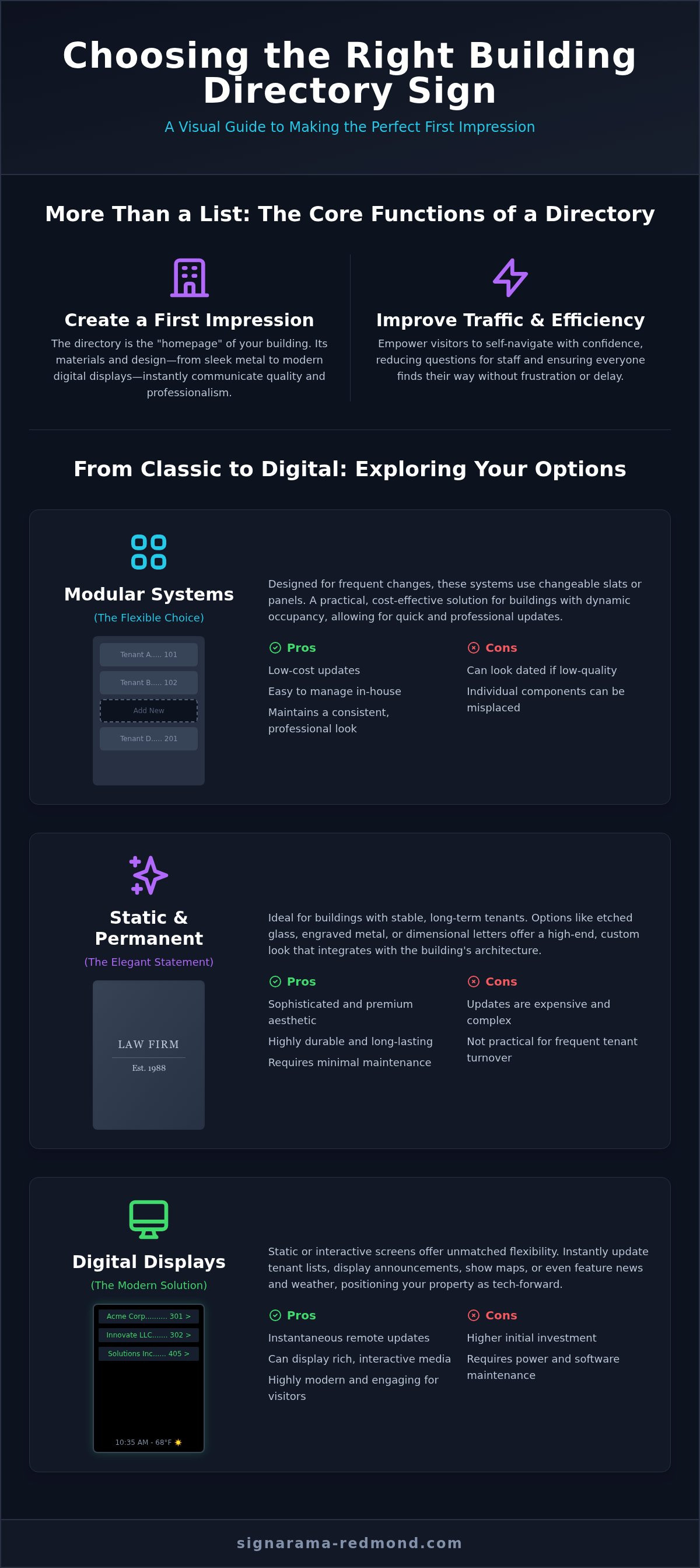
Modular & Updateable Systems (The Flexible Choice)
These systems are the workhorses of multi-tenant properties. Designed for frequent changes, they typically feature changeable slats or panels with magnetic or slide-in nameplates. This practical approach allows for quick, professional updates without replacing the entire sign, making them a reliable and cost-effective solution for buildings with dynamic occupancy. It's also vital that each component is designed for accessibility. Ensuring every nameplate meets legibility requirements, as outlined in the official ADA Standards for Accessible Design, is straightforward with these professionally managed systems.
Pros: Low-cost updates, easy to manage, maintains a consistent and professional look.
Cons: Lower-quality systems can look dated; individual components can be misplaced.
Static & Permanent Signs (The Elegant Statement)
For buildings with stable, long-term tenants-such as a corporate headquarters or a law firm-a static sign makes a powerful statement of permanence and quality. Options like beautifully etched glass, engraved metal plaques, or dimensional letters mounted directly onto a feature wall offer a high-end, custom look. These signs become an integrated part of the building's architecture, conveying a sense of prestige and stability.
Pros: Sophisticated and premium aesthetic, highly durable, requires minimal maintenance.
Cons: Updates are expensive and complex; not practical for frequent tenant turnover.
Digital & Interactive Displays (The Modern Solution)
Embrace the future with digital directory displays. These screens, which can be static or interactive, offer unmatched flexibility and a modern appeal. You can update tenant lists instantly from a computer, display building announcements, show interactive maps, or even feature local news and weather. A digital directory immediately positions your property as tech-forward and enhances the visitor experience by providing dynamic, helpful information.
Pros: Instantaneous updates, can display rich media and interactive content, highly engaging.
Cons: Higher initial investment, requires power and potential software maintenance.
Key Considerations: Material, Design & Strategic Placement
Once you've decided to invest in a lobby directory, the next step is to determine what's right for your specific space and needs. Moving beyond the "what is it" to "what works for me" involves a careful balance of aesthetics, durability, and budget. As your professional sign partner, we help you navigate these choices to create a solution that not only looks great but also functions flawlessly for years to come. A well-planned sign is a valuable, long-term asset for your property.
Choosing the Right Materials for Durability and Style
The material of your directory sign sets the immediate tone for your building's interior. Each option offers a unique blend of style and resilience. Our experts can guide you through the best choices for your environment, whether it's a high-traffic lobby or a professional office suite.
Metal (Aluminum & Stainless Steel): Delivers a sleek, modern, and highly professional look. Exceptionally durable and low-maintenance, making it ideal for high-traffic areas.
Acrylic & Glass: Provides a clean, contemporary, and upscale feel. These materials are perfect for backlighting and creating a sophisticated first impression.
Wood: Conveys warmth, tradition, and a welcoming atmosphere. A great choice for businesses wanting a classic, natural, or rustic aesthetic.
Design That Aligns with Your Brand
Effective directory signs for buildings are a direct extension of your brand identity and a critical tool for visitor navigation. The design must be both beautiful and functional. We ensure your sign incorporates your brand's fonts, colors, and logo for a cohesive look. More importantly, we prioritize readability with high-contrast, legible typography. Information must be organized logically-whether by floor, suite number, or company name-to prevent confusion. This follows core wayfinding design principles that focus on creating a clear and intuitive path for every visitor.
Finding the Perfect Location
The most beautiful sign is useless if it's in the wrong spot. Strategic placement is key to ensuring your directory serves its purpose. We recommend installing signs at primary decision points, such as inside the main entrance, near elevator banks, or at major corridor intersections. When conducting a site survey, we assess visibility, existing lighting, and traffic flow to find a location that is easily seen without creating a bottleneck. Proper placement ensures your directory signs for buildings are accessible and helpful to every person who walks through your doors.
ADA Compliance for Directory Signs: What You Must Know
Ensuring your office building is accessible to everyone isn't just good practice-it's the law. The Americans with Disabilities Act (ADA) sets forth clear guidelines for architectural signage to ensure people with disabilities can navigate public spaces safely and independently. For property managers and business owners, compliance is not an option; it's a legal requirement that protects you from potential fines and litigation.
Navigating these complex regulations can be daunting. That's where a professional sign partner becomes invaluable. At Signarama, we remove the guesswork by designing and installing fully compliant directory signs for buildings, giving you complete peace of mind.
Key ADA Requirements for Directories
While ADA rules are extensive, several key standards apply directly to visual-character signs like directories. These are designed to maximize legibility for all visitors.
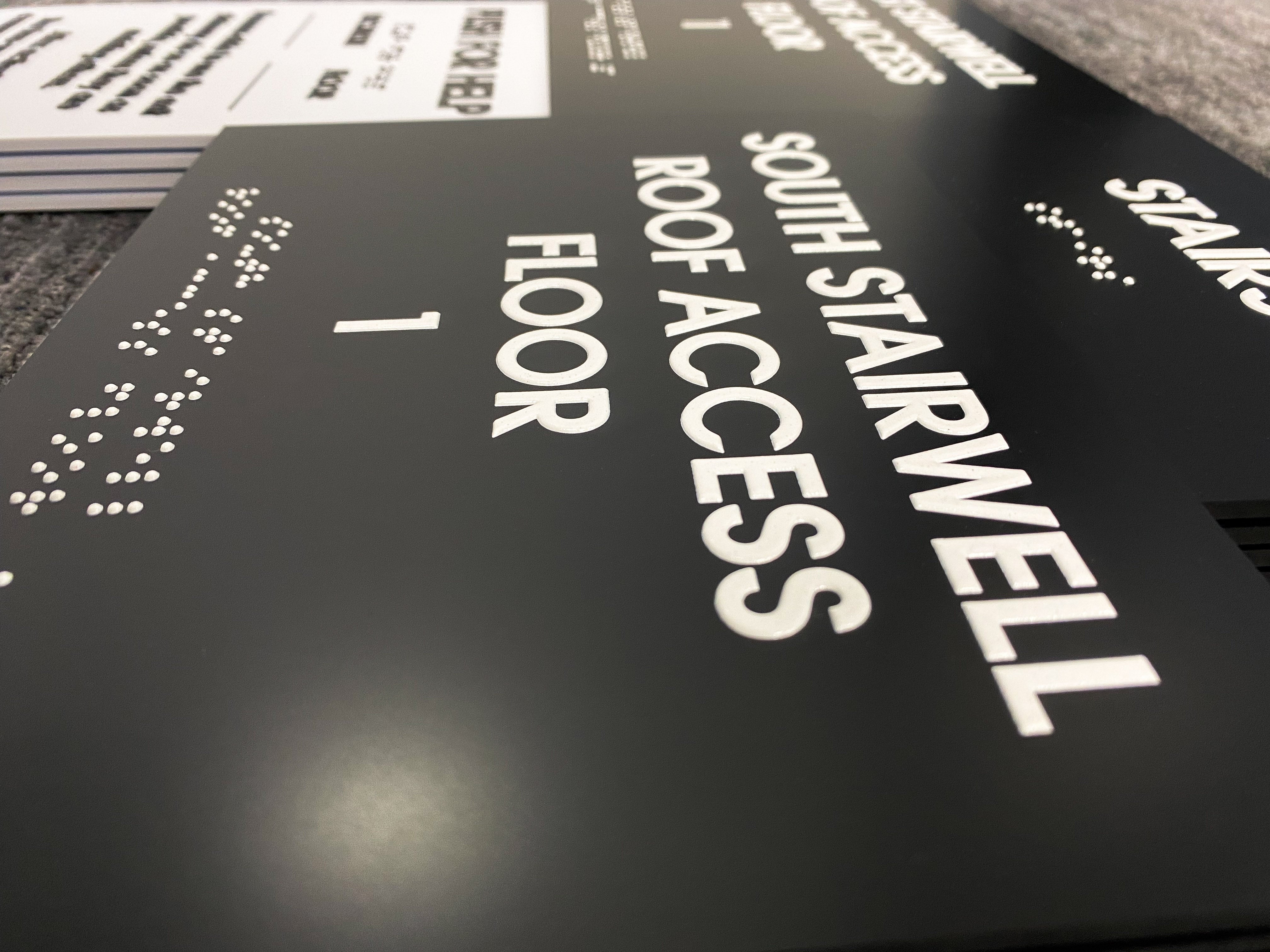
Finish and Contrast: Signs must have a non-glare finish (like matte or eggshell) to prevent reflections. The characters must also have a high contrast with their background-think dark text on a light background or vice-versa.
Fonts and Character Height: Only simple, sans-serif fonts are permitted. The height of the letters is determined by the sign's location and viewing distance to ensure readability.
Tactile and Braille Rules: A common point of confusion. While large, changeable directories are typically exempt from raised text and Braille, the permanent room signs they point to (like suite numbers or restroom signs) must be fully tactile. We ensure your entire wayfinding system works together cohesively and compliantly.
Mounting Height and Location Rules
Proper installation is just as critical as proper design. ADA guidelines dictate exactly where and how signs must be mounted to be accessible. This includes a standard height of 48 inches from the floor to the baseline of the sign's text, with the top line no higher than 60 inches. Additionally, signs must be located where a person can approach within 3 inches without bumping into obstacles, ensuring clear floor space for wheelchair access. Our professional installation team handles these precise measurements, guaranteeing every sign is correctly and securely placed.
Avoiding Common Compliance Mistakes
Many well-intentioned businesses make costly errors with their directory signs for buildings. Common mistakes include using stylized, non-compliant fonts for branding purposes, choosing color combinations with poor contrast, or incorrect Braille placement on accompanying signs. These small details can render an entire sign system non-compliant.
Navigating these detailed regulations is our expertise. We take the time to understand the specific requirements for your facility to deliver a solution that is both effective and legally sound. Let our experts handle ADA compliance for you.
The Signarama Process: From Concept to Flawless Installation
Choosing the right signage can feel overwhelming, but at Signarama Redmond, we remove the guesswork. We believe in a true partnership, guiding you through a seamless, end-to-end process that ensures your project is a success from the first conversation to the final reveal. Our proven workflow is designed for clarity, quality, and complete peace of mind, ensuring you get the perfect directory signs for buildings that meet your exact needs.
Step 1: Consultation and Site Survey
Our process begins by understanding your vision. A dedicated project manager will meet with you to discuss your goals, brand identity, and budget. This initial partnership is crucial for creating effective signage. We then conduct a thorough on-site survey to:
Assess your building's unique architecture, traffic flow, and lighting conditions.
Take precise measurements to ensure a perfect fit and identify the optimal placement for maximum visibility.
Understand your brand aesthetic to ensure the final sign feels like a natural extension of your space.
Step 2: Professional Design and Proofing
With a clear understanding of your needs, our expert design team gets to work. We create a detailed digital mock-up that brings your directory sign to life, showing you exactly how it will look in your lobby. During this phase, we focus on creating a design that is not only visually stunning and on-brand but also fully ADA compliant. You’ll have the opportunity to review and approve every element, from font choices to material finishes, ensuring you are 100% confident before we move forward.
Step 3: Quality Fabrication and Installation
Once the design is approved, our skilled technicians begin fabrication using only durable, high-quality materials built to last. We manage the entire production process in-house to maintain strict quality control. The final step is our flawless installation. Our professional team handles everything securely and efficiently, respecting your property and ensuring a clean worksite from start to finish. We take pride in a job well done, leaving you with a final product you’ll be proud to display.
This organized, transparent process is how we deliver exceptional results for all types of directory signs for buildings. Ready to get started on a sign solution that works for you? Contact your local sign partners at Signarama Redmond today for a free consultation.
Your Partner for Clear and Compliant Directory Signage
As we've explored, effective wayfinding is the cornerstone of a positive visitor experience. From classic modular signs to dynamic digital displays, the right directory signs for buildings enhance your brand, ensure seamless navigation, and meet critical ADA compliance standards. Strategic planning around design, materials, and placement transforms a simple sign into an indispensable asset for your facility.
Navigating the details of a signage project can feel complex, but you don't have to do it alone. As your local Redmond and Greater Seattle sign partner, Signarama provides expert end-to-end project management. We handle everything from concept to completion, guaranteeing quality materials and a professional installation you can rely on to remove all the guesswork.
Ready to improve your building's navigation and create a flawless first impression? Start your project with a trusted local partner. Get a free consultation today!
Let's work together to create a welcoming and efficient environment for everyone who walks through your doors.
Frequently Asked Questions About Directory Signs
How much do directory signs for buildings typically cost?
The cost of directory signs for buildings varies based on size, materials, complexity, and features like illumination. A simple, wall-mounted directory with interchangeable name strips might start in the low hundreds, while a large, custom-designed digital directory can cost several thousand dollars. We partner with you to understand your budget and functional needs, providing a detailed quote that outlines all costs upfront to find the most durable and effective solution for your property.
How long does the process take from design to installation?
Our typical end-to-end process for a custom directory sign takes between 3 to 6 weeks. This timeline includes initial consultation and design proofs (1-2 weeks), fabrication (1-3 weeks), and professional installation (1 day). For more complex projects or those requiring city permits, the timeline may extend. We provide expert project management with clear timelines from start to finish, ensuring a smooth and predictable process for our partners.
What is the easiest way to update a directory sign when tenants change?
For frequent changes, we recommend modular systems with interchangeable name strips or plaques. These allow your property manager to easily slide new names in and out without special tools. For a more modern, flexible approach, a digital directory offers the ultimate convenience, allowing for instant updates via simple software. We can help you choose the system that best fits your building’s needs and frequency of tenant turnover, ensuring updates are always simple and professional.
Can directory signs be illuminated or backlit?
Absolutely. Illumination is a fantastic way to enhance visibility and create a high-end, professional look in your lobby. We can integrate energy-efficient LED lighting for backlighting, edge-lighting, or halo-lit effects to make your directory stand out. Our expert team handles all electrical aspects safely and professionally, ensuring your illuminated sign is not only beautiful but also compliant with all local codes. Let's discuss how lighting can elevate your building's entryway.
What information should I include on my building directory?
Clarity is key for a helpful directory. At a minimum, you should include the business or tenant name and their corresponding suite or floor number. For larger buildings, it's also useful to list key destinations like the management office, restrooms, elevators, and main exits. We recommend keeping the design clean and uncluttered to ensure visitors can find information quickly and easily. Our team can help design a layout that is both functional and brand-aligned.
Do you handle the sign permitting process with the city?
Yes, we handle the entire sign permitting process as part of our end-to-end service. Navigating city codes and submitting the required paperwork can be complex, so we manage it all for you to ensure full compliance and remove the guesswork. From initial code research to final inspection, our expert project managers work directly with municipalities like Redmond, Bellevue, and Seattle, ensuring your project proceeds smoothly and without delays.


Signarama Redmond, WA
Summer Hours (July - August) - MON-THUR: 8.00AM - 6.30PM, FRI - SUN: CLOSED
contact
Signarama Redmond, WA