Your Consultative Signs and Graphics Partner for Eastside Businesses


Comprehensive Campus Wayfinding Solutions: A Guide for 2026
Jun 25, 2026 by
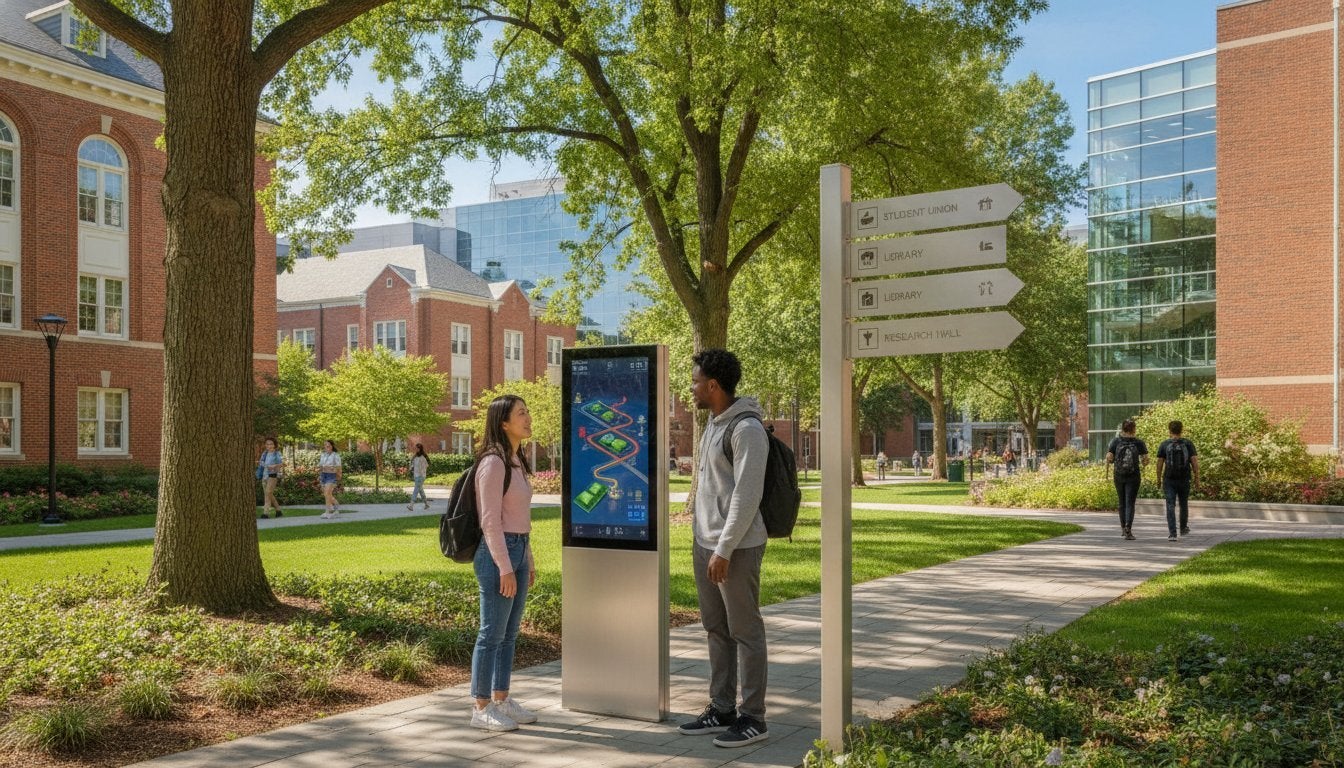
Did you know that implementing modern digital campus wayfinding solutions can improve navigation and safety by as much as 50%? It's a powerful statistic, yet many administrators still struggle with visitors getting lost in complex building layouts or the visual clutter of inconsistent branding. You likely recognize the frustration of seeing guests wander aimlessly because a sign was either outdated or simply missing. We agree that a campus should feel like a cohesive, welcoming community rather than a confusing maze. With the new ADA Title II requirements taking effect in April 2027, the pressure to provide accessible and clear information is higher than ever.
This guide will help you master the art of campus navigation through expert strategies for planning, designing, and implementing reliable systems. You'll gain a clear roadmap for conducting a campus-wide signage audit and learn how to improve visitor satisfaction scores through a collaborative partnership of physical and digital tools. We'll preview the best ways to integrate durable graphics with real-time digital displays to create a seamless experience for every pedestrian and driver. By the end of this article, you'll have the expertise needed to build a navigation system that reflects the quality and professionalism of your institution.
Key Takeaways
Learn how modern navigation has evolved into an experience-driven strategy that prioritizes visitor comfort and reduces navigation anxiety.
Discover the four pillars of effective signage, including how to place identification and directional signs at critical decision points.
Explore how to build a hybrid ecosystem that blends the reliability of physical signs with the dynamic flexibility of digital campus wayfinding solutions.
Gain a step-by-step framework for conducting a signage audit that maps out the unique journeys of students, visitors, and vendors.
Understand the importance of a collaborative partnership to ensure your campus remains compliant with local codes and evolving ADA regulations.
What Are Campus Wayfinding Solutions in 2026?
If you look at the fundamental question of What is Wayfinding?, you'll find it's a comprehensive system of signs, maps, and symbols designed to guide people through complex environments. In 2026, campus wayfinding solutions have evolved far beyond simple arrows on a wall. They're now a core part of Environmental Graphic Design (EGD), which blends architecture, communication, and psychology to help users understand their surroundings. It's about more than just getting from point A to point B. It's about the entire experience of the journey.
Modern campuses are moving toward "experience-driven" navigation. This shift means we prioritize reducing the cognitive load on a visitor. Instead of bombarding a student with fifty different room numbers on a single directory, we use design to offer clarity. This approach is critical for campus safety and accessibility. Clear signs and graphics ensure that emergency exits, medical stations, and accessible routes are instantly recognizable. This is especially vital as we approach the April 26, 2027, deadline for DOJ Title II compliance, which requires digital content to meet WCAG 2.1 Level AA standards. A well-planned system isn't just a convenience; it's a legal and moral commitment to inclusion.
The ROI of Seamless Navigation
Investing in professional signs and graphics provides a measurable return on investment for any institution. When visitors can find their way independently, staff interruptions decrease significantly. This allows your administrative team to focus on high-value tasks rather than giving directions. For prospective students and their families, a clear navigation system builds trust and signals a well-organized institution. Furthermore, clear regulatory and emergency signage helps mitigate liability by ensuring safety protocols are visible and easy to follow. It's a proactive way to protect both your visitors and your institution's reputation.
Wayfinding Beyond the Map
Effective navigation uses more than just text; it relies on intuitive cues that speak to our natural instincts. Wayfinding is a blend of logic and visual communication. By using color-coding for different departments or building wings, you create a visual shorthand that's easy to follow. Architectural landmarks, such as a specific sculpture or a unique building facade, act as "anchors" that help people orient themselves. We also utilize a psychological principle called progressive disclosure. This design strategy ensures that signs only reveal information as it becomes relevant to the user's specific location. This prevents information overload and keeps the visitor moving forward with confidence. Implementing these campus wayfinding solutions transforms a confusing maze into a welcoming, navigable community.
The Four Pillars of Effective Campus Directional Signage
Building a successful navigation system requires a balanced approach. Effective campus wayfinding solutions rely on four distinct pillars working in harmony to ensure every traveler's needs are met. Identification signs mark the final destination, such as gateway monuments, building IDs, or room plaques. Directional signs act as the "decision point" markers, using pylons, finger posts, or overheads to guide flow at intersections. Informational signs provide necessary context through maps, directories, and hours of operation. Finally, regulatory signs handle safety and legal compliance, covering everything from parking rules to speed limits.
When these elements are designed together, they create a predictable environment. A visitor should never have to hunt for information; the next sign should appear exactly where they naturally look for guidance. By following Best Practices for Wayfinding Signage, institutions can ensure their campus wayfinding solutions are both functional and aesthetically pleasing. If you're unsure about your current signage status, our team can help you evaluate your custom sign needs to ensure every pillar is strong and serving your community effectively.
Monument Signs and First Impressions
Gateway monuments are more than just markers. They represent your institution's heritage and brand identity. In Redmond, material selection is vital for longevity. Our Pacific Northwest weather brings constant moisture and varied temperatures that can degrade inferior materials. We recommend using durable metals and high-quality graphics that resist rust and UV fading. Integrating internal or external illumination ensures these landmarks remain visible 24/7. This provides a sense of security and professional branding even after sunset, making a lasting first impression on every prospective student or client.
ADA Compliance and Universal Design
Accessibility is a cornerstone of modern campus design. In 2026, tactile and Grade 2 Braille elements are mandatory for permanent room signs. We use high-contrast color palettes to assist visually impaired navigators, ensuring text stands out clearly against the background. Mounting height is equally critical. We strictly follow standards that place tactile characters between 48 and 60 inches from the finished floor. This precision removes uncertainty for your visitors and ensures your facility remains inclusive and compliant with current regulations. Using sans-serif fonts like Helvetica or Arial further improves readability for all users, regardless of their physical abilities.
Digital vs. Static Wayfinding: Building a Hybrid Ecosystem
Many institutions face a choice between traditional boards and modern screens. We believe the most effective campus wayfinding solutions don't choose one over the other. Instead, they build a hybrid ecosystem. Static signs act as the permanent foundation for your infrastructure. They're always there, regardless of power or internet connectivity. Digital kiosks add a layer of dynamic information that can change at a moment's notice. This combination ensures that your visitors always have a reliable guide, whether they're looking for a permanent building or a one-time guest lecture.
Static signage remains the gold standard for reliability and safety. It doesn't require electricity and it's easy to read in any lighting condition. However, digital displays excel in high-traffic areas where information changes frequently. For example, hospitals and large campuses that use digital kiosks report up to 30% fewer directional questions asked of staff. This efficiency saves time for everyone. Consider these specific benefits for each type:
Static signs: Provide 24/7 visibility for permanent landmarks and safety exits.
Digital kiosks: Offer real-time updates for event schedules and room changes.
QR integration: Allows users to carry directions on their personal mobile devices.
We use QR codes on physical signs to bridge the gap. A quick scan allows a student to transfer a complex map directly to their mobile device, extending the reach of your physical signs into the digital space. This mobile handoff is a standard feature for 2026, ensuring that the navigation experience continues even after the visitor leaves the signpost.
Interactive Kiosks and Real-Time Data
In 2026, interactive kiosks serve as more than just maps; they're communication hubs. You can manage high-traffic areas by placing touch-screen directories at main entrances or transit hubs. These systems integrate directly with your campus-wide alerts. In an emergency, every screen can instantly display evacuation routes or safety instructions. Smart placement is key. We help you position these units where they get maximum engagement without blocking the natural flow of pedestrian traffic. This proactive approach keeps your community informed and safe.
Sustainable Materials for Static Signs
Durability and environmental responsibility go hand-in-hand for modern institutions. Implementing these campus wayfinding solutions with sustainable materials, such as recyclable metals and eco-friendly substrates, ensures long-term value. To protect your investment, we apply anti-graffiti coatings and UV-resistant finishes. These treatments ensure your signs remain clear and professional for years, even in the rainy Pacific Northwest. Static signs provide the 'skeleton' of your navigation system while digital components provide the 'pulse' that keeps the information fresh. Together, they create a comprehensive and resilient wayfinding experience.

Planning Your Campus Signage Audit: A Step-by-Step Framework
Executing a successful overhaul of your campus navigation requires more than just buying new signs. It starts with a comprehensive audit. This process helps you identify exactly where your current system fails and where your campus wayfinding solutions need the most attention. We follow a structured five-step framework to ensure no detail is overlooked and your institution's brand remains consistent.
Step 1: Identify Key Decision Points. These are the specific locations where visitors typically hesitate or stop to look for directions.
Step 2: Conduct User Journey Walk-Throughs. We walk the campus through the eyes of different personas, such as a first-time visitor, a new student, or a delivery vendor.
Step 3: Inventory Existing Signs. We document every current sign to identify "brand drift," where old logos or inconsistent colors have cluttered the visual landscape.
Step 4: Develop a Signage Hierarchy. This step creates a standard for how information is prioritized, from large gateway monuments down to small room plaques.
Step 5: Create a Phased Implementation Plan. Replacing everything at once can be disruptive. A phased approach allows for a smoother transition and better budget management.
Mapping the Decision Points
Correct placement is just as important as the design itself. We use sight-line analysis to determine exactly where a sign should sit to be visible from a distance without being blocked by architecture. It's vital to address both "first mile" navigation, like entering the campus grounds, and "last mile" gaps, such as finding a specific office inside a large building. We also apply the 10-foot versus 30-foot rule. This ensures that fonts are legible whether a person is standing right in front of the sign or viewing it from a vehicle 30 feet away.
Budgeting for a Multi-Phase Rollout
A complete update for a large campus can be a major undertaking. We recommend prioritizing high-impact areas first, such as main entrances and emergency routes. This ensures that the most critical paths are addressed immediately while you manage your budget over time. It's also important to coordinate with your landscaping and lighting teams. A sign is only effective if it's well-lit and not obscured by seasonal growth. For inspiration on how we've managed similar projects, you can browse the Signarama Redmond portfolio. If you're ready to begin your own assessment, schedule a professional signage audit with our team today.
Partnering with Signarama Redmond for Seamless Campus Navigation
Choosing the right partner for your campus wayfinding solutions means finding a team that understands both the technical requirements and the local landscape. We don't just sell signs; we offer a collaborative partnership. Our team works with you from the initial audit through the final installation to ensure every graphic and sign aligns with your institutional goals. Because we're based right here in the community, we have deep expertise in Redmond-specific permitting and local compliance codes. This local knowledge saves you time and prevents costly delays during the rollout of your new navigation system.
We believe in providing a comprehensive, all-in-one solution for design and fabrication. This approach removes uncertainty for our clients and ensures a streamlined, hassle-free experience. Our commitment to high-quality craftsmanship and local community goals means we take a personal interest in your success. Whether you're managing a small private school or a sprawling corporate headquarters, we provide the expertise needed to guide your visitors with confidence. Our role is to act as your guide, helping you build a campus that is accessible, professional, and easy to navigate for everyone.
A Holistic Lifecycle Approach
We manage every stage of the project with a structured approach that prioritizes clear communication. You'll receive detailed management plans and specific timelines so you always know what to expect. Our professional installation teams are trained to respect campus operations, working efficiently to minimize disruptions to students, staff, or patients. We don't consider the job finished once the signs are in the ground. We offer ongoing support and maintenance to ensure your campus wayfinding solutions remain durable and effective for years to come. This long-term commitment protects your investment and keeps your navigation system looking its best.
Custom Solutions for Every Campus Type
Different environments require specialized strategies to be effective. For corporate tech campuses, we focus on sleek, modern graphics that integrate seamlessly with digital displays to reflect a forward-thinking brand. Educational institutions often need heritage-focused monuments that respect the school's history while providing clear, easy-to-read student directories. In healthcare complexes, our priority is high-visibility, stress-reducing wayfinding that helps patients and families find their way quickly during urgent situations. No matter the environment, we tailor our signs and graphics to meet the unique psychological and physical needs of your users. Start your campus wayfinding consultation with Signarama Redmond today!
Future-Proof Your Campus Navigation Today
Mastering the complexity of institutional navigation requires a thoughtful blend of durable physical signs and dynamic digital tools. We've explored how using the four pillars of signage and following a structured audit framework can eliminate visitor confusion while helping you meet upcoming accessibility standards. Implementing these campus wayfinding solutions is a long-term investment in your institution's safety, inclusivity, and overall reputation. It's about creating a welcoming environment that truly reflects your institutional values and professional standards.
Managing a large-scale signage update doesn't have to be a source of stress. We offer a collaborative partnership that removes uncertainty through structured project management from the initial design to the final install. Our team brings expert knowledge of local Redmond sign permits and utilizes durable materials specifically tested to withstand PNW weather conditions. We're here to ensure your vision becomes a reality while staying on schedule and within your specific requirements. Schedule a Campus Wayfinding Audit with the Redmond Experts today and take the first step toward a more navigable future. We look forward to helping you build a campus where every visitor feels confident and well-guided.
Frequently Asked Questions
How often should a campus wayfinding system be audited?
You should audit your campus wayfinding solutions every two to three years to maintain accuracy and effectiveness. This schedule helps identify damaged signs or outdated information before they cause visitor frustration. It's also vital to conduct a review after any major construction or departmental moves. Regular audits prevent "brand drift" and ensure your navigation system stays compliant with evolving safety and accessibility regulations.
Are digital wayfinding kiosks worth the investment for smaller campuses?
Digital kiosks are often worth the investment for smaller campuses that host frequent public events or community programs. While static signs are reliable for permanent locations, digital displays allow you to update event schedules and directories in seconds. This flexibility reduces the workload on your administrative staff and provides a modern, high-tech experience that visitors expect in 2026.
What are the most durable materials for outdoor signs in the Pacific Northwest?
Aluminum and stainless steel are the premier choices for the Pacific Northwest because they resist rust and moisture damage. We also recommend high-density urethane (HDU) for institutions wanting a carved look without the maintenance of natural wood. These materials, paired with UV-resistant graphics and powder coatings, ensure your signs remain clear and professional despite our local rain and seasonal temperature shifts.
How do I ensure my campus signs are ADA compliant in 2026?
Ensuring ADA compliance involves using high-contrast colors, sans-serif fonts, and Grade 2 Braille on all permanent room signs. You must also adhere to specific mounting heights, typically 48 to 60 inches from the floor to the baseline of the tactile characters. For digital systems, remember the upcoming DOJ Title II deadline in April 2027, which mandates that audiovisual content meets WCAG 2.1 Level AA standards.
Can wayfinding signs be integrated with my existing campus branding?
Absolutely, your wayfinding system should be a seamless extension of your existing campus branding. We use custom colors, logos, and specific typography to ensure that every sign and graphic reinforces your institutional identity. This holistic approach creates a professional, unified look that builds confidence in your visitors and makes the entire campus feel like a single, cohesive community.
What is the typical timeline for a campus-wide signage overhaul?
A comprehensive overhaul for a mid-size institution typically follows an 18 to 24-month timeline. This period includes the initial audit, design phase, permitting, and a phased installation process. By rolling out the new system in stages, we minimize disruption to campus life. Smaller projects, such as updating a single wing or building, can be completed in a significantly shorter timeframe.
How do QR codes enhance traditional wayfinding signs?
QR codes enhance traditional signs by providing a "mobile handoff" of navigational data. When a visitor scans the code, they can carry interactive maps and turn-by-turn directions directly on their smartphone. This technology is especially useful for indoor navigation where GPS might be unreliable. It's a simple, low-cost way to offer real-time updates without replacing your durable physical signs.
Does Signarama Redmond handle the permitting process for large monument signs?
Yes, Signarama Redmond handles the entire permitting process for large monument signs and exterior graphics. We understand the specific zoning laws and building codes in Redmond and surrounding municipalities. Our team manages the application and coordination with local officials, ensuring your project meets all legal requirements. This comprehensive service allows you to focus on your campus while we handle the technical paperwork.


Signarama Redmond, WA
Summer Hours (July - August) - MON-THUR: 8.00AM - 6.30PM, FRI - SUN: CLOSED
contact
Signarama Redmond, WA