Your Consultative Signs and Graphics Partner for Eastside Businesses


Commercial Sign Removal and Site Restoration for Redmond Tenants
Nov 16, 2026 by Signarama Redmond
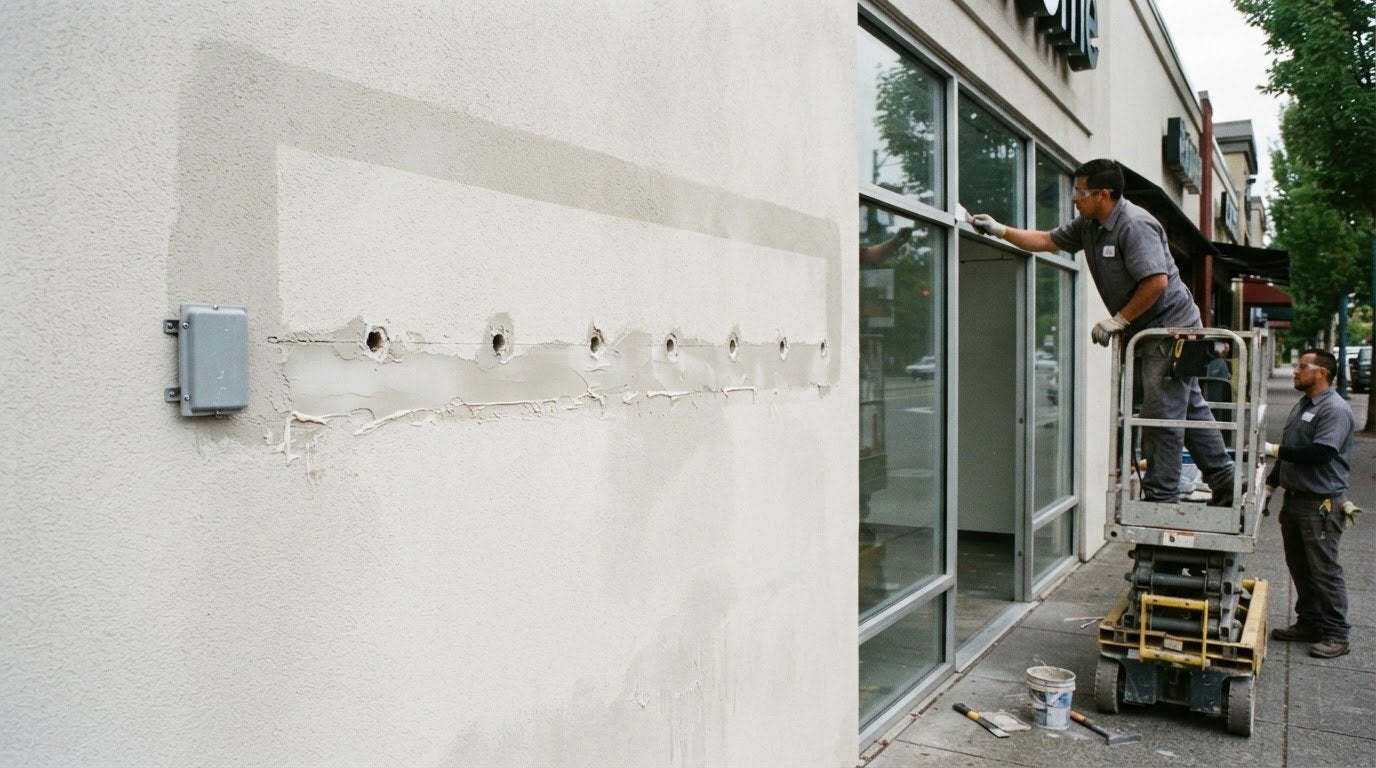
A sign may come down in a day, but preparing the space for lease handover involves more than removing it. The time needed depends on the sign’s size, type, height, and accessibility. For end-of-lease sign removal and site restoration in Redmond, plan for both the removal and the condition in which the façade must be left.
It’s easy to focus on the sign itself when a lease is ending. But the deadline may also involve removing interior and exterior signage and restoring the space. A commercial lease can require this work within 30 days after the lease expires or is terminated early.
This guide covers factors that affect the timeline, how to work backward from a lease-end deadline, and what restoration may involve, from patching mounting holes to addressing electrical connections and visible façade changes. Use these details to plan the work and coordinate a smooth handover.
Key Takeaways
Include fastener removal, anchor-hole sealing, and surface repair in the restoration scope, not just sign removal.
Build the schedule around the sign’s size, type, height, accessibility, and any obsolete hardware or structures that need removal.
Use the lease’s removal and restoration terms to set a clear completion deadline and plan the handover.
Assess façade changes and electrical connections as part of the work, and keep photos of the restored area for turnover records.
Table of Contents
Can you patch the wall after removal?
Whether commercial sign removal requires a permit depends on the work involved. Redmond requires inspections before permitted work is concealed, and each separate trade permit must be approved or finaled before final building approval.
Wall Patching and Repainting
After sign removal, restoration may include removing fasteners, patching mounting holes, and sealing anchor holes. The scope depends on what the installation leaves behind: a small fastener opening needs different repair from a larger mounting point or damaged panel. Repainting can help blend the repaired area, but the finish should account for the surrounding color and texture. The aim is a coherent façade, not visible marks from the former sign.
Surface Repair and Paint Matching
Surface repair can involve more than filling holes. Sign removal may expose faded paint, discoloration, or structural attachment points, so review the affected area before choosing paint. A close match takes the existing façade into account, not just the former sign’s colors. Photo documentation can record the restored façade for lease turnover. Include the repaired locations and enough of the surrounding surface to provide useful context.
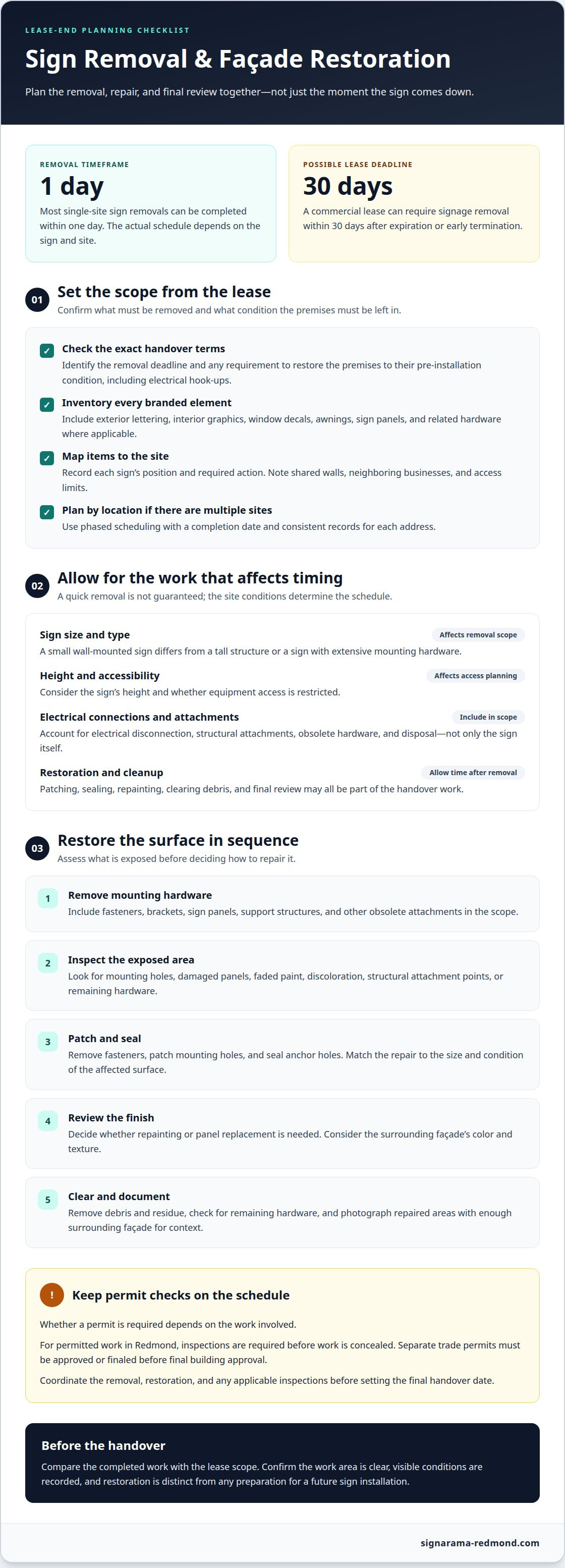
For commercial construction and repair, coordinate the restoration scope with the property’s handover requirements. A practical sequence is to remove mounting hardware, assess the exposed surface, complete patching and sealing, then review whether repainting is needed. If a panel or façade section cannot be repaired to the required condition, replacement may form part of the restoration plan. The sequence keeps surface work connected to the sign’s actual mounting points.
Storm damage can also affect façade repairs. If a storm reveals new damage near former sign attachments, document it separately from removal-related holes before repairs begin. An emergency response to storm damage may need a different sequence from planned lease-end restoration. Clear records help distinguish sign removal repairs from unrelated damage during the final condition review.
How long does a sign removal take?
Most single-site sign removals can be completed within one day. The schedule depends on the sign’s size, type, height, and accessibility. Removing a small wall-mounted sign differs from taking down a tall structure with electrical connections, extensive mounting hardware, or restricted equipment access.
When choosing a sign company, review the written scope, cleanup steps, restoration work, and insurance documentation. Confirm that the scope covers obsolete hardware, structural attachments, electrical disconnection, and disposal, not just removing the sign.
Redmond’s requirements depend on the work and whether permits apply. For permitted work, inspections are required before work is concealed, and separate trade permits must be approved or finaled before final building approval.
The cost of commercial sign removal and site restoration depends on the project. Factors include sign size, mounting complexity, height, electrical decommissioning, restoration scope, and disposal handling. Request a quote based on the specific site and work required.
Cleanup may include removing old brackets, fasteners, sign panels, and support structures. A site inspection helps identify what remains after the sign comes down, such as an unused base or exposed attachment points. When lease turnover also demands comprehensive commercial building care, providers such as advancecleaningservices.ca offer specialized cleaning solutions to ensure facilities are thoroughly prepared for handover. For work across multiple sites, phased scheduling can coordinate equipment and access while keeping each location’s scope clear.
Water damage and vandalism can add separate cleanup needs. A damp area may allow mold to begin growing within 24 to 48 hours, so water-damaged surfaces need prompt assessment and appropriate restoration. For graffiti, the cleaning approach should suit the affected surface; aggressive cleaning can damage some finishes.
Before handover, site preparation can include clearing removed materials and checking the work area for remaining hardware or debris. Commercial cleaning may address residue around the former installation, while a final inspection records visible conditions. For planning a future sign installation, explore commercial sign options alongside your site turnover plans.
Setting a deadline for signage removal after lease end
For Redmond tenants, separate the lease deadline from permit conditions tied to the work. A commercial lease can require removal of interior and exterior signage within 30 days after lease expiration or earlier termination. It can also require restoring the premises to their pre-installation condition, including removing sign panels and electrical hook-ups. Plan end-of-lease sign removal and site restoration in Redmond around both obligations.
Start with the lease’s exact handover terms, then schedule removal early enough to allow for surface restoration and a final review. The agreement may authorize the landlord to remove signage and restore the premises at the tenant’s expense if the tenant fails or refuses to do so. Set a clear completion date to coordinate access, removal, and turnover documentation.
Include every branded element in the scope. A storefront may have exterior lettering, interior graphics, window decals, and an awning. At a retail or shopping-center location, map each installation to the lease area and note shared walls, neighboring businesses, and access limits. This inventory helps prevent a panel or graphic from being missed during debranding.
For a business with multiple locations, schedule work in phases and set a completion date for each site. A location-by-location plan makes it easier to coordinate access and keep records consistent. List each sign, its position, and the required removal or restoration action for every address.
Preparing building surfaces for new signage requires a separate handoff. After removal, document exposed mounting points and remaining panels, then define the surface condition needed for the next installation. This distinguishes lease-end restoration from preparing for replacement signage and clarifies which work belongs to the outgoing tenant.
Redmond’s permit and inspection requirements depend on the work being performed. Permitted work must be inspected before it is concealed. Set the deadline for end-of-lease sign removal and site restoration in Redmond with time for applicable inspections, surface repairs, and a final site review, rather than scheduling removal for the lease’s final day. Keep the lease, site inventory, schedule, and completion documentation together for turnover.
The permits required depend on the work being performed. Any permitted work must be inspected before it is concealed.
End-of-lease sign removal and façade restoration
A complete handover addresses the sign, its attachment points, and any related site disturbance. The lease and the building’s existing finish help define the restoration scope.
Façade Restoration After Sign Removal
After removal, the contractor assesses exposed mounting holes, faded paint, discoloration, and structural attachment points. Restoration may include patching and sealing anchor holes, then addressing the finish so repaired areas fit the surrounding façade. The tenant should compare the agreed scope with lease requirements, including any obligation to return the space to its pre-installation condition. Photo documentation records the restored façade for turnover.
Repairing Holes, Wiring, and Landscaping
Repair sign holes by removing fasteners, patching openings, and sealing anchor points against exposure. For an illuminated or electrical sign, connections must be safely disconnected and properly sealed or capped. Assess visible façade damage around the installation as well. If removal disturbed landscaping, include those areas in the site review and define any restoration according to the lease and agreed property condition.
Restoration Steps and Timeline
Begin by reviewing the lease and identifying each sign, attachment, and electrical connection. Then remove the installation and assess newly exposed surfaces. Complete repairs, sealing, and any required inspections before final documentation. The schedule depends on sign size, height, access, mounting complexity, and restoration scope. This sequence helps ensure permitted work is inspected before it is concealed.
For a clear handover, align the restoration finish with the property’s standards and retain photos of completed work. If the façade will receive replacement signage, coordinate its planned placement with the repaired surface so new mounting points don’t conflict with existing repairs. Plan a replacement sign for the restored façade.
Signarama Redmond, WA: Signs
Signarama Redmond helps businesses plan signs and graphics for a refreshed storefront after lease-end restoration. Once the façade is ready for its next use, replacement signage or updated graphics can introduce new branding without retaining the outgoing tenant’s identity.
Bring the planned sign location, preferred message, and any property guidelines to the discussion. These details help shape signage that fits the storefront and its next stage of occupancy. If the space is changing tenants, align the new visual direction with the restored surface and property requirements before installation.
For signs or graphics that support your next storefront, contact Signarama Redmond to discuss your project.
Plan the Next Storefront Transition
Use the handover to establish a clear starting point for whoever occupies the space next. A concise record of the agreed property condition, outstanding approvals, and transition responsibilities helps separate the outgoing tenant’s work from future improvements. It also gives property teams and incoming businesses a shared reference as plans move forward.
A well-planned end-of-lease sign removal and site restoration in Redmond can prepare the storefront for its next visual direction. Consider how future signs or graphics should relate to the building, the new business identity, and property requirements. Discussing those choices early can align the next phase with the completed handover.
When you’re ready to explore signs or graphics for the space’s next chapter, contact Signarama about your next storefront project. A thoughtful transition can help the business move forward with a clear plan.
Frequently Asked Questions
Can you remove illuminated or electrical signs?
Yes. Illuminated sign removal includes safely disconnecting electrical connections and sealing or capping them afterward. Where service-side disconnection at the breaker or meter is required, licensed electrical subcontractors handle that work. For example, a storefront sign with a power connection needs electrical work coordinated with its physical removal, so the sign and connections are addressed as part of one planned handover.
Need Exterior Signs or Branding Removed?
Exterior sign removal can be planned alongside other tenant branding that needs to come down. A property review can identify building signs, window graphics, interior displays, and custom installations belonging to the outgoing business. This is useful when a storefront has accumulated several forms of branding over time. A documented scope helps distinguish tenant-specific items from shared property signage or permanent building features.
What Are Commercial Debranding Services?
Commercial debranding means removing visual elements associated with a departing business. A site assessment can cover exterior signage, interior graphics, custom installations, and color schemes. For example, a retail tenant may need window graphics and a branded reception display considered alongside its building sign. The assessment defines what should be removed and what should remain for the next occupant.
What happens to the old sign?
Depending on the tenant’s plans, the sign can be stored, relocated, recycled, or disposed of. A reusable sign intended for another location needs a different destination plan from a damaged sign being discarded. Decide what happens to the sign before removal, then include that direction in the project scope. This prevents storage or disposal from becoming an unresolved handover task.
Who is responsible for sign removal under a commercial lease in Redmond?
The lease sets the tenant’s responsibilities. It may require removal of interior and exterior signage and restoration of the premises. It may also authorize the landlord to remove signs and restore the space at the tenant’s expense if the tenant fails or refuses to do so. Review the specific lease language, including the deadline and required condition of the premises at handover.
Are there Redmond rules for disposal or recycling of removed signs and electrical components?
Plan the sign’s destination as part of the removal scope: it may be stored, relocated, recycled, or disposed of, depending on the tenant’s plans. Identify electrical components separately, since safe disconnection and handling are distinct from deciding the sign’s final destination. Recording the plan helps account for removed materials during site turnover.

Signarama Redmond, WA
Summer Hours (July - August) - MON-THUR: 8.00AM - 6.30PM, FRI - SUN: CLOSED
contact
Signarama Redmond, WA