
Temporary Banners: Fast, Affordable Signage While You Wait for Permanent Signs
Oct 1, 2026 by
A temporary banner is the fastest way to put your name on a building, often in days instead of the weeks a permanent sign can take. It costs a fraction of a fabricated sign and goes up without heavy equipment.
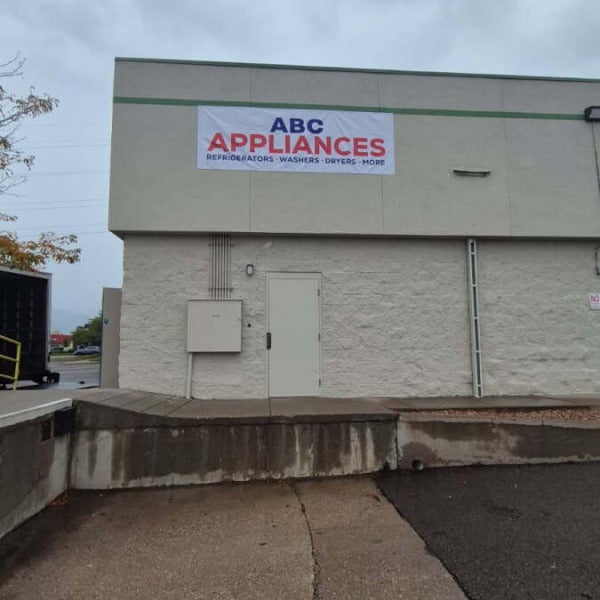
Take the ABC Appliances banner we recently installed in Colorado Springs. It mounts flat on the upper wall, uses bold red and navy lettering that reads from the parking lot, and tells drivers exactly what's inside: refrigerators, washers, dryers and more.
When a Temporary Banner Makes Sense
A banner fits any time you need visibility now, or only for a while.
• Grand openings. Announce you're open while your permanent sign is still in design, permitting or fabrication.
• New tenants and rebrands. Cover an old tenant's sign or show your new name before the channel letters arrive.
• Sales and seasonal promotions. Run a clearance, holiday sale or "Now Hiring" message, then take it down.
• Events. Tournaments, festivals, fundraisers and trade shows need signage for a weekend, not a decade.
• Construction sites. Tell the neighborhood what's coming and who's building it.
• Sponsor recognition. Fence banners at ballfields and sports complexes give local sponsors season-long exposure.
Materials, Sizes and Mounting
The right material depends on where the banner hangs and how long it needs to last. Colorado's wind and high-altitude sun are hard on signage, so we spec for both.
Vehicle Magnets 101: What They're Good For (and What They're Not)
Sep 22, 2026 by
If there's one product that gets underestimated, it's the humble vehicle magnet. Business owners either think of them as the cheap, temporary option, or they don't think of them at all — right up until a driver needs USDOT and MC numbers on a rental van by tomorrow morning. In reality, magnetic signs solve a specific, useful problem: they let you turn a vehicle into a rolling advertisement or a compliant commercial vehicle without committing to a permanent wrap or paint job.
Here's what vehicle magnets are actually good for, how they compare to vinyl decals and full wraps, and what the law requires if you're using them to display DOT, MC, or PUC numbers.
What Are Vehicle Magnets?
Vehicle magnets are flexible magnetic sheets, printed with your logo, contact information, or required regulatory numbers, that stick to the metal body of a car, van, or truck. They're removable by design — pull them off at the end of a shift, swap them between vehicles, or take them off entirely when the vehicle goes back to personal use.
They're typically made from a flexible vinyl-coated magnetic material, digitally printed and finished with a UV-resistant laminate so the color doesn't fade or peel in the sun.
Why Businesses Use Them
• Low cost, fast turnaround: Magnets are one of the most affordable ways to advertise a business, and a small set can usually be produced same-day or next-day.
• No commitment: Perfect for a personal vehicle that's only used for work sometimes, a rental or leased vehicle, or a seasonal business that doesn't want branding up year-round.
• Protects vehicle value: Nothing goes on the paint. Magnets come off clean, which matters for leased fleets or vehicles that will be resold.
• Easy to update: If your phone number, logo, or a driver's assigned vehicle changes, you replace a magnet instead of stripping and re-wrapping a truck.
• Fleet flexibility: Rotate magnets between vehicles as your fleet grows, shrinks, or gets reassigned.
Vehicle Magnets vs. Decals vs. Full Wraps
Magnets aren't a replacement for a full wrap — they're a different tool for a different situation. A full vehicle wrap or cut vinyl decal is permanent (or close to it), covers far more surface area, and holds up to years of weather and washing without moving. That's the right call for a primary company vehicle that's branded for good.
Magnets make more sense when the branding needs to come and go: a personal truck used for side jobs, a rental cargo van for a move, a contractor's vehicle that's only branded on the clock, or a fleet that leases vehicles and can't alter the paint. They also cost a fraction of a wrap, which matters if you're outfitting several vehicles at once.
A Very Common Use Case: USDOT, MC & PUC Compliance Magnets
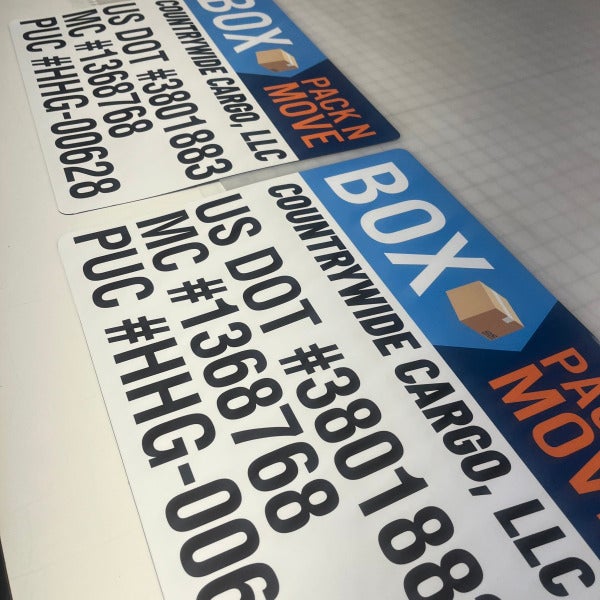
One of the most frequent reasons we print vehicle magnets isn't marketing at all — it's compliance. Any commercial motor vehicle operating under a USDOT number is required by federal law to display it on both sides of the power unit, along with the carrier's legal or trade name. Moving companies and other for-hire carriers typically also need to show their MC number and, in Colorado, their PUC number.
Under FMCSA regulation 49 CFR § 390.21, that marking has to:
• Show the company name (or a single trade name) and the number, preceded by “USDOT,” e.g., “USDOT 1234567”
• Be in a color that contrasts sharply with the vehicle, so it reads clearly
• Be legible in daylight from 50 feet away while the vehicle is stationary — in practice, that means lettering at least 2 inches tall
• Stay legible: no peeling, fading, or being blocked by racks, ladders, or dirt
Magnetic signs are explicitly allowed to satisfy this requirement, which is exactly why they're popular for this — they're cheap enough to update the moment a number changes, and they move easily between a fleet of rented, leased, or seasonal vehicles. The only catch is they need a flat, clean steel surface to grip properly, and drivers should check before every trip that they're still securely attached and legible.
Design Tips That Actually Matter
• Keep it simple: logo, business name, phone number or website. A magnet is read in a couple of seconds at a stoplight, not studied.
• Contrast beats cleverness: dark text on a light background (or vice versa) is what actually gets read from a distance.
• Match your magnet size to your door panel. Standard sizes (12″×24″, 18″×24″) work for most vehicles, but a custom size looks far more professional on anything unusual.
• Use a thicker-gauge magnet (30 mil or heavier) if the vehicle sees highway speeds regularly — thin magnets are more prone to lifting at the edges.
Get Them Made Right
We design, print, and finish vehicle magnets in-house — from a quick compliance set with your USDOT/MC/PUC numbers to a full set of branded door magnets for your whole fleet. Small jobs like this typically turn around in 24 hours.
Office Nameplate Signs: A Practical Guide for Colorado Springs Businesses
Sep 20, 2026 by
A nameplate sign is often the smallest sign in an office, and one of the most noticed. It's the first thing a client sees before a meeting, the detail that tells a visitor they're in the right place, and — done well — a quiet signal that a business pays attention to the details. At Signarama Colorado Springs South, office nameplates are one of the most requested items from law firms, financial offices, medical practices, and corporate suites across Colorado Springs, Monument, and Pueblo, and there's more to getting them right than picking a font.
Why Nameplate Signs Matter More Than You Think
Nameplate signs do double duty: they help clients and visitors navigate an office, and they reinforce a brand every time someone walks down the hall. A consistent set of nameplates — matching materials, colors, and mounting style across every door and desk — reads as polished and intentional. Mismatched, faded, or hand-labeled signs do the opposite, even in an otherwise well-run office. For growing businesses, nameplates are also one of the easiest wins for a cohesive look, since they're inexpensive relative to other signage but highly visible to the people who matter most: clients, partners, and new hires.
Materials and Finishes We Recommend
Most offices choose between a few core options: engraved plastic laminate (the classic two-tone look, durable and affordable), painted or printed acrylic, and dimensional or layered acrylic for a more upscale, branded appearance. For executive offices and reception areas, we often recommend a layered design — a solid color acrylic base with a raised or printed name plate, sometimes paired with a die-cut logo element that mounts above or beside the name. It's a small upgrade that makes a nameplate feel custom rather than off-the-shelf, and it holds up well to years of daily handling and cleaning.
Fixed vs. Interchangeable Nameplates
Not every office needs the same setup. A firm with a stable roster of partners or a business owner with a permanent office is usually best served by a fixed, single-piece nameplate that's built to last. Offices with more turnover — shared desks, rotating account managers, seasonal staff, or growing teams — benefit from interchangeable nameplate holders with sliding inserts, so a name change is a five-minute swap instead of a new sign order. We can quote either approach, and for larger offices we'll often recommend a mix: fixed nameplates for permanent leadership offices and interchangeable holders for desks and shared spaces.
When ADA Compliance Comes Into Play
Personal nameplates on an individual's office door are typically decorative and don't fall under ADA signage requirements. But if a nameplate is also serving as the permanent room identification — for a conference room, restroom, stairwell, or any room ID sign required by the building code — it needs to meet ADA standards for mounting height, raised tactile characters, Grade 2 Braille, and non-glare finishes. ADA signage is one of our core specialties, so when a project blends personal nameplates with code-required room identification, we make sure every sign in the package is compliant without looking institutional.
Recent Project Spotlight
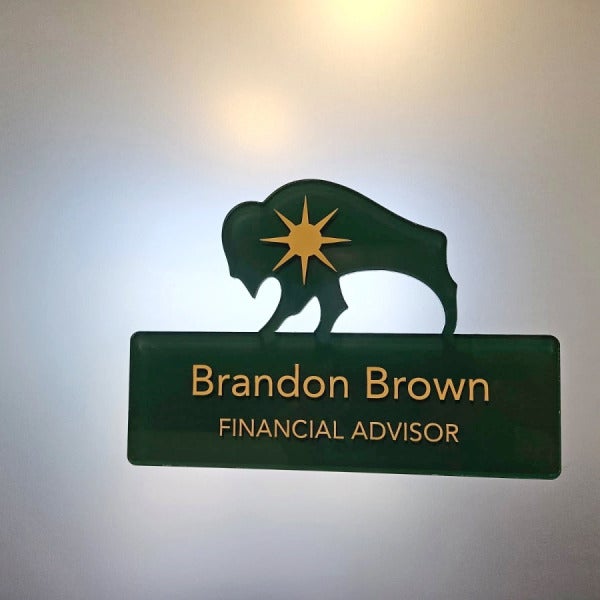
We recently produced a nameplate for a local financial advisor's office that's a good example of what a layered design can do. The sign pairs a solid dark green acrylic base with gold lettering for the name and title, topped with a custom die-cut silhouette of the company's logo mark mounted above the plate. The result reads as a single cohesive piece rather than a name sticker on a door, and it holds its color and finish under daily office lighting and handling.
● Custom shapes and logo cutouts, not just rectangles
● Color and finish matched to existing brand or suite standards
● Engraved, printed, or dimensional lettering options
● Fixed nameplates or interchangeable slide-in holders
● ADA-compliant room ID signage when a project requires it
Design Tips for a Cohesive Office Look
If you're outfitting more than one office or desk, standardize early: pick one base material, one color palette, and one mounting style, and use it everywhere. Keep title formatting consistent (all caps or all title case, not a mix), and leave room in the budget for a logo element on nameplates in client-facing areas like reception and conference rooms. It's much easier — and cheaper — to set that standard once than to reorder mismatched signs down the line.
Get a Quote for Office Nameplate Signs
Whether you need a single executive nameplate or a full office buildout, our in-house team handles design, production, and installation from start to finish
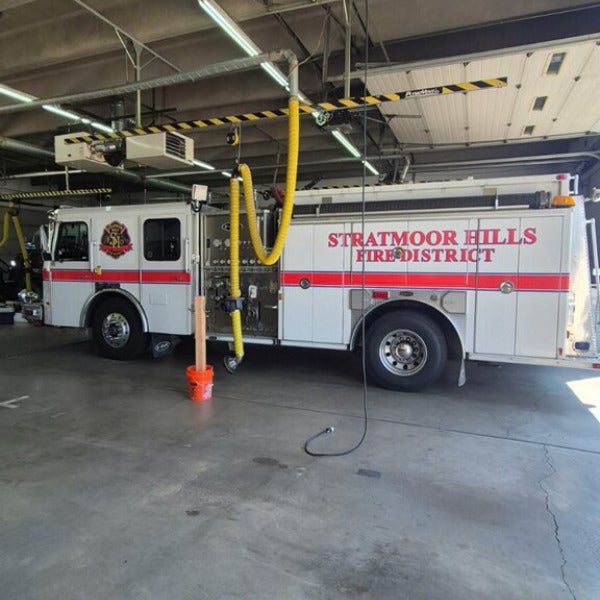
Fire Truck Vinyl Graphics in Colorado Springs: Inside Our Stratmoor Hills Fire District Project
Sep 17, 2026 by
Fire apparatus takes a beating. Between road salt, UV exposure, wash-bay chemicals, and thousands of miles responding to calls, any graphics applied to a fire engine have to be tougher than the graphics on an everyday work van. That's exactly the challenge we tackled on a recent project for Stratmoor Hills Fire District, and it's a great example of what goes into professional fire truck vinyl graphics — from material selection to layout to installation.
When a Fire Engine Needs More Than Paint
Departments have two real options for apparatus identification: factory paint and lettering, or custom-cut and printed vinyl graphics. Vinyl wins for most departments because it's faster to produce, far less expensive than a repaint, and easy to update when a unit number, roster, or district logo changes. High-performance vinyl also matches paint-level durability when it's installed correctly, which is where working with an experienced sign shop makes the difference between graphics that last the life of the truck and graphics that start lifting at the edges within a year.
The Project: Stratmoor Hills Fire District
For this job, our team produced and installed custom vinyl graphics for a Stratmoor Hills Fire District engine, including the district name and identifying markings applied directly to the cab and body panels. As with any apparatus project, the graphics had to line up cleanly around door seams, compartment doors, and curved surfaces, and hold their color and adhesion through daily use, weather, and regular truck washing.
Materials Built to Perform in the Field
We use high-performance cast vinyl films with UV-stable inks and a protective laminate for apparatus and fleet work. Cast vinyl conforms to compound curves and rivets far better than lower-cost calendared vinyl, which matters on a vehicle body with as many contours as a fire engine. The laminate layer protects against fading, abrasion from the wash bay, and chemical exposure, so the district's colors and lettering stay sharp for years rather than months.
Visibility and Reflective Striping Standards
Emergency vehicle graphics aren't only about branding — visibility is a safety issue. NFPA 1901, the standard that guides fire apparatus specification, addresses retroreflective markings on the rear and sides of first-line apparatus, commonly satisfied with alternating chevron striping in high-visibility colors. When a department needs reflective chevrons, retroreflective lettering, or DOT-compliant conspicuity striping alongside its branding, we build that into the design and use reflective-grade vinyl so the finished apparatus meets the department's spec and stands out clearly at night or on scene.
From Design to Installation — All In-House
Signarama Colorado Springs South handles fire and municipal fleet graphics from design through final installation under one roof. That matters for apparatus work, where turnaround time is tight and templates need to be right the first time. Our in-house team designs the layout, prints and cuts the vinyl, and installs it — with fast turnaround on smaller jobs and full-scale fleet projects scheduled around a department's availability. We proudly serve fire districts, municipalities, and fleets throughout Colorado Springs, Monument, and Pueblo.
● Custom-designed layouts matched to your department's colors and roster
● High-performance cast vinyl with protective laminate for long-term durability
● Reflective and chevron striping options to support NFPA 1901 visibility guidelines
● In-house design, printing, and installation — no subcontracting delays
● Experience with apparatus, command vehicles, and support fleet graphics alike
Ready to Upgrade Your Department's Equipment?
Whether you need graphics for a single engine or a full fleet refresh, our team can design, produce, and install durable vinyl graphics that meet your department's look and safety requirements.

Vehicle Branding: Why Your Fleet Might Be Your Best Marketing Investment
Aug 28, 2026 by
Every truck, van, and sedan your business owns spends its day parked at job sites, idling at stoplights, and sitting in grocery store lots — in front of exactly the kind of local audience most advertising spends a fortune trying to reach. A blank vehicle treats that as wasted opportunity. A branded one turns it into a moving billboard that works whether you're behind the wheel or not.
Vehicle branding covers a wide range, from a full wrap that turns a truck into a rolling piece of art to a simple door decal with a logo and phone number. The right choice depends on your budget, your fleet, and what you're actually trying to accomplish — but the underlying case for doing something is stronger than most business owners realize.
The Numbers Behind Vehicle Advertising
Fleet and vehicle graphics consistently post some of the lowest costs per impression of any advertising format available. Industry data puts the average vehicle wrap at 30,000 to 70,000 daily views, translating into millions of impressions over the life of the wrap — and at a cost that other channels can't come close to matching.
● Vehicle wraps: roughly $0.77 per thousand impressions (some businesses see it as low as $0.48)
● Radio: about $7.75 per thousand impressions
● Newspaper: about $19.70 per thousand impressions
● Magazine: about $21.46 per thousand impressions
● Television: about $23.70 per thousand impressions
It's also a one-time investment rather than a recurring media buy. Once a wrap is installed, it keeps generating impressions every day it's on the road without a monthly bill attached. And the awareness it builds compounds with everything else you're doing — studies on out-of-home advertising have found that including vehicle graphics in a broader campaign lifted search-driven ROI by roughly 40% and print ROI by about 14%, because people see the truck, then see the ad or the mailer, and the two reinforce each other.
What Actually Makes a Wrap Work
A wrap only pays off if people can read it and remember it, and that comes down to a handful of design fundamentals more than clever graphics:
● Legibility at speed — bold, high-contrast lettering that someone can read in the two or three seconds they're near your vehicle in traffic
● One clear message — a logo, a short line about what you do, and a phone number or website. Not all three competing for attention plus five extra taglines
● Consistency with everything else — the same colors, fonts, and logo treatment as your website, signage, and business cards, so the truck reinforces the brand instead of looking like a separate thing
● Contact information that's actually usable — a phone number large enough to read and remember, not just decorative
This is also where a lot of otherwise-good wraps fall short: window and door handles, gas caps, and mirrors all break up the design, and a wrap that isn't planned around them ends up with text split across a seam or a logo interrupted by a door handle. Good vehicle branding is designed for the actual vehicle, not just dropped onto a flat template.
Full Wrap Isn't the Only Option
A complete wrap is the highest-impact option, but it's not the only way to brand a vehicle, and it's worth matching the format to the budget and the fleet:
● Full wraps — maximum coverage and impact, best for vehicles that are constantly on the road or serve as a rolling showpiece
● Partial wraps and spot graphics — cover key panels (hood, sides, tailgate) at a lower cost while still making a strong visual statement
● Perforated window film — turns rear or side windows into branding space without blocking visibility from inside
● Cut vinyl decals and lettering — logo, name, and contact info on doors; the most cost-effective option for a larger fleet or a tighter budget
● Magnetic signs — removable branding for a personal vehicle used occasionally for work, or for a rental
For a company with more than a handful of vehicles, this often means mixing formats: a full or partial wrap on the vehicles that see the most public exposure, and clean decal packages on the rest, so the whole fleet reads as one consistent brand without every vehicle needing the same budget.
Getting It Right From Design Through Install
Vehicle wraps involve more moving pieces than most signage: file setup that accounts for the vehicle's exact curves and panels, print materials rated for years of sun and weather, and an installation that avoids bubbles, lifting edges, and misaligned seams. Handling design, printing, and installation under one roof — rather than passing the project between a designer, a print shop, and an installer — is what keeps the final result matching the mockup and keeps the wrap looking clean for years instead of months.
Signarama Colorado Springs South handles the full process in-house for businesses across Colorado Springs, Monument, and Pueblo — from the first design concept to the finished install. Whether it's a single work truck or a full fleet, the goal is the same: a vehicle that looks sharp, reads clearly, and keeps working for the business every mile it drives.
Window Graphics & Perforated Film: Turning Glass Into Marketing Space in Colorado Springs
Aug 17, 2026 by
Every square foot of glass on your building is space you're either using or wasting. Window graphics, from cut vinyl lettering to full-color perforated window film, turn storefront windows, glass doors, and office partitions into branding, privacy, and marketing space without any construction or permitting. Here's what window graphics and window perf actually do, what they cost to maintain, and how to know which type is right for your space.
What Are Window Graphics?
"Window graphics" covers several distinct products, and most businesses end up using more than one:
• Cut vinyl lettering, the most affordable option, ideal for hours, phone numbers, and logos in a solid brand color
• Full-color printed graphics, applied to the interior or exterior face of the glass for photo-quality branding or promotions
• Frosted or etched film, which replicates the look of sandblasted glass for privacy on doors, partitions, and conference rooms without blocking light
• Perforated window film (window perf), a printed vinyl with thousands of small holes that lets people inside see out while the exterior reads as a solid graphic
What Is Perforated Window Film (Window Perf), Exactly?
Perforated window film is a vinyl material punched with a pattern of tiny perforations, commonly about 1.5mm, then printed with a full-color design. The one-way effect comes down to light and perspective: from inside, your eye naturally focuses through the small holes toward the brighter light outside, so the window still feels open. From outside, the printed surface reflects more light than passes through the tiny holes, so passersby see the graphic, not your interior.
Perforated film comes in a few standard hole-to-vinyl ratios, and the right one depends on how much you want to prioritize visibility versus graphic impact:
• 50/50, equal vinyl and holes, maximizes interior visibility
• 60/40 and 65/35, a balance of clearer graphics with reasonable see-through
• 70/30, the most common choice for retail storefronts, favoring graphic impact
• 80/20, maximum graphic presence for high-visibility advertising
One thing to plan around: the one-way effect can reverse at night if your interior lighting is brighter than the light outside, so perf works best paired with a lighting plan for after-hours visibility.
Why Businesses Invest in Window Graphics
• Turns unused storefront glass into advertising space without altering your building or lease
• Adds privacy to offices, conference rooms, and treatment rooms without giving up natural light
• Blocks an estimated 75% of solar heat gain, which has been shown to reduce afternoon cooling costs by around 12% in real-world installations
• Costs a fraction of a new pylon or monument sign while still driving walk-in traffic
• Reinforces your brand at eye level, right where customers are standing at your door
Where Window Graphics Work Best
• Storefront windows facing street traffic, perforated film for promotions and branding that reads clearly from the sidewalk or road
• Entry doors and glass vestibules, full-coverage printed or frosted film for a branded first impression
• Office partitions, conference rooms, and restrooms, frosted or etched film for privacy without losing light
• Vehicle showrooms and real estate offices, large-format printed graphics for promotions that change seasonally
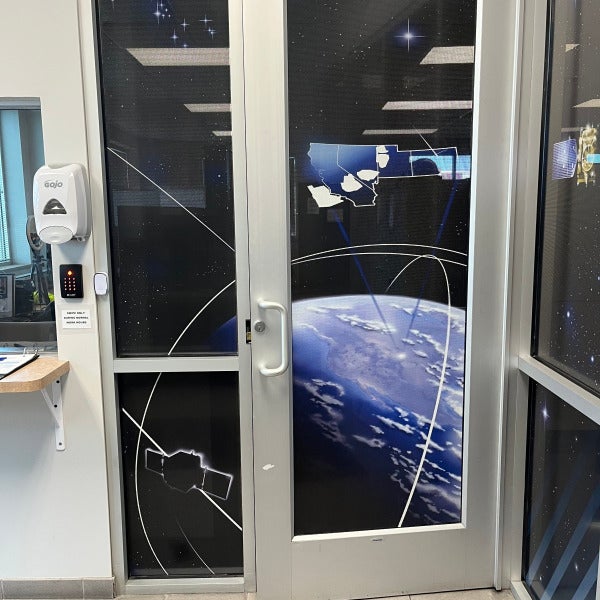
The photo above is a recent full-glass door and window installation our team completed, combining a custom printed design across multiple panes for a cohesive, branded entryway.
How Long Does Window Film Last?
• Exterior perforated film, unlaminated: roughly 1 year before noticeable fading
• Exterior perforated film, laminated: up to 3 years of durability
• Interior-applied graphics and frosted film: 5+ years, since they're protected from direct UV and weather
Because exterior graphics take the brunt of Colorado Springs sun and weather, we recommend laminated film for any storefront-facing installation and factor a refresh cycle into seasonal or promotional graphics.
What to Expect from a Professional Window Graphics Installation
• A site visit to measure your glass and evaluate sun exposure, interior lighting, and viewing angles
• Material and ratio recommendations based on how much visibility versus graphic impact you need
• In-house design and full-color printing sized to your exact window dimensions
• Clean, bubble-free professional installation, with removal that won't damage the glass or leave residue
Why Colorado Springs Businesses Choose Signarama
• Full in-house capability from design through installation
• Fast turnaround, including 24-hour service on small jobs
• Local experience serving Colorado Springs, Monument, and Pueblo businesses
• Guidance on which window graphic type fits your goals, whether that's privacy, branding, or both
LED Sign Conversion in Colorado Springs: Why It's Time to Upgrade Your Business Signage
Aug 15, 2026 by
If your storefront still relies on neon tubing or fluorescent lamps to light up at night, you're paying more to run it, and getting less visibility, than you need to. An LED sign conversion swaps outdated illumination for modern LED modules inside your existing channel letters, cabinet sign, or monument, cutting energy use, extending the life of your sign, and giving your storefront a brighter, more consistent glow after dark. Below, the team at Signarama Colorado Springs South breaks down how LED conversions work, what they cost to run versus older lighting, and how to know when it's time to make the switch.
What Is an LED Sign Conversion?
An LED sign conversion, sometimes called an LED retrofit, replaces the internal lighting of an existing sign, neon tubing, fluorescent lamps, or incandescent bulbs, with LED modules or LED neon-flex, without rebuilding the sign cabinet or letters from scratch. Because the retrofit reuses your existing sign structure, mounting, and electrical, it's typically faster and less expensive than a full sign replacement, while still delivering the brightness, uniformity, and durability of new LED technology.
Signs Your Business Sign Is Ready for an LED Upgrade
• Sections of your channel letters or cabinet sign are dim, flickering, or completely dark
• You're replacing fluorescent tubes or neon transformers more than once a year
• Your electric bill has crept up with no change in operating hours
• The sign looks noticeably dimmer or more yellow than when it was installed
• You're getting service calls for a sign that's less than 10 years old
Any one of these is a signal that your current lighting is nearing the end of its useful life, and that the cost of keeping it running is starting to outweigh the cost of converting it.
The Real Numbers Behind an LED Conversion
The case for converting comes down to energy use, lifespan, and maintenance, and the difference is significant no matter what your sign currently uses:
• Fluorescent to LED: roughly 50-70% less energy for the same or better brightness
• Neon to LED: roughly 75-85% less energy, with none of the transformer or glass-tube upkeep
• Typical channel letter retrofit: an 800-watt sign can drop to 240-320 watts
• Typical cabinet sign retrofit: a 400-watt sign can drop to 120-160 watts
• LED modules are rated for 50,000-100,000 hours of operation, roughly 10-15 years at typical storefront operating hours, versus 18-24 months between fluorescent tube replacements
• Most channel letter and cabinet conversions pay for themselves in energy and maintenance savings within 14-30 months
Beyond the utility bill, LED conversions also cut down on service calls. Fluorescent and neon systems tend to need attention multiple times a year, tube replacements, transformer failures, ballast issues, while LED systems typically run for years between service visits. For multi-location or high-visibility signage, that maintenance savings often adds up to as much of the return on investment as the lower electric bill.
Which Signs Can Be Converted to LED?
Most illuminated sign types on the market today can be retrofitted, including:
• Channel letters, internally illuminated with LED modules replacing neon tubing
• Cabinet and pole signs, backlit faces converted from fluorescent to LED sheet modules
• Monument signs with internal illumination
• Awning and canopy signage
• Existing neon and neon-style signage, converted to flexible LED neon for the same look with a fraction of the power draw and none of the fragile glass tubing
In some cases, particularly older cabinet signs with worn faces or damaged housings, it makes more sense to combine the LED retrofit with a face replacement or refresh so the sign looks as good as it performs. Our team evaluates the whole sign, not just the lighting, before recommending a conversion.
What to Expect from a Professional LED Conversion
• On-site evaluation of your existing sign, wiring, and power supply
• A lighting plan matched to your sign's size, letter depth, and face material for even, consistent illumination
• Removal of old lighting components and installation of new LED modules or drivers
• Testing for brightness and color consistency before we leave the site
• Coordination with permitting where local code requires it for electrical or structural work
Because Signarama Colorado Springs South handles design, fabrication, and installation in-house, most channel letter and cabinet sign conversions can be scheduled and completed without the sign ever leaving your building, minimizing downtime for your storefront.
Fleet Graphics 101: Turning Your Work Trucks Into a Rolling Billboard
Aug 13, 2026 by
Every mile your work truck drives is free advertising — if it's branded. A plain fleet vehicle is a missed opportunity, while a truck with clean, professional graphics turns every job site, parking lot, and stoplight into an impression for your business. Fleet graphics are one of the most cost-effective marketing investments a service business can make, and they keep working long after the ad budget for the month runs out.
What Are Fleet Graphics?
Fleet graphics are vinyl decals, lettering, and logos applied directly to a work vehicle's doors, tailgate, or panels to display a business name, phone number, website, and services. Unlike a full or partial wrap that covers most of the vehicle's body, fleet graphics are typically simpler: die-cut vinyl lettering and a logo applied to key panels, giving strong visibility at a fraction of the cost and install time of a full wrap.
Fleet Graphics vs. Vehicle Wraps
• Fleet Graphics (Cut Vinyl Decals): Individual lettering, logos, and contact info applied to specific panels like doors and tailgates. Faster to install, lower cost, and easy to update or remove.
• Partial Wraps: Larger printed vinyl graphics covering sections of the vehicle — hoods, rear panels, or full door coverage — for a bigger visual footprint than lettering alone.
• Full Wraps: Printed vinyl covering nearly the entire vehicle body, offering maximum branding impact and creative freedom, at a higher cost and longer install time.
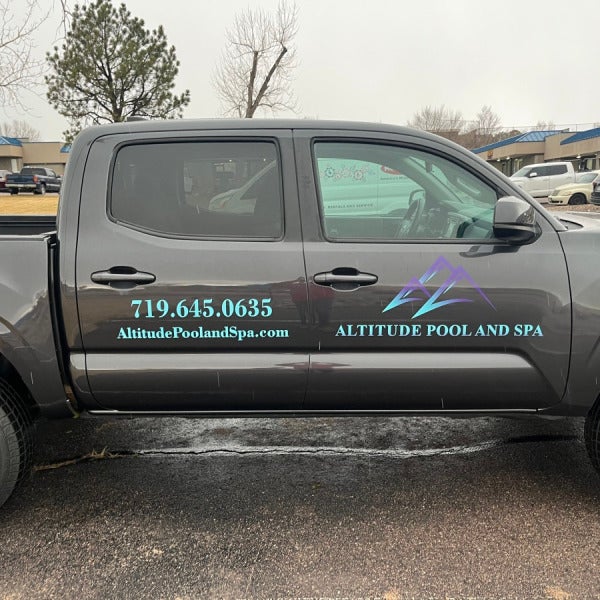
For many service businesses — plumbers, HVAC techs, pool and spa companies, contractors — clean fleet graphics like lettering, a phone number, and a logo deliver excellent return on investment without the cost of a full wrap.
Why Fleet Graphics Are a Smart Marketing Investment
• Mobile Advertising: A single work truck can generate thousands of visual impressions per month simply by driving its normal daily route.
• One-Time Cost, Ongoing Return: Unlike a monthly ad spend, fleet graphics are a one-time investment that keeps advertising for years.
• Professional Credibility: A branded truck signals an established, trustworthy business to customers, especially when parked in front of a job site or a customer's home.
• Easy Recall: A consistent logo, color scheme, and phone number across every vehicle helps customers remember and recognize your business around town.
• Low Cost Per Impression: Compared to digital or print advertising, fleet graphics have one of the lowest costs per thousand impressions of any marketing channel.
What to Include on Your Fleet Graphics
• Business Name and Logo: Large enough to read at a glance from an adjacent lane or across a parking lot.
• Phone Number: Bold, high-contrast lettering so it's legible even from a distance or in a driver's mirror.
• Website Address: A short, easy-to-remember URL performs better than a long one.
• Core Services: A short list of key services (e.g., "Service | Maintenance | Install") tells potential customers exactly what you do.
• Consistent Branding: Matching colors, fonts, and logo placement across every vehicle in the fleet builds a cohesive, professional look.
Design and Material Considerations
• High-Performance Cast Vinyl: Holds up best to Colorado's UV exposure, temperature swings, and washing without cracking or fading.
• Contrast Against Vehicle Color: Light lettering on dark trucks (or vice versa) reads far better at a distance than low-contrast combinations.
• Panel Placement: Doors are the most common placement, but tailgates and rear windows add visibility to vehicles behind you in traffic.
• Reflective Vinyl Options: Reflective lettering improves visibility and safety for vehicles that operate early morning, at night, or on job sites near traffic.
How Long Do Fleet Graphics Last?
Quality cast vinyl fleet graphics typically last 5 to 7 years outdoors with proper care, and often outlast the useful advertising life of the vehicle itself. Regular washing (avoiding high-pressure direct spray on edges) and parking in shade when possible help graphics hold their color and adhesion longer, especially at Colorado's high altitude.
Brand Every Truck in Your Fleet
At Signarama Colorado Springs South, we design, print, and install fleet graphics built to handle Colorado's intense sun, wind, and temperature swings. Whether it's a single work truck or a full fleet rollout, our team keeps every vehicle consistent and on-brand across Colorado Springs, Monument, and Pueblo.
ACM Signs: The Durable, Permanent Way to Get Noticed From Every Angle
Aug 10, 2026 by
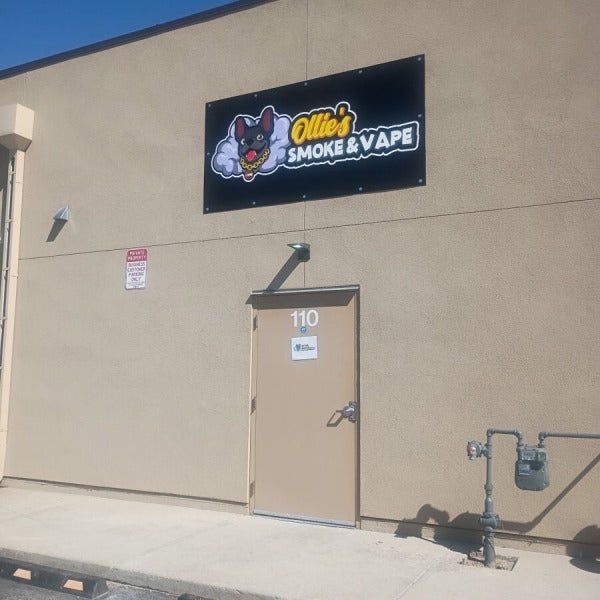
Not every entrance a customer uses is the one facing the street. Loading docks, side doors, and rear entrances in business parks and strip centers see plenty of foot traffic too — and a well-placed ACM sign is one of the most durable, cost-effective ways to make sure that traffic finds the right door. Printed, mounted, and built to stay put, ACM signs turn an overlooked wall into permanent advertising space.
What Is an ACM Sign?
An ACM sign is a flat-panel sign made from aluminum composite material — two thin sheets of aluminum bonded to a solid polyethylene core, often known by brand names like Dibond or Alumalite. The panel is printed or vinyl-wrapped with the business graphics, then mounted directly to a building facade using standoffs, screws, or an adhesive system. Because the panels are rigid, lightweight, and fully weatherproof, ACM is one of the most popular materials for permanent flat signage on secondary entrances, exterior walls, and locations where a fully illuminated cabinet sign isn't practical or allowed.
Why ACM Signs Work So Well for Secondary Entrances
• Built to Last: Unlike paper or fabric materials, ACM panels are rigid and weatherproof, holding their shape and color for years without sagging, tearing, or fading prematurely.
• Cost-Effective Permanence: ACM signs deliver a large, bold, permanent graphic at a fraction of the cost of an illuminated cabinet sign — a smart option for back entrances, loading areas, or secondary doors that still see regular customer traffic.
• Big Impact, Clean Install: A properly sized ACM panel can be seen from a distance across a parking lot or business park, giving an easily missed door the same visual weight as the main storefront.
• Durable Outdoor Materials: Aluminum composite resists rust, warping, and impact damage, so a well-made ACM sign holds up to sun, wind, hail, and temperature swings for many years.
• Flexible Mounting: Standoffs, direct-mount hardware, or adhesive systems make ACM panels easy to install on stucco, block, or metal building facades — no electrical work required.
Design Tips That Make an ACM Sign Actually Get Noticed
• Bold, Simple Graphics: A clean logo and a few key words read far better from a distance than a cluttered design packed with text.
• High Contrast Colors: Dark backgrounds with bright lettering (or vice versa) stand out against building stucco, brick, or metal siding.
• Size It for the Distance: A sign meant to be read from across a parking lot needs larger lettering than one mounted near a walkway — sizing should match how far away people will actually be standing.
• Standoff or Flush Mount: Standoff hardware creates a dimensional, elevated look, while a flush mount gives a cleaner, more integrated finish against the building.
• Consistent Branding: Matching the sign's colors, fonts, and logo to your storefront signage keeps the brand recognizable no matter which door a customer approaches.
Common Uses for ACM Signs
• Secondary or rear building entrances in business parks and strip centers
• Suite and unit identification on multi-tenant buildings
• Permanent replacements for temporary banners or paper signage
• Directional and wayfinding signage across a property
• Exterior branding for warehouses, industrial parks, and back-of-house entrances
How Long Do ACM Signs Last?
A quality ACM sign with UV-rated inks or laminated vinyl typically holds its color and structural integrity for 7 to 10-plus years outdoors. In Colorado's high-altitude climate, UV-resistant finishes and a rigid aluminum core help an ACM sign hold up against intense sun and temperature swings far longer than fabric or paper alternatives.
Get a Sign That Gets Noticed
At Signarama Colorado Springs South, we design, print, and install ACM signs built to handle Colorado's sun, wind, and temperature swings. Whether it's a rear entrance that needs more visibility, suite identification, or a permanent upgrade from temporary signage, our team can deliver a durable, professional result across Colorado Springs, Monument, and Pueblo
Light Box Faces 101: How Illuminated Sign Panels Keep Your Business Visible Day and Night
Aug 6, 2026 by
Walk through any shopping center after sunset and the businesses that catch your eye are almost always the ones glowing from within. That glow usually comes from a light box face — one of the most cost-effective, durable, and attention-grabbing sign products in the industry. If you've ever wondered what's behind that evenly lit panel above a storefront, here's everything you need to know.
What Is a Light Box Face?
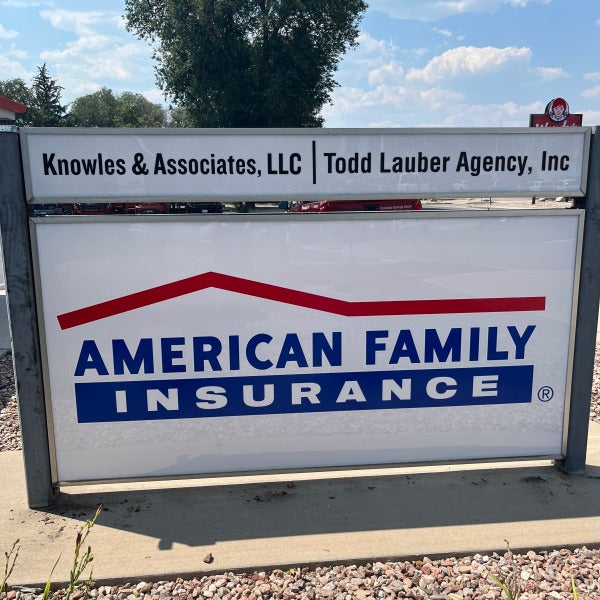
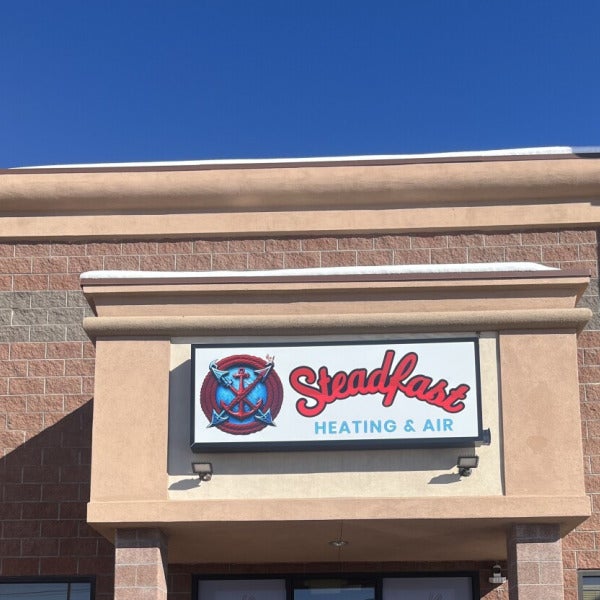
A light box face is the flat, translucent panel that sits on the front of an illuminated cabinet sign, channel letter set, or pylon sign. During the day, the face displays your logo and colors like any other sign. At night, internal LED modules shine through the material, turning the whole panel into a bright, uniform advertisement that's visible from the road long after the sun goes down.
The "box" refers to the aluminum cabinet or retainer frame that houses the lighting and holds the face in place. The face itself is the visible surface people actually read — which makes its material, printing, and design the most important factor in how well the sign performs.
Common Materials Used for Light Box Faces
• Acrylic (Plexiglass): The industry standard. Lightweight, weather-resistant, and available in dozens of translucent colors. Acrylic diffuses LED light evenly and holds up for years outdoors.
• Polycarbonate: A tougher, more impact-resistant option often used in high-traffic or high-vandalism areas like parking garages and transit stops.
• Flexible Face Fabric: A stretchable vinyl-like material pulled taut over a cabinet frame, common on larger pylon and monument signs. It's lighter than acrylic and easier to ship for big-box installations.
• Routed and Backed Faces: Aluminum or PVC faces routed out where the copy or logo goes, then backed with colored acrylic or Lexan. This produces a crisp, dimensional look with light shining only through the lettering.
Why Light Box Faces Are a Smart Investment
• 24/7 Visibility: An illuminated face works just as hard for your brand at 9 p.m. as it does at 9 a.m., extending your storefront's advertising hours without any extra effort.
• Consistent Branding: Printed or vinyl-applied graphics keep your logo, colors, and fonts sharp and standardized across every location.
• Low Maintenance: Modern LED modules are rated for tens of thousands of hours, so a well-built light box face can run for years with minimal upkeep.
• Energy Efficiency: LED illumination uses a fraction of the electricity that older fluorescent or neon light boxes required, cutting utility costs over the sign's lifespan.
• Easy Updates: Because the face is a separate component from the cabinet, rebranding, a new logo, or seasonal promotions can often be handled by swapping or reprinting the face rather than replacing the entire sign.
Where You'll See Light Box Faces
Light box faces show up everywhere illuminated signage is used, including storefront cabinet signs, pylon and monument signs, channel letter backs and returns, gas station canopies, directory and multi-tenant signs, and awning or under-canopy panels. Any business that wants strong evening visibility — restaurants, retail centers, medical offices, auto shops, and more — benefits from a well-designed light box face.
Design Considerations for a High-Performing Light Box
• Color Choice: Darker background colors can look great during the day but may block too much light at night. A sign professional can balance aesthetics with light transmission.
• Copy-to-Background Contrast: High contrast between text and background keeps the message legible in daylight and after dark.
• LED Layout: Even LED spacing behind the face prevents "hot spots" — bright patches that make a sign look unevenly lit.
• Local Sign Code Compliance: Size, brightness, and placement of illuminated signs are regulated differently across Colorado Springs, Monument, and Pueblo, so it pays to work with a shop that knows the local permitting process.
How Long Do Light Box Faces Last?
With quality acrylic or polycarbonate material and proper UV-rated inks or vinyl, a light box face can typically last 7 to 10 years or more before fading or yellowing becomes noticeable. Faces exposed to intense high-altitude Colorado sun benefit from UV-protective laminates, which help preserve color vibrancy year-round.
Get a Light Box Face Built for Colorado's Climate
At Signarama Colorado Springs South, we design, fabricate, and install light box faces engineered for Colorado's intense sun, wind, and temperature swings. From a single replacement face to a full illuminated sign package, our team handles design, permitting, fabrication, and installation from start to finish across Colorado Springs, Monument, and Pueblo.
Fleet Graphics: Turning Your Work Trucks Into Your Hardest-Working Salespeople
Jul 23, 2026 by
Fleet Graphics: Turning Your Work Trucks Into Your Hardest-Working Salespeople
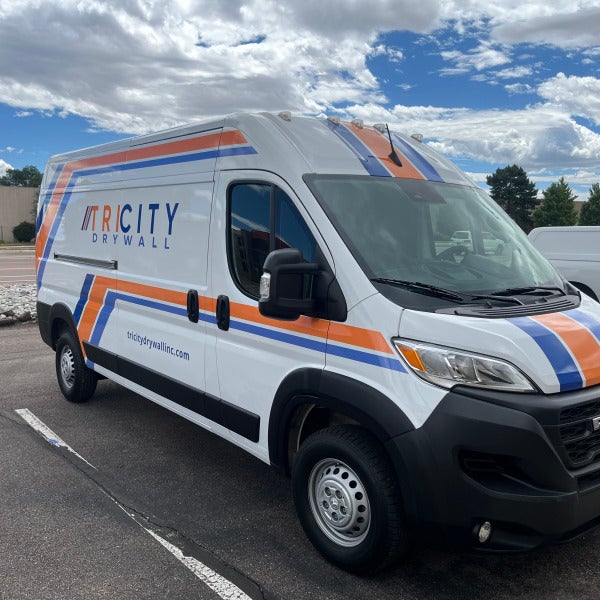
If your business sends vehicles out into the world every day, you already own a marketing asset you're probably underusing. A well-designed fleet wrap turns every job site, parking lot, and stoplight into an impression for your brand — no ad spend required after the install. We recently wrapped a van for Tri City Drywall, a local drywall contractor, and it's a great example of what fleet graphics can do when they're planned well.
Why Fleet Graphics Are One of the Best Investments a Local Business Can Make
A vehicle wrap works around the clock in a way most advertising can't. It's parked outside a customer's home while a crew works inside. It's sitting at a red light on a busy corridor. It's in the lot at the supply house next to every competitor's truck. Studies on out-of-home advertising consistently point to vehicle graphics as one of the lowest costs per impression of any medium, simply because the vehicle is already going where your customers are.
For trade businesses especially — drywall, electrical, plumbing, HVAC, landscaping — a wrapped vehicle also does something a billboard never can: it builds trust. A truck with a clean, professional wrap parked in a residential driveway signals to the whole neighborhood that a legitimate, established company is on the job. That's free word-of-mouth advertising every time a crew shows up to work.
What Went Into the Tri City Drywall Wrap
For this project, we designed a wrap that carries Tri City Drywall's brand colors in bold diagonal stripes running the length of the van, with the logo placed prominently on the side panel and the website called out clearly below it. The goal was legibility at a glance — a passing driver or a homeowner glancing out a window should be able to read the company name and web address in a second or two, without the design feeling busy or cluttered.
As with all of our vehicle work, the project moved through design, proofing, print, and in-house installation without leaving our shop. That full in-house workflow, from concept to install, is one of the things that lets us turn small and mid-size vehicle jobs around quickly, and it means the color-matching and panel alignment are handled by the same team from start to finish.
Ready to Put Your Fleet to Work?
Whether you have one van or a dozen trucks, a well-designed wrap pays for itself many times over in brand exposure and credibility. We handle everything in-house — design, printing, and installation — for businesses across Colorado Springs, Monument, and Pueblo.
ADA Signage: A Final-Walkthrough Checklist Item GCs Can't Skip
Jul 2, 2026 by
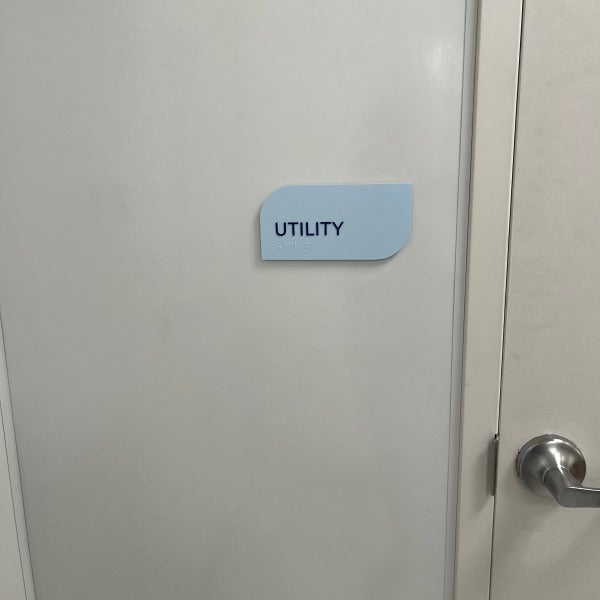
On a commercial build or tenant improvement, ADA signage is easy to push to the bottom of the punch list, right up until the final inspection flags it. Room ID signs, restroom signs, and braille-compliant wayfinding aren't optional finishing touches; they're a code requirement under the ADA and ICC A117.1, and getting them wrong (wrong mounting height, missing braille, wrong contrast) can hold up a certificate of occupancy. The sign below is a recent restroom/utility door sign Signarama Colorado Springs South produced and installed as part of a tenant buildout.
What Inspectors Actually Check
ADA and ICC A117.1 requirements cover more than most GCs expect from a sign vendor: raised characters at a minimum height paired with grade 2 braille below, specific mounting height ranges measured to the centerline of the sign, non-glare finishes, and minimum contrast between text and background. Mounting location matters too: signs need to sit on the latch side of the door, with clear floor space in front so someone can approach and read it without the door swinging into them. A sign that looks right but misses any one of these specs can fail inspection just as easily as one with no sign at all.
Where This Fits in the Build Schedule
ADA signage works best as a coordinated line item, not a last-minute scramble:
• Early in permitting: room counts and naming get locked down so sign quantities and content are accurate.
• Mid-construction: signs are fabricated while finishes and door hardware are being installed.
• Final walkthrough: signs are mounted and ready before the inspector shows up, not scheduled around them.
Working from architectural drawings or a room schedule lets a sign shop quote and produce the full package at once, which keeps a GC from chasing down individual sign approvals room by room.
One Vendor, Start to Finish
Signarama Colorado Springs South designs, fabricates, and installs ADA signage in-house, working directly from a project's architectural set so room IDs, suite numbers, and code-required signage are accurate and ready before the final walkthrough. Call 719-576-9931 to get ADA signage built into your next project's schedule.
Frosted Glass for Conference Rooms: Privacy Meets Branding
Jun 30, 2026 by
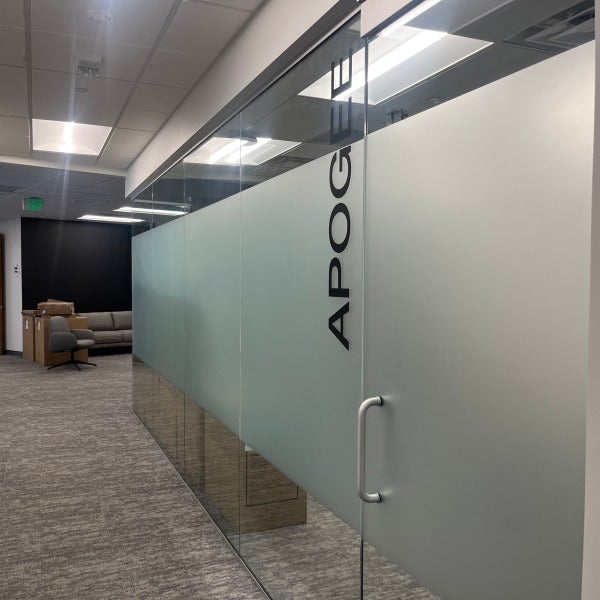
Glass-walled conference rooms look great on paper, but they come with a tradeoff: everyone in the hallway can see (and sometimes hear-adjacent) what's happening inside. Frosted window film solves that problem without losing the open, modern feel of the space. The photo below is from a recent install at a Colorado Springs office, where a frosted band runs the length of the glass wall with the company name cut directly into the film.
Why Offices Frost Their Glass Walls
A full band of frosted film, like the one shown here, blocks direct sightlines into a meeting while still letting daylight pass through. That matters for two reasons: it gives people inside the room a sense of privacy for sensitive conversations, and it keeps the hallway from feeling like a fishbowl. Cutting the company name or logo directly into the frost, rather than printing it as a separate decal, gives the wall a clean, etched-glass look that reads as a permanent architectural feature rather than an add-on.
This approach works well for:
• Conference and huddle rooms: privacy for client calls, interviews, and confidential discussions.
• Reception and lobby glass: a branded first impression as soon as someone walks in.
• Executive offices: a quieter, more private feel without closing off natural light.
Design Options Worth Knowing
Frosted film isn't one-size-fits-all. Full frost, like this installation, covers the entire panel for maximum privacy. Banded or partial frost (a strip at eye level, for example) balances privacy with an open feel. And cut-vinyl logos, whether frosted into the film itself or applied as a separate gloss or color decal on top, let a company's branding live permanently on the glass instead of on a sign next to it.
Mission Pride on the Wall: Signarama Returns to Frontgrade Technologies
Jun 29, 2026 by
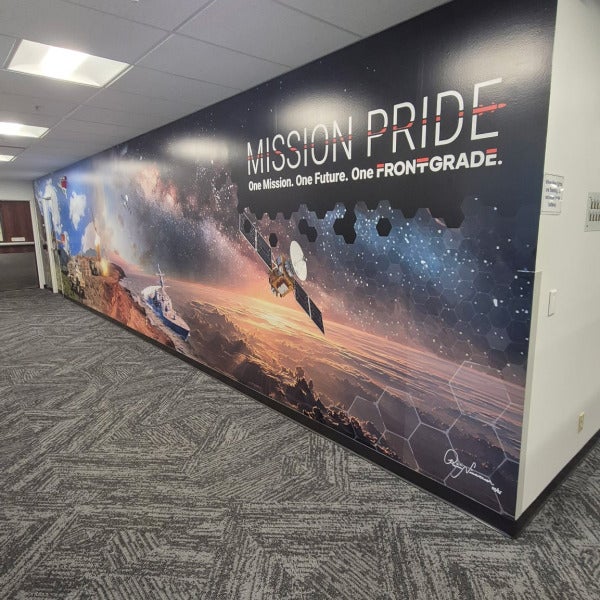
Some clients leave such a strong impression the first time around that a second call isn't a surprise — it's an expectation. That's exactly the case with Frontgrade Technologies, a Colorado Springs-based defense and aerospace technology company with a clear vision for what their workspace should communicate. When they were ready to expand their branding into another area of their facility, they called Signarama Colorado Springs South.
A Mural Built for Mission
The design — a sweeping, full-color graphic featuring satellite imagery, aerospace environments, and the bold "Mission Pride" headline — demanded precision across every panel seam. Running the full length of a main corridor, this wasn't a small accent piece. It was a statement. The kind of installation that stops employees and visitors in their tracks.
Our team produced and installed the mural on Avery wall vinyl, chosen for its clean adhesion, vivid color reproduction on our HP Latex printer, and long-term durability in a high-traffic commercial environment. The dark, space-themed background and sharp typographic elements printed with the depth and contrast the design called for.
Why Wall Murals Work for Corporate Branding
Wall murals do something no framed print or digital display can fully replicate — they integrate a company's identity directly into the physical environment. For Frontgrade, a company operating at the intersection of defense technology and innovation, that sense of mission and purpose needed to be felt the moment someone walked the hallway. A large-format mural delivers exactly that.
Whether it's a lobby feature, a conference room accent wall, or a full corridor installation like this one, custom wall graphics are one of the highest-impact investments a business can make in its space.


Signarama Colorado Springs South, CO
Or by Appointment
contact
Signarama Colorado Springs South, CO