Your local team for custom business signs & vehicle graphics.


Does My Business Sign Need a Permit in Tampa? Complete 2026 Sign Permit Guide
Aug 21, 2026 by Raju Gupta
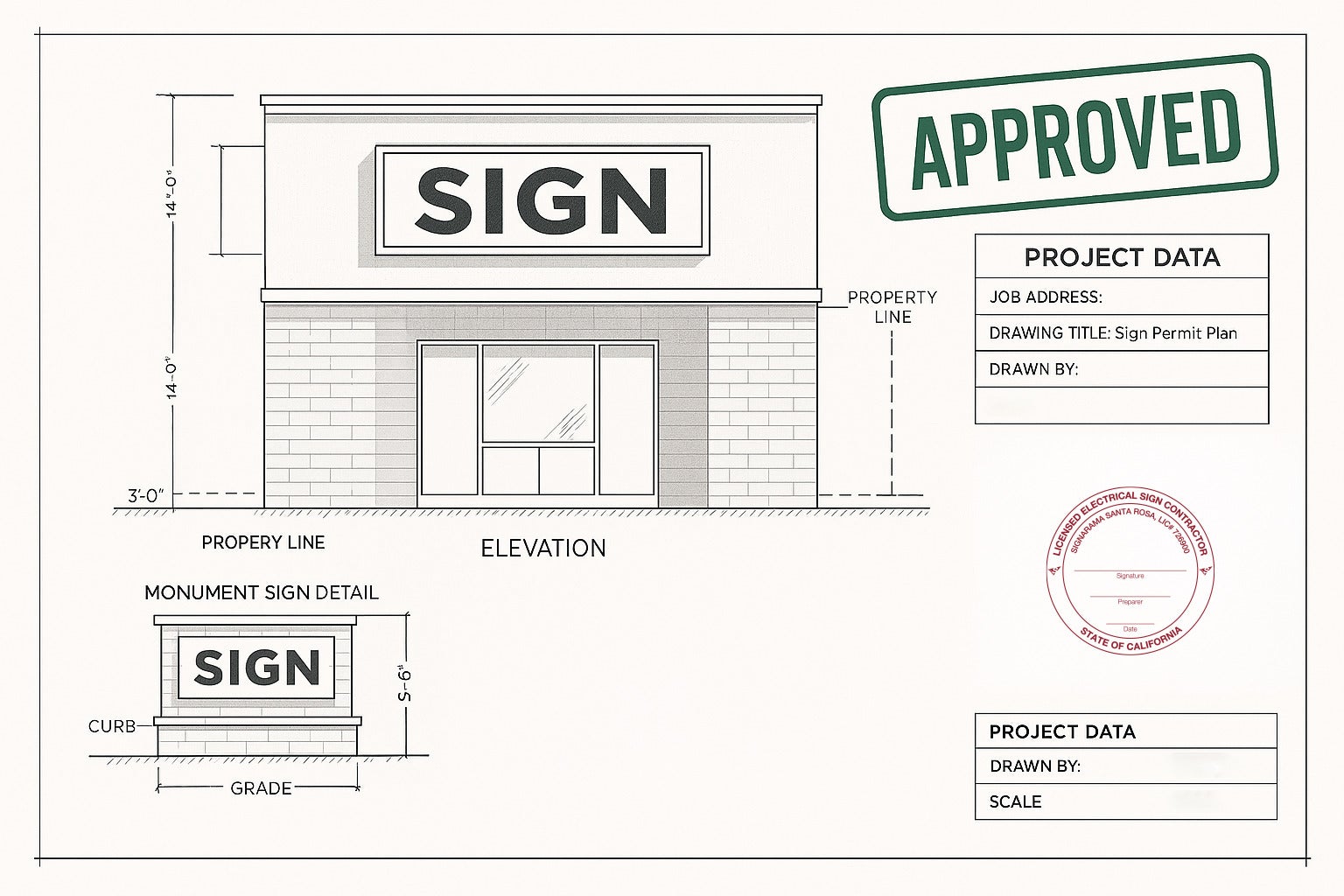
Does My Business Sign Need a Permit in Tampa? Complete 2026 Sign Permit Guide
If you're installing, replacing, relocating, or modifying a business sign in Tampa, one of the most important questions to answer before starting work is:
Do I need a permit for my business sign?
Quick Answer: Does a Business Sign Need a Permit in Tampa?
Many permanent commercial signs in Tampa require a sign permit.
This commonly includes new wall signs, channel letters, illuminated signs, monument signs, pylon signs, projecting signs, and other signs that are attached to or supported by a building or structure.
However, not every sign project requires the same permitting process, and certain limited sign changes or exempt signs may not require a new sign permit.
The answer depends on several factors:
Where the property is located
Type of sign
Size of the sign
Whether the sign is illuminated
How it attaches to the building
Whether an existing structure is being modified
Whether structural components are changing
Whether electrical work is involved
Applicable zoning and sign-code requirements
One particularly important point for Tampa-area businesses is that a Tampa mailing address does not necessarily mean the property is inside the City of Tampa.
A property may instead be located in unincorporated Hillsborough County or another municipality, which can mean different sign regulations and permitting procedures.
At Signarama Carrollwood, determining the correct jurisdiction is one of the first steps we consider when evaluating a permitted sign project.
What Types of Signs Typically Require a Permit in Tampa?
Permanent exterior commercial signage commonly requires permitting when a sign is being newly installed or when an existing sign is structurally altered, relocated, enlarged, rebuilt, or otherwise modified in a way covered by the applicable sign code.
Examples may include:
Channel letter signs
Illuminated wall signs
Cabinet signs
Monument signs
Pylon signs
Pole signs
Projecting signs
Blade signs
Large wall-mounted signs
Freestanding signs
Electronic message centers
Signs requiring new structural attachments
Signs requiring foundations or footers
The exact requirements should always be verified for the particular property and project.
Do Channel Letter Signs Require a Permit in Tampa?
New exterior channel-letter signs generally require permitting.
Channel letters are permanent building-mounted signs and may involve both structural attachment and electrical components.
A channel-letter permit package may need to address:
Overall sign dimensions
Letter dimensions
Sign area
Building elevation
Sign location
Mounting method
Attachment details
Electrical requirements
Wind-load requirements
For raceway-mounted channel letters, the attachment of the raceway to the building is also an important part of the installation.
For individually mounted letters, the mounting pattern and electrical penetrations may need to be considered.
Do Illuminated Business Signs Require a Permit?
Illuminated commercial signage generally involves additional requirements because electricity is involved.
Examples include:
Internally illuminated channel letters
Halo-lit letters
Illuminated cabinet signs
Illuminated monument signs
Illuminated pylon signs
Electronic message centers
LED displays
The City of Tampa's current commercial-sign permitting guidance specifically identifies electrical connection information, when applicable, as part of its document review requirements.
Depending on the project, electrical work may involve additional permitting and inspection requirements.
This is one reason illuminated signage should be planned before fabrication begins.
Does Replacing an Existing Sign Face Require a Permit?
This is one of the most common questions businesses ask.
The answer is:
It depends on exactly what is being changed.
A straightforward change to advertising copy or a sign face may be treated differently from a modification that alters the structure, sign area, mounting system, electrical components, or design integrity of the existing sign.
For example, imagine an existing illuminated cabinet sign with a flexible face.
If the project simply replaces equivalent graphics on an existing permitted face, that may be very different from converting the cabinet from a flexible-face system to rigid acrylic or polycarbonate panels.
The second project can potentially affect:
Retainers
Cabinet construction
Face weight
Structural loads
Attachment
Wind resistance
Original engineered design
Therefore, don't assume that “we're only changing the face” automatically means a permit isn't required.
The scope of the modification matters.
Does Changing the Graphics on an Existing Sign Require a Permit?
Sometimes simple copy changes may not require a new sign permit.
For example, changing the tenant name or graphics on an existing permitted sign without increasing its sign area or structurally modifying the sign may fall into a different category from installing an entirely new sign.
However, once the work requires structural disassembly, modification, relocation, enlargement, or other substantial changes, permitting requirements can change.
Before modifying an existing sign, it's wise to determine:
Whether the existing sign was permitted.
What the existing permit approved.
Whether the proposed work changes that approved condition.
Whether electrical or structural components will be modified.
Does a New Storefront Sign Require a Permit?
In many cases, yes.
If you're opening a business and installing permanent exterior signage on the building, expect permitting to be part of the project.
Typical examples include:
Channel letters
Dimensional exterior letters
Illuminated logo signs
Cabinet signs
Projecting signs
Large wall signs
But permitting is only one layer of approval.
If you lease the property, your landlord may also need to approve the sign before it is manufactured.
Does My Landlord Need to Approve My Sign?
Often, yes.
Shopping centers and commercial landlords frequently have their own sign criteria.
The criteria may regulate:
Letter height
Sign width
Colors
Logo size
Illumination
Raceway color
Mounting
Placement
Materials
Maximum sign area
A sign can potentially comply with local sign code while still violating your lease or shopping-center sign criteria.
Likewise, landlord approval doesn't automatically mean the sign meets municipal code.
You may need both landlord approval and government permitting.
This is why we recommend obtaining and reviewing the property's sign criteria early in the design process.
Does a Monument Sign Require a Permit?
Yes, new monument signs typically require permitting.
A monument sign is a freestanding structure, so the permit review can involve considerably more than the graphics displayed on the sign.
Depending on the project, plans may address:
Overall dimensions
Sign area
Property location
Setbacks
Foundation
Structural supports
Wind loading
Electrical connections
Illumination
Sight visibility
Zoning requirements
The City of Tampa specifically lists foundation plans for freestanding signs among its commercial-sign document-review requirements.
Does a Pylon or Pole Sign Require a Permit?
Yes, a new pylon or pole sign generally requires permitting and structural review.
These signs can be large structures exposed to substantial wind forces.
The engineering may need to consider:
Sign height
Cabinet dimensions
Sign area
Pole diameter
Steel thickness
Foundation diameter
Foundation depth
Soil assumptions
Wind speed
Wind pressure
Connections
Welds
Anchor systems
In Florida, the structural design of a large freestanding sign is particularly important because of wind-loading requirements.
Do I Need Engineering Drawings for My Sign?
Not every sign requires the same level of engineering, but many structural sign projects may require engineered documentation.
Engineering is particularly relevant for projects involving:
Freestanding signs
Pylon signs
Monument signs
Large wall signs
Projecting signs
Suspended signs
Large channel-letter installations
Structural modifications
Unusual mounting conditions
The City of Tampa's commercial-sign review requirements include items such as:
Sign specifications
Design wind-load information
Foundation plans for freestanding signs
Building attachment information
When engineering is required, the engineer evaluates how the sign and its supporting structure resist the loads imposed on them.
Why Are Wind Loads Important for Signs in Florida?
Exterior signs essentially act like surfaces exposed to the wind.
The larger and taller the sign, the greater the forces can become.
Engineers may consider factors such as:
Design wind speed
Exposure
Sign height
Sign area
Building height
Sign location
Support structure
Attachment method
This becomes especially important for:
Monument signs, pylon signs, projecting signs, large cabinets and large building-mounted signs.
A properly engineered installation isn't simply about passing permitting—it is about helping ensure that the sign and its support system are appropriate for the environment where they will be installed.
What Documents Are Needed for a Sign Permit in Tampa?
Requirements depend on the project, but a commercial sign permit package may include items such as:
Site Plan
The site plan can show:
Property boundaries
Building location
Proposed sign location
Distances to property lines
Existing signs
Streets and access
Building Elevation
For a building-mounted sign, the elevation typically shows:
Building façade
Proposed sign
Sign dimensions
Location on the building
Sign Drawings
These may show:
Overall dimensions
Letter dimensions
Materials
Sign area
Colors
Illumination
Cabinet construction
Attachment Details
These explain how the sign will be secured to the structure.
Examples might include:
Anchors
Bolts
Studs
Raceway mounting
Structural framing
Wall attachment
Foundation Details
For freestanding signs, plans may show:
Footer diameter
Footer depth
Reinforcement
Pole or support structure
Concrete specifications
Electrical Information
Illuminated signs may require information about:
Power supply
Disconnect
Wiring
LED components
Electrical connection
Engineering Information
When applicable, engineering documents may provide structural calculations and signed/sealed drawings.
What Is the Sign Permit Process in Tampa?
Although every project is different, a typical commercial sign project follows a process similar to:
1. Site Survey
The location is measured and existing conditions are documented.
↓
2. Sign Design
The proposed signage is designed based on branding, visibility, code limitations and property requirements.
↓
3. Landlord Approval
If applicable, the property owner or management company reviews the design.
↓
4. Engineering
Structural details are prepared when required.
↓
5. Permit Application
Plans and supporting documents are submitted to the appropriate jurisdiction.
↓
6. Plan Review
The jurisdiction reviews the project for applicable requirements.
↓
7. Corrections, If Required
Reviewers may request revisions or additional information.
↓
8. Permit Approval
Once approved and required fees are paid, the permit can be issued.
↓
9. Manufacturing
The approved sign is fabricated according to the permitted design.
↓
10. Installation
The sign is installed according to the approved plans.
↓
11. Inspection
Required building and/or electrical inspections are completed.
For City of Tampa commercial signs, the City's current guidance identifies both building final and electrical final inspections as applicable stages of the process.
How Long Does It Take to Get a Sign Permit in Tampa?
There isn't one guaranteed timeline.
Permit processing time depends on:
Project complexity
Jurisdiction
Completeness of the application
Engineering requirements
Current review workload
Corrections requested
Zoning issues
Property conditions
A straightforward wall sign with complete documentation can move differently from a large engineered monument or pylon sign.
The best way to avoid unnecessary delays is to submit a complete and accurate permit package the first time.
Can I Install My Sign While Waiting for the Permit?
If the project requires a permit, you should not install the sign before the required permit has been issued.
Manufacturing before approval can also create unnecessary risk.
For example, imagine manufacturing a 10-foot-wide channel-letter sign only to discover during permit review that the allowable sign area or landlord criteria limits it to 8 feet.
Now the sign may need to be redesigned or remanufactured.
For permitted projects, final production should be coordinated with the approved design.
What Happens If I Install a Sign Without a Required Permit?
Installing a sign without a required permit can create serious problems.
Potential consequences can include:
Stop-work action
Code-enforcement involvement
After-the-fact permitting
Additional fees
Required engineering
Required inspections
Modification of the sign
Removal of noncompliant signage
An unpermitted sign can become particularly problematic when a property is sold, renovated, inspected, or reported.
Obtaining the correct approvals before installation is generally far less expensive than correcting an unpermitted installation afterward.
Is Tampa the Same as Hillsborough County for Sign Permits?
No. This is extremely important.
The City of Tampa and unincorporated Hillsborough County are separate permitting jurisdictions.
For example, a business address may say:
Tampa, FL
but the property may actually be located outside the incorporated City of Tampa.
In that case, Hillsborough County may be the permitting authority.
Other Tampa Bay properties can fall under jurisdictions such as:
Temple Terrace
Plant City
Clearwater
St. Petersburg
Pinellas County
Pasco County
Each jurisdiction can have its own sign regulations and permitting process.
Always verify the property's jurisdiction before applying.
How Are Sign Permits Submitted in the City of Tampa?
The City of Tampa uses its electronic permitting system for permit applications and plan review.
Commercial-sign applications require project information and supporting documentation appropriate to the proposed sign.
The City's current commercial-sign guidance identifies documentation including site plans, building elevations, sign specifications and area calculations, wind-load information, electrical information when applicable, foundation plans for freestanding signs, and building-attachment information.
Permit requirements can change, so current requirements should be verified when the project is submitted.
How Are Sign Permits Submitted in Hillsborough County?
For properties located in unincorporated Hillsborough County, sign permits are handled through Hillsborough County rather than the City of Tampa.
Hillsborough County currently directs sign-permit applications through HillsGovHub.
Projects prepared by professional designers such as engineers or architects may also be subject to the County's digital-signature requirements for signed and sealed documents.
Again, the first step is determining which jurisdiction actually governs the property.
Do Window Graphics Require a Sign Permit?
Window graphics can be treated differently from permanent structural signage.
Whether approval or permitting is required can depend on:
Amount of window coverage
Type of graphic
Property location
Sign code
Illumination
Temporary vs. permanent use
Landlord restrictions
Even if a building permit isn't required, zoning or sign-code limitations can still apply.
Businesses should avoid assuming that because vinyl doesn't involve drilling into a building, there are no rules governing it.
Do Wall Murals Require a Permit?
Possibly.
A decorative mural and a mural containing commercial advertising or business identification may be treated differently.
The content, location, dimensions, method of installation and applicable local regulations can affect how the project is classified.
Large exterior wall graphics should therefore be evaluated before production and installation.
Do Temporary Signs and Banners Require Permits?
Temporary signs can have their own set of regulations.
Rules may address:
Size
Placement
Duration
Quantity
Setbacks
Attachment
Right-of-way restrictions
A sign being temporary does not automatically mean it is exempt from all local regulations.
Before installing a large promotional banner or temporary exterior sign, check the requirements applicable to the property.
What About Signs in Historic Districts?
Properties within historic districts or specially regulated areas can face additional design requirements.
A sign that might be acceptable elsewhere in Tampa may require additional review when installed on a historic property or within a regulated district.
This can affect:
Sign dimensions
Materials
Illumination
Placement
Sign style
Attachment methods
Identifying these requirements early can prevent redesign later.
How Much Does a Sign Permit Cost in Tampa?
There isn't one universal price for every commercial sign permit.
Total permitting-related costs can depend on:
Sign type
Project valuation
Electrical work
Engineering
Number of signs
Additional reviews
Revisions
Contractor services
Also distinguish between:
Government permit fees and the cost of preparing and processing the permit.
A sign company may charge separately for site surveys, permit drawings, engineering coordination, application preparation, revisions, permit processing and inspections.
When comparing sign quotes, ask exactly what the permitting charge includes.
Can a Sign Company Handle the Permit for Me?
A qualified commercial sign company can often coordinate much of the permitting process for a sign project.
At Signarama Carrollwood, our goal is to help customers manage the complete sign process rather than simply manufacture a sign and leave them to determine what happens next.
Depending on the project, that can include coordination of:
Site Survey → Design → Landlord Approval → Engineering → Permit Submission → Production → Installation → Inspection
This is particularly valuable for business owners opening a new location who are already coordinating contractors, furniture, utilities, inventory, employees and dozens of other tasks.
Before Ordering a Business Sign: Permit Checklist
Before manufacturing your exterior sign, make sure you can answer these questions:
What jurisdiction is the property located in?
What is the property's zoning?
Does the landlord have sign criteria?
Has the landlord approved the design?
Is the proposed sign size allowed?
Does the sign require a permit?
Is structural engineering required?
Is electrical work involved?
Who is responsible for providing electrical power?
Who is pulling the permit?
Who will handle inspections?
Does the approved permit match the sign being manufactured?
Answering these questions before fabrication can save considerable time and money.
Tampa Sign Permit FAQs
Do I need a permit to install channel letters in Tampa?
New permanent exterior channel letters generally require permitting. Illuminated channel letters may also involve electrical requirements.
Do I need a permit to replace an existing sign?
It depends on what is being replaced. Simple copy or face changes can be treated differently from structural modifications, enlargement, relocation, electrical changes, or changes affecting the existing sign's design.
Does replacing a cabinet sign face require a permit?
Possibly. A simple equivalent face replacement can be different from changing the face material or modifying retainers, framing, structure, illumination, or other components.
Do monument signs require engineering?
Many freestanding sign projects require structural information addressing foundations and wind loads. The exact engineering requirements depend on the project and jurisdiction.
Does my sign need an electrical permit?
Illuminated signs may involve electrical permitting and inspection requirements depending on the project.
Can my landlord approve my sign instead of the city?
No. Landlord approval and governmental approval are separate matters. You may need both.
Can I install the sign before the permit is approved?
If the project requires a permit, installation should wait until the required permit has been issued.
Is a Tampa address automatically under City of Tampa permitting?
No. Some properties with Tampa mailing addresses are located in unincorporated Hillsborough County. Always verify the jurisdiction.
Who can help me determine whether my sign requires a permit?
A local commercial sign company experienced with permitting can review the property, sign type and scope and help determine the appropriate next steps.
Need Help With a Sign Permit in Tampa?
Sign permitting can become confusing because a business owner isn't dealing with just one question.
You may need to determine:
What sign is allowed?
How large can it be?
Does the landlord approve it?
Does it need engineering?
Does it need electrical work?
Which jurisdiction handles the permit?
What drawings are required?
Who handles the inspection?
That's why choosing a sign company that understands the complete process can make a significant difference.
Signarama Carrollwood provides custom commercial signage for businesses throughout Tampa and the surrounding area, including:
Channel letters
Cabinet signs
Monument signs
Pylon signs
Dimensional letters
ADA signage
Window graphics
Wall graphics
Vehicle graphics
Directional and wayfinding signs
Custom commercial signage
Our team can help take your project from concept through design, permitting and engineering coordination when required, fabrication and installation.
Planning a new sign or unsure whether your project requires a permit? Contact Signarama Carrollwood to discuss your project before fabrication begins.

Signarama Carrollwood, FL
contact
Signarama Carrollwood, FL