
When Brookfield Businesses Should Choose Custom Metal Signs
Jul 30, 2026 by Signarama Danbury
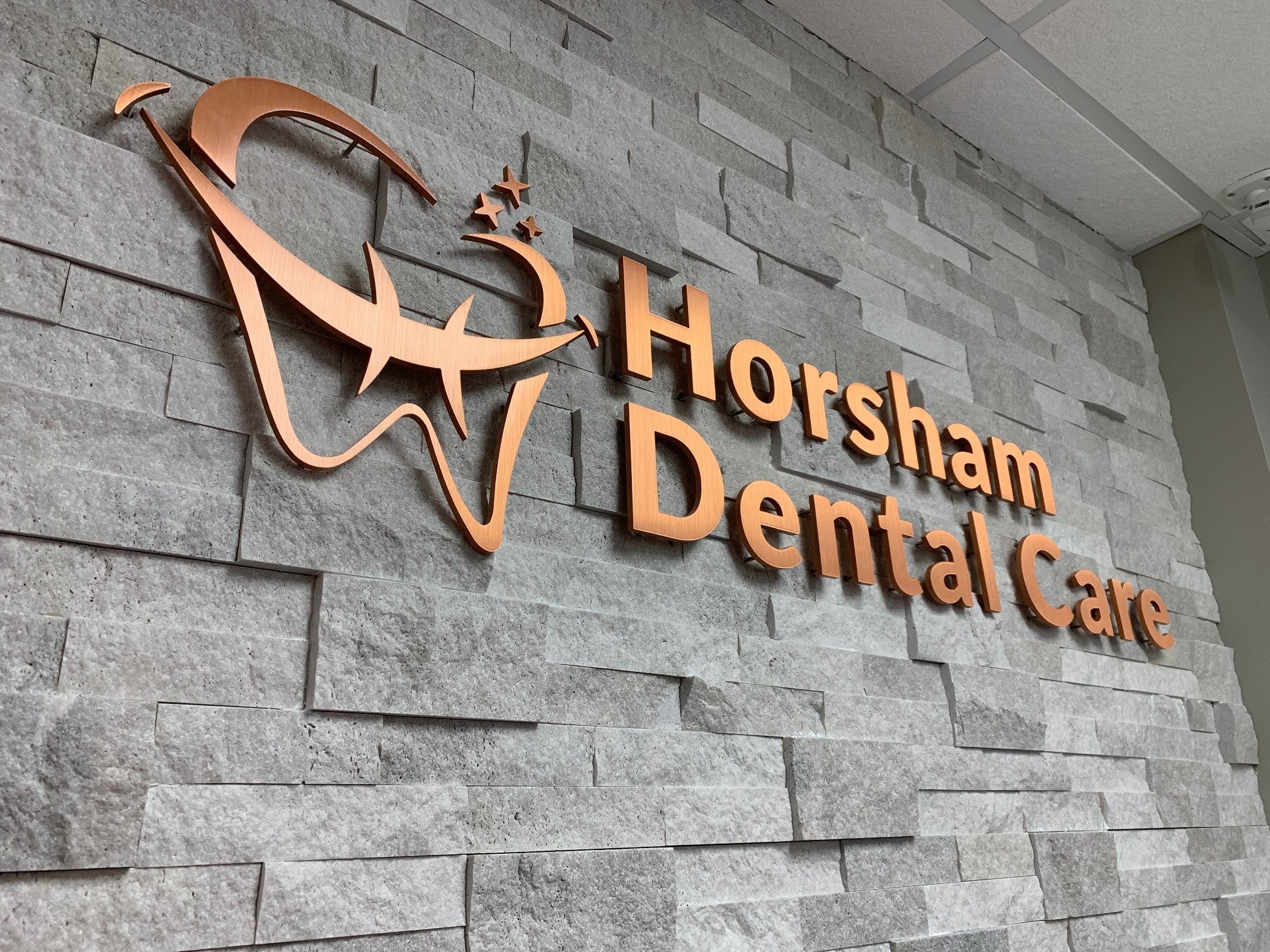
Every sign material has a moment where it stops being a preference and becomes the obviously right answer. For plenty of Brookfield storefronts, offices, and commercial properties, that answer is metal. Local custom metal signs bring a combination of durability, precision, and polish that few materials match, but they earn their cost in some situations far more than others.
Here are specific moments when metal is the smart call, the formats available for business signs in Brookfield, CT, and what actually goes into the estimate when you're ready to move.
When Is Metal the Right Call for Your Sign?
The strongest metal sign decisions are triggered by circumstances, not catalogs. These are the situations where the material pays for itself.
When a Temporary Sign Has Overstayed Its Welcome
Plenty of businesses open with a banner or coroplast panel and plan to upgrade later. If "later" has stretched past its first year, the temporary sign is now the permanent impression. Moving to a fabricated metal sign resets how established the business looks overnight.
When the Facade Takes Direct Weather Exposure
Some storefronts sit sheltered under canopies. Others face wind, rain, snow load, and full sun with nothing in between. For exposed installations, outdoor signs in Brookfield, CT need a material that shrugs off moisture and temperature swings, and aluminum does exactly that without rusting or warping.
When the Brand Calls for a Modern, Precise Look
Metal reads as engineered. Clean-cut dimensional letters, crisp panel edges, and machined finishes suit medical offices, financial firms, tech companies, salons, and any brand whose promise is precision. Where carved wood says heritage, metal says current.
When the Sign Must Outlast a Long Lease
A business committed to its location for years should buy signage on the same timeline. Metal's service life stretches across lease cycles with minimal upkeep, which turns a higher upfront investment into a lower cost per year than cheaper materials that need replacing.
When a Landlord or Plaza Standard Demands Quality
Multi-tenant properties often hold tenants to signage criteria, and flimsy materials can fail the review before they fail the weather. Fabricated metal signage meets quality standards comfortably and keeps the approval process short.
Which Metal Sign Formats Fit Brookfield Businesses?
Metal is a material, not a single product. It shows up across several formats, each suited to different buildings and goals.
Format | Where It Works Best | Worth Knowing |
Aluminum panel signs | Storefront fascias, property signage, parking and directional needs | Lightweight, rust-resistant, takes printed or applied graphics cleanly |
Dimensional metal letters | Office facades, professional suites, lobby walls | Depth creates shadow and presence without illumination |
Channel letters | Retail and restaurants wanting lit presence day and night | Metal returns house the lighting, faces carry the color |
Metal plaques | Entrances, dedications, suite identification | Compact, refined, built to last decades |
Monument and post-mounted faces | Driveway entrances and roadside identification | Metal faces and accents extend the life of ground signage |
Why Does Metal Hold Up Where Other Materials Struggle?
The case for metal is mostly a case about time. Here is what the material does for a business over years, not weeks.
It Resists the Weather That Breaks Cheaper Signs
Aluminum does not rot, swell, or rust, and it handles freeze-thaw cycling without cracking. Moisture intrusion and UV embrittlement can send other outdoor signs in Brookfield, CT, to the scrap pile early, but they barely register on properly finished metal.
It Keeps Its Edges, Corners, and Face
Materials that dent, chip, or bow start looking tired long before they stop working. Metal's rigidity keeps panels flat and letters true, so the sign still photographs well in year six.
It Carries Finishes Other Materials Cannot
Painted, brushed, and polished treatments give metal a finish range that plastic substrates cannot imitate. That flexibility lets local custom signs match a brand exactly instead of settling for the nearest stock look.
It Asks Very Little in Return
An occasional cleaning and a periodic hardware check are the whole maintenance plan for most metal signage. For owners who would rather run their business than tend their sign, that is the quiet, deciding advantage.
How Do Metal Signs Compare to Wood, Acrylic, and Vinyl Alternatives?
No material wins every situation, and the fastest way to a confident decision is seeing where each one pulls ahead.
The Character Each Material Projects
Metal reads as modern and engineered, while carved wood leans traditional and handcrafted. A financial office and a countryside inn are both making the right choice when they pick differently, because the material itself is part of the brand message before a single letter is read.
Weather Performance Over Time
Metal holds its shape and finish through the seasons with very little asked in return. Wood delivers its charm in exchange for a regular finish maintenance schedule, while vinyl performs well in shorter service windows before sun and exposure begin to show.
Upfront Investment Versus Cost Per Year
Vinyl and acrylic typically win on initial price, which suits promotions and shorter commitments. Metal usually costs more on day one but spreads that investment across a much longer service life, often making it the least expensive option per year for a business staying put.
The Dimensional Look Each Can Achieve
Acrylic offers a budget-friendly path to dimensional letters with a clean, glossy face. Metal achieves a similar depth with a more substantial, premium presence, and the difference becomes most visible up close at entrances and office facades.
Fit for Temporary Versus Permanent Needs
Vinyl graphics and banners are built for flexibility: promotions, events, and messages that change. Metal sits at the opposite end as a set-it-and-forget-it investment, which is why many businesses run both, using permanent metal signage for identity and vinyl for whatever this season needs to say.
Quick Comparison at a Glance
Material | Best For | Maintenance | Typical Commitment |
Metal | Permanent branding, exposed facades, modern look | Minimal | Long-term |
Carved wood | Heritage brands, character properties | Regular refinishing | Long-term |
Acrylic | Budget dimensional letters, interior signage | Low | Mid-term |
Vinyl | Promotions, windows, changing messages | Low | Short-term |
How Does a Metal Sign Go From Concept to Installed?
Understanding the production path helps owners plan timelines realistically. Metal signage typically moves through three key stages.
The Design Stage Locks Every Decision That Matters
Format, dimensions, finish, lettering, and mounting all get resolved on screen first, ending in a scaled proof. This is the stage the owner controls most, and quick proof feedback is the single best way to keep a project on schedule.
Fabrication Turns Approved Files Into Physical Signage
Cutting, forming, finishing, and any lighting assembly happens in the shop. Because the work is precision fabrication rather than printing alone, this stage sets the timeline, and complex dimensional or illuminated pieces take longer than flat panels.
Installation Fits the Sign to the Real Building
Mounting hardware, leveling, sealing, and electrical connections for lit formats all happen on site. Professional installation matters most with metal, since the weight and rigidity that make the material durable also make correct anchoring non-negotiable.
When Should an Existing Metal Sign Be Refaced Instead of Replaced?
One of metal's quiet advantages is that the structure often outlives the graphics on it. A sound aluminum sign can take new faces, fresh paint, or updated lettering for far less than full fabrication. The decision comes down to which side of the line your sign sits on.
When to Reface
If the panel, frame, and mounting are still structurally sound
If the graphics have faded, but the sign sits straight and secure
If a rebrand, name change, or new logo is the only thing driving the update
If contact details, suite listings, or tenant information need correcting
If only one element has failed, like a cracked face or worn paint
If the budget favors a refresh now over a full rebuild later
When to Replace
If the hardware or structure shows corrosion or damage
If internal lighting has failed beyond simple repair
If the sign was undersized or poorly placed from the start
If the mounting surface itself has deteriorated
If refacing costs are approaching the price of new fabrication
Frequently Asked Questions
Will an aluminum sign rust near the road in winter?
Aluminum naturally resists corrosion, including exposure to road salt spray, which is one reason it dominates exterior signage in New England climates. Steel components and hardware are the pieces that need protective treatment, and quality fabrication accounts for that.
Can metal signs be illuminated?
Yes, most directly through channel letters, where metal construction houses the lighting itself. Non-lit dimensional letters and panels can also be paired with external fixtures when a softer look fits the property better.
Is metal too heavy for some walls?
Weight is a mounting question, not a barrier. Aluminum keeps most formats manageable, and a site evaluation determines the right anchoring for the wall behind the sign, whether that is brick, siding, EIFS, or concrete.
Can a metal sign reuse the design from my other signage?
That is the ideal approach. Local custom signs work hardest when the metal piece on the building matches the vehicle graphics, window vinyl, and interior branding, so bring existing brand files to the first conversation.
Can an existing metal sign be updated instead of replaced?
Often, yes. Because aluminum holds its structure for so long, a sound metal sign can take new panel faces, repainting, or updated lettering during a rebrand at a fraction of the full fabrication cost. The evaluation comes down to the condition of the structure and hardware underneath, which is exactly what a site visit confirms before recommending either path.
Get a Custom Metal Sign Built for Your Business
Choosing signage is really choosing how a business will look years from now. Metal is the material for owners who want that answer to be "the same as day one," through every season western Connecticut delivers, with almost nothing asked in return.
Signarama has designed, fabricated, and installed local custom metal signs and business signs in Brookfield, CT and across western Connecticut for over 20 years, with support from design through installation.
If your storefront has outgrown its current sign, bring your logo files and building photos, and get a recommendation built around your actual property.


Signarama Danbury, CT
Contact
Signarama Danbury, CT



Contact Us
Contact the team at Signarama Danbury, CT
203-792-4091Signarama Danbury, CT35 Eagle Rd Danbury Connecticut 06810
Certified Wrap Installer
Follow Us
Select your country:
About Signarama
With the latest technologies and a wide range of available materials, there really is no end of choice and quality in the manufacturing of Signarama Signage. Images and logos belong to their owners and do not imply Signarama’s endorsement—shown only as examples of our work. Visit our corporate section to see more about: