

Wayfinding Signage in Danbury, CT: Complete Guide
Jan 19, 2026 by Signarama Danbury

Wayfinding is the system that helps people understand where they are, where they need to go, and how to get there quickly without confusion. It goes beyond a few arrows on a wall. It’s a coordinated strategy that reduces friction, supports accessibility, and makes spaces feel more intuitive.
In a time when people expect the same clarity from physical places as they get from Google Maps, wayfinding has become a competitive advantage. For businesses and public spaces, poor navigation can quietly erode trust, increase stress, and cost time. That’s why choosing a sign company in Danbury, CT, that businesses can rely on is no longer a cosmetic decision. It’s operational. It’s customer experience. It’s risk management.
What Is Wayfinding Signage?

Wayfinding signage is a coordinated set of signs designed to help people move through a space easily, confidently, and without needing to ask for directions. Unlike a single directional sign, wayfinding signage works as a system, guiding visitors from the moment they enter a property to the moment they reach their destination. It supports orientation, decision-making, and confirmation at every step.
In practical terms, wayfinding signage answers three key questions:
• Where am I?
• Where do I need to go?
• How do I get there without confusion?
Wayfinding signage is especially valuable in complex environments like medical buildings, office parks, schools, shopping centers, and multi-tenant facilities, where visitors often feel rushed or unfamiliar with the layout. Research on healthcare environments has shown that improved wayfinding can reduce travel time and help relieve strain on staff who otherwise spend time giving directions.
Wayfinding Vs. Basic Directional Signs
A strong wayfinding signage system typically includes more than arrows. It may combine:
• Identification signs (to label rooms, entrances, and departments)
• Directional signs (to guide people at key decision points)
• Directories and maps (to support planning and orientation)
• Regulatory signs (to maintain safety and compliance)
• Confirmation signs (to reassure people after they turn)
Well-executed wayfinding signage improves customer experience, supports accessibility, and reflects professionalism. It also helps reduce bottlenecks, confusion in parking areas, and unnecessary interruptions to staff.
For organizations that serve the public, wayfinding signage is not a “nice-to-have.” It is a functional design tool that keeps spaces efficient, welcoming, and easier to navigate.
How Wayfinding Signage Works In Real Spaces

Wayfinding signage works best when it matches real behavior. People do not read signs like documents. They scan. They compare. They look for the quickest reassurance that they are making the right choice.
The Three-Step Wayfinding Process
Most navigation happens in a predictable loop:
• Orientation: “Where am I right now?”
• Route decision: “Which option gets me there?”
• Confirmation: “Am I still on the right path?”
If a space lacks confirmation signage, people lose confidence even after making the correct turn.
Common Places That Need Wayfinding Signs
Wayfinding signs are most essential in places where stress, urgency, or complexity is high:
• Hospitals and medical offices
• Multi-tenant buildings
• College campuses
• Shopping centers and parking lots
• Warehouses, factories, and distribution facilities
• Downtown districts and municipal buildings
Healthcare research has shown that improving wayfinding can reduce travel time for patients and visitors and may reduce wasted staff time, which translates into real operational savings.
What Makes Wayfinding Signage Effective
Good wayfinding signage typically includes:
• Consistent terminology (do not alternate between “Reception” and “Check-In”)
• High-contrast readability
• Decision-point placement (before the turn, not after)
• Clear hierarchy (destination first, details second)
• Simple icon support when appropriate
Wayfinding Signs Vs. Directional Signs: What’s The Difference?
Directional signage is the “voice.” Wayfinding is the full conversation.
Directional Signs Are One Piece Of The System
Directional signs tell someone where to go next. They are essential, but they are not enough on their own
A complete wayfinding plan also includes:
• Arrival signage and entry cues
• Identification signs (labels)
• Directories and maps
• Confirmation signs after turns
• Regulatory and ADA-compliant signage
Directional Signage Alone Can Still Fail
Directional signage fails when:
• The message comes too late (after a split hallway)
• Wording changes between signs
• Multiple signs compete for attention
• Arrows are inconsistent or unclear
• Signs are mounted at inconsistent heights or locations
A space can have many signs and still be hard to navigate. That’s the difference between signage and wayfinding.
What Are the 4 Types of Wayfinding Signage and Where Each One Belongs
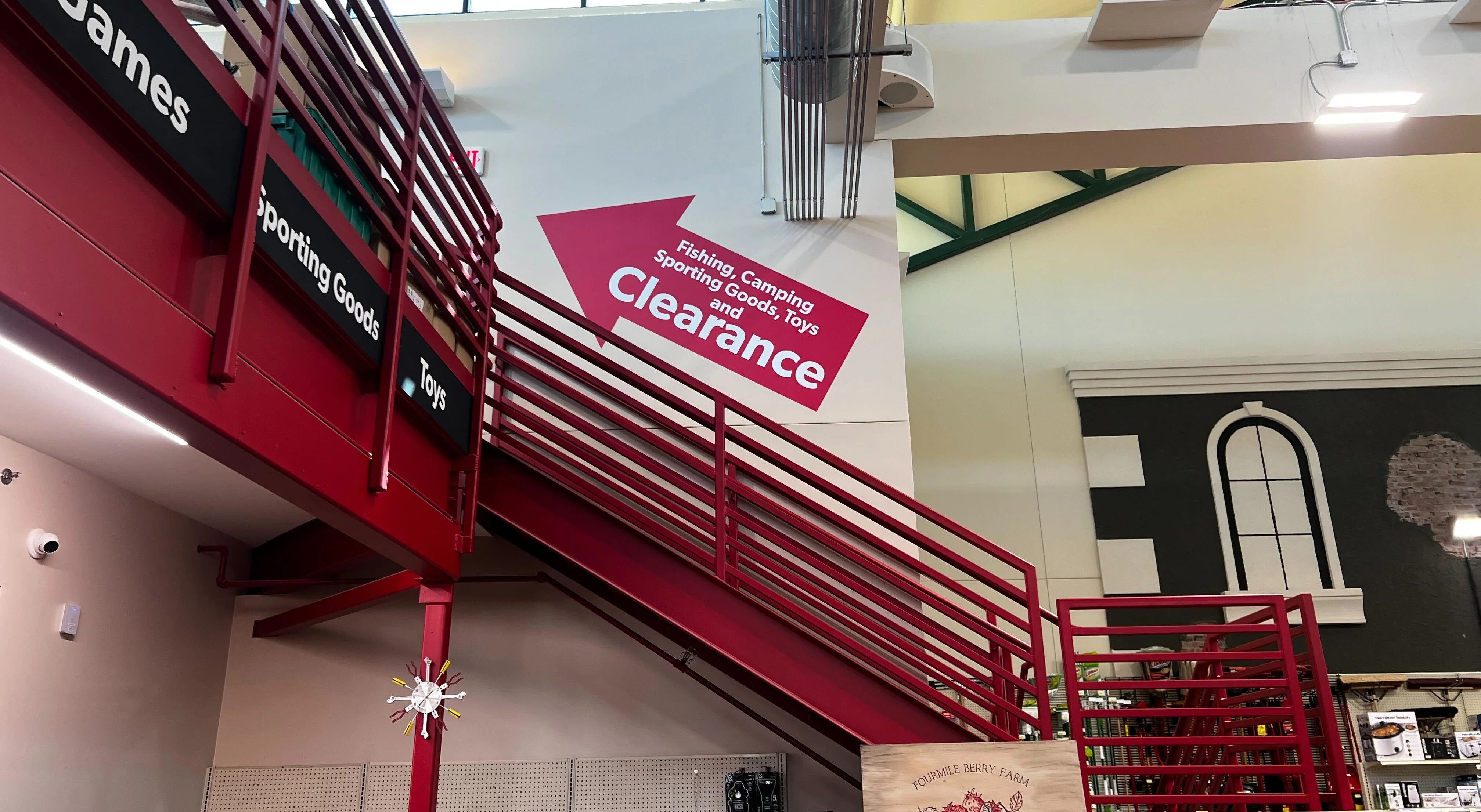
Different sign types handle different moments in the navigation journey.
Identification Signs
These tell you what something is:
• Building names
• Department labels
• Room names and numbers
• Tenant signs
Directional Signs
These tell you where to go next:
• Arrows
• Destination lists
• Floor-level navigation
• Parking routing
Informational Signs
These help people understand the space:
• Directories
• Maps
• Hours and instructions
• Policies
Regulatory Signs
These protect safety and compliance:
• Restricted access
• Safety notices
• Emergency exit indicators
“This Sign Means…” How People Interpret Signage (And Why It Matters)
When people stop and wonder, “This sign means what?” you’ve lost the moment. Confusion leads to hesitation, and hesitation may result in a bad experience.
Why People Misread Even Simple Signs
Most sign confusion comes from predictable design and messaging mistakes:
• Too much text
• Poor contrast or glare
• Unfamiliar symbols with no context
• Signs placed after the decision point
• Different names for the same destination
Examples Of “This Sign Means” Confusion
Here are common real-world problems:
• “Entrance,” but the door is locked
• “Main Entrance” with multiple doors visible
• “Check-In” posted after the hallway split
• Arrows pointing toward multiple corridors
• Parking signs that do not match the actual traffic flow
How Signage Design Eliminates Guesswork
Effective signage design reduces interpretation errors by using:
• Clear typography and spacing
• Short, standardized wording
• Icon support that matches user expectations
• Consistent arrow style and placement
• Confirmation cues after every major decision point
Wayfinding Signage Design Best Practices
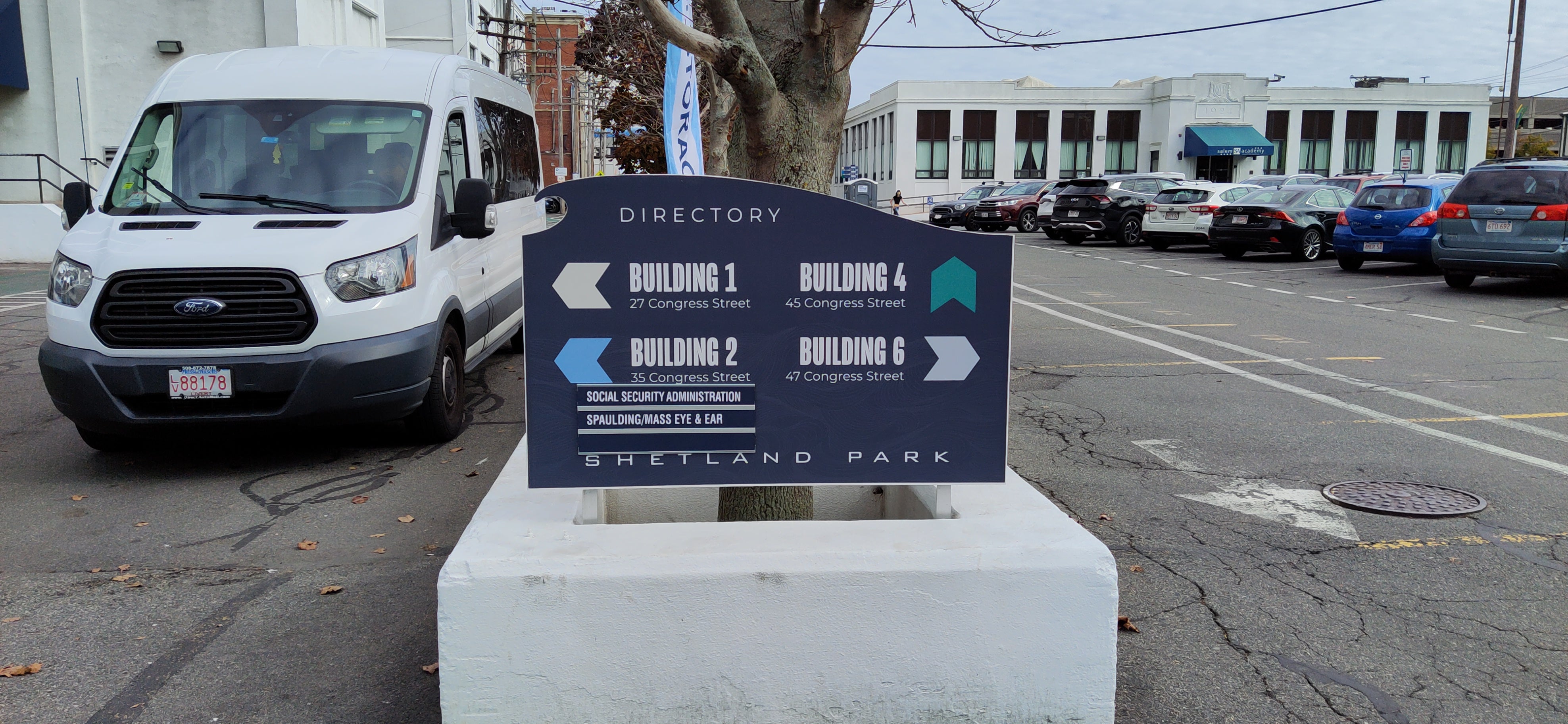
Wayfinding design blends readability, psychology, and spatial logic. The best systems feel invisible because they work so well.
Use Visual Hierarchy, Not Just Words
Prioritize the destination first. Supporting information should not compete with the main message. Good hierarchy typically means:
• Largest text for key destinations
• Smaller text for secondary info
• Strong contrast between text and background
• Ample whitespace for fast scanning
Make Directional Signage Easy To Scan
People read signage in motion, often while carrying bags or managing distractions. Scan-friendly signage includes:
• Bullet-style destination lists
• Simple arrows that are consistent across signs
• Short phrases instead of full sentences
• Logical grouping by floor, wing, or category
ADA-Friendly Wayfinding Signs

ADA standards address both scoping and technical requirements for signs, including tactile and visual features where required. This includes raised characters, braille, mounting height, and placement near doors for certain room identification signs. For organizations that serve the public, ADA-compliant signage is a core part of a reliable wayfinding system, not an optional upgrade.
Working With A Sign Company In Danbury, CT For Wayfinding
If you want wayfinding that works, you need more than production. You need planning, surveying, and consistency.
Why Local Expertise Matters
A local team can identify real friction points in your space, including:
• Where people hesitate
• Where they take wrong turns
• Where traffic gets congested
• Where the building layout contradicts the signage
Local experience also helps ensure signage fits building code expectations, community norms, and the way Danbury visitors actually move through spaces.
What A Professional Wayfinding Plan Includes
A true wayfinding plan often includes:
• A site walkthrough and traffic-flow review
• A sign placement map tied to decision points
• A message strategy (what each sign should say)
• Consistent design standards across the property
• Material recommendations based on indoor vs. outdoor conditions
• ADA signage coordination where required
When Businesses In Danbury Typically Need Wayfinding Updates
Wayfinding upgrades become urgent when:
• You remodel or expand
• You add tenants or departments
• You rebrand
• You change parking flow or entrances
• Visitors ask for help repeatedly
• Staff wastes time giving directions
How Signarama Helps With Wayfinding Signage In Danbury, CT
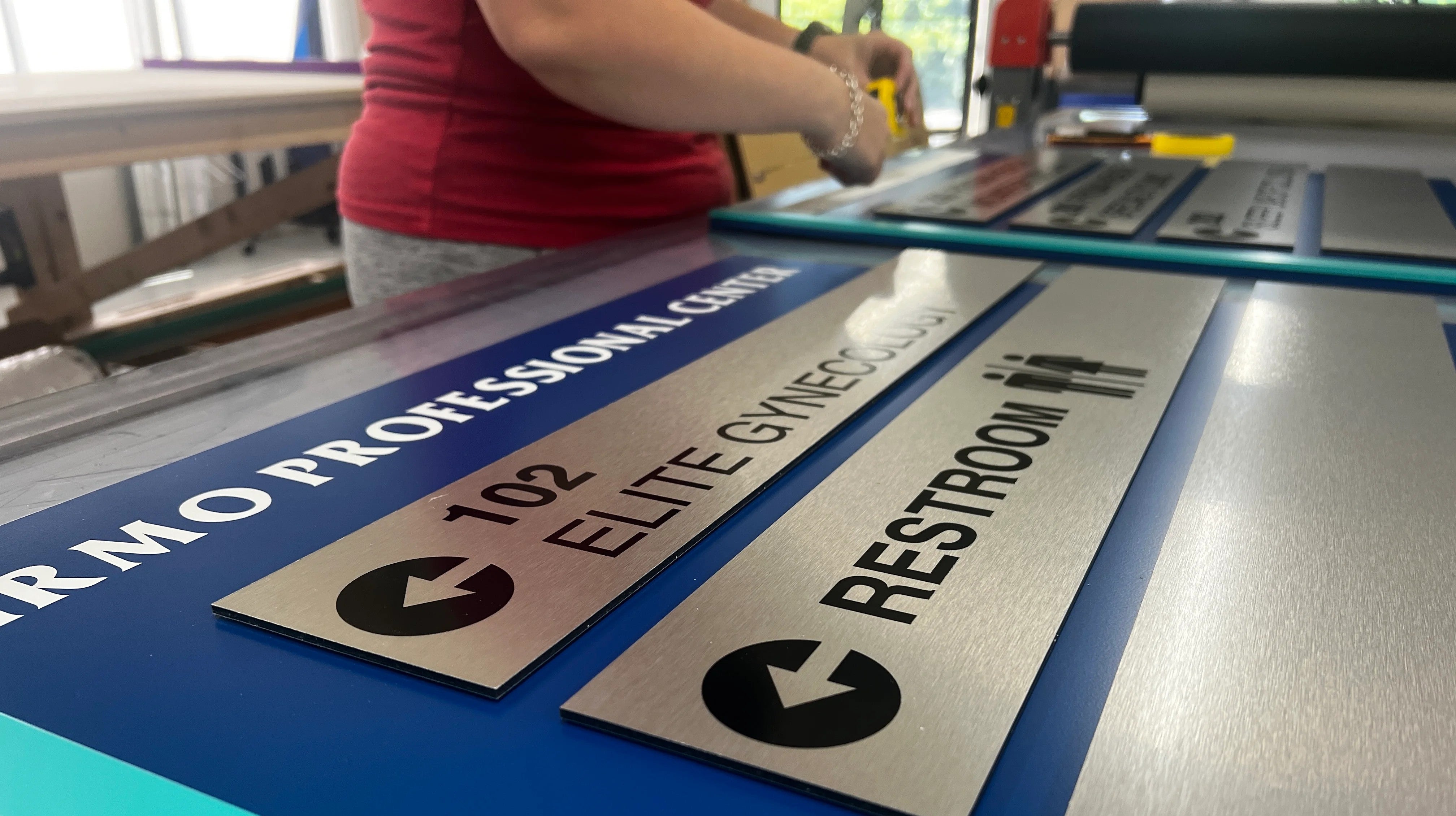
Wayfinding signage is strongest when one partner can plan, design, produce, and install consistently. Signarama supports businesses with scalable solutions that match both branding and functionality.
Full-Service Wayfinding From Design To Installation
A full-service approach typically includes:
• Design consultation and layout planning
• Material selection for durability and visibility
• Fabrication for indoor and outdoor use
• Installation coordination to reduce disruption
Popular Wayfinding Sign Options
Common solutions include:
• Wall-mounted directional signs
• Lobby directories and building maps
• Parking and traffic-direction signage
• Window decals for entry guidance
• Floor graphics for queueing and pathing
• ADA-compliant identification signs
Frequently Asked Questions About Wayfinding
What Is The Purpose Of A Wayfinder?
A wayfinder helps people navigate unfamiliar spaces. It can be a sign, map, floor graphic, or digital tool that shows where someone is, where they need to go, and how to get there with minimal confusion. The goal is better accessibility, less frustration, and a smoother visitor experience.
How Can Digital Signage Enhance Wayfinding?
Digital signage improves wayfinding by offering real-time updates and flexible directions. It can display interactive maps, rotate messages, adjust for events, and guide people during high-traffic periods or emergencies. It also supports multiple languages and accessibility features.
How Important Is Wayfinding Signage In Hospitals?
Wayfinding signage is critical in hospitals because confusion increases stress and can delay care. Clear, consistent signage helps patients and visitors reach check-in, imaging, emergency, and patient rooms faster without relying on staff for directions.
Good hospital wayfinding supports:
• Higher patient satisfaction
• Faster navigation for first-time visitors
• Fewer bottlenecks in hallways and lobbies
• Better accessibility for people with disabilities
• Improved staff efficiency
What Are Common Directional Sign Mistakes?
Directional signs fail when they are hard to read, inconsistent, or placed after the decision point. Signs should be visible at entrances, intersections, elevators, and key turns.
Common mistakes include:
• Using too much text
• Inconsistent wording
• Poor placement that appears too late
• Low contrast or hard-to-read fonts
• Too many signs in one area
• Missing ADA-compliant elements where required
Schedule A Wayfinding Consultation With Signarama In Danbury
Wayfinding problems tend to show up as “small” annoyances until they aren’t. A confusing entry point can lead to missed appointments. A confusing parking lot can lead to late arrivals. A confusing office layout can make your business feel harder to work with than it actually is.
If you need wayfinding signage, wayfinding signs, or directional signage in Danbury, CT, Signarama can help you build a signage system that guides people clearly, supports accessibility, and reinforces professionalism from the first step to the final exit.
Get help improving wayfinding signs and placement in Danbury, CT. Call us.

Signarama Danbury, CT
contact
Signarama Danbury, CT