

This Sign Means What? Understanding Wayfinding and Directional Signs in Danbury, CT
Feb 13, 2026 by Signarama Danbury
If you have ever followed arrows to a parking lot, found a doctor’s suite on the right floor, or located a pickup area without asking for help, you have used wayfinding.
For businesses, wayfinding and directional signs are not decoration. They are an information system that reduces confusion, improves safety, and keeps people moving. For visitors, this sign means more than decoration. It is a cue that reduces confusion and improves safety.
That is why a sign company Danbury, CT property managers rely on is often brought in early—before complaints pile up and before a space becomes harder to navigate as it grows.
Wayfinding is also becoming more important as sites get more complex. Federal guidance for roadway signage reflects how seriously agencies take comprehension and legibility, including research-backed updates for symbols, conspicuity, and readability. Indoors, accessibility standards drive how identification and directional signage must work for people with disabilities.
What is Wayfinding?
Wayfinding is the full system that helps people understand where they are, where they need to go, and how to get there with the least effort. It typically includes:
- Directional signs that tell you which way to go
- Identification signs that confirm you have arrived
- Informational signs like directories, maps, and hours
- Regulatory and safety signs that control behavior
Directional signs are only one piece of wayfinding. A single arrow can point someone toward the front desk, but a complete wayfinding system makes it hard to get lost in the first place by using consistent naming, placement, and visual patterns.
Common Types of Wayfinding and Directional Signs
Exterior Wayfinding Signs
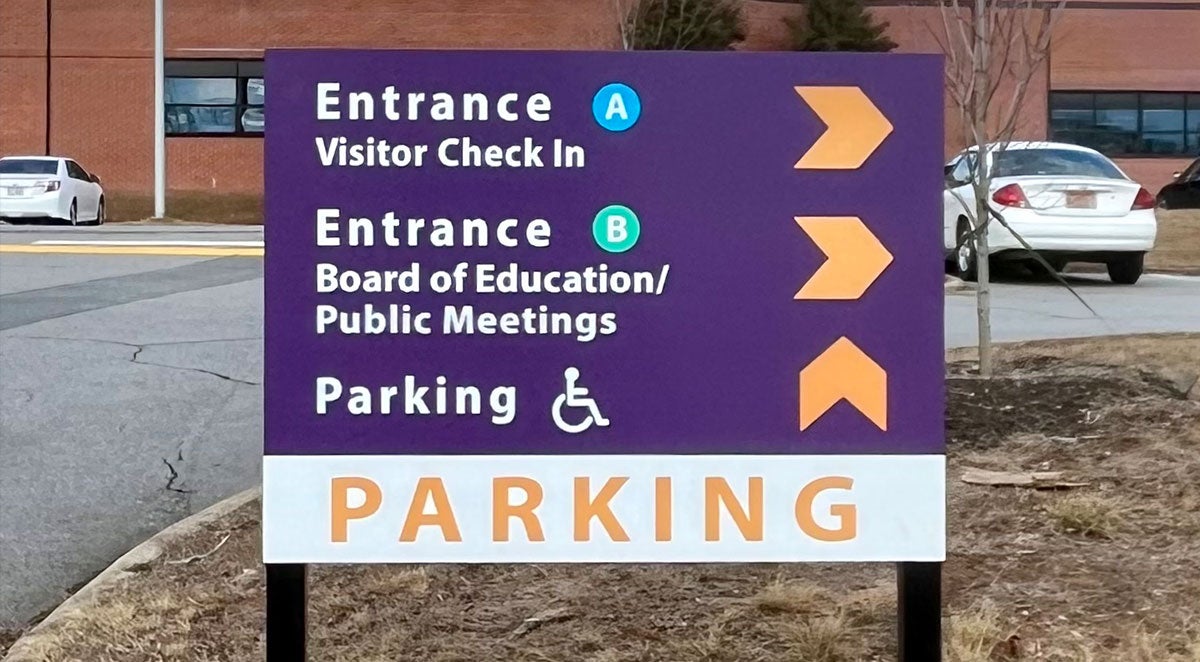
Exterior signs help people decide before they park, turn, or walk. Common examples include:
- Monument or post signs identifying a property entrance
- Parking, drop-off, and delivery direction signs
- Campus-style directory boards for multi-tenant sites
- Pedestrian path and accessibility route signs
In public environments, sign visibility and legibility are core performance requirements. For traffic-related signs, the MUTCD sets national standards and includes requirements that help agencies maintain visibility, including at night through minimum retroreflectivity practices.
Interior Wayfinding Signs
Interior signs confirm location and prevent wrong turns. Common examples include:
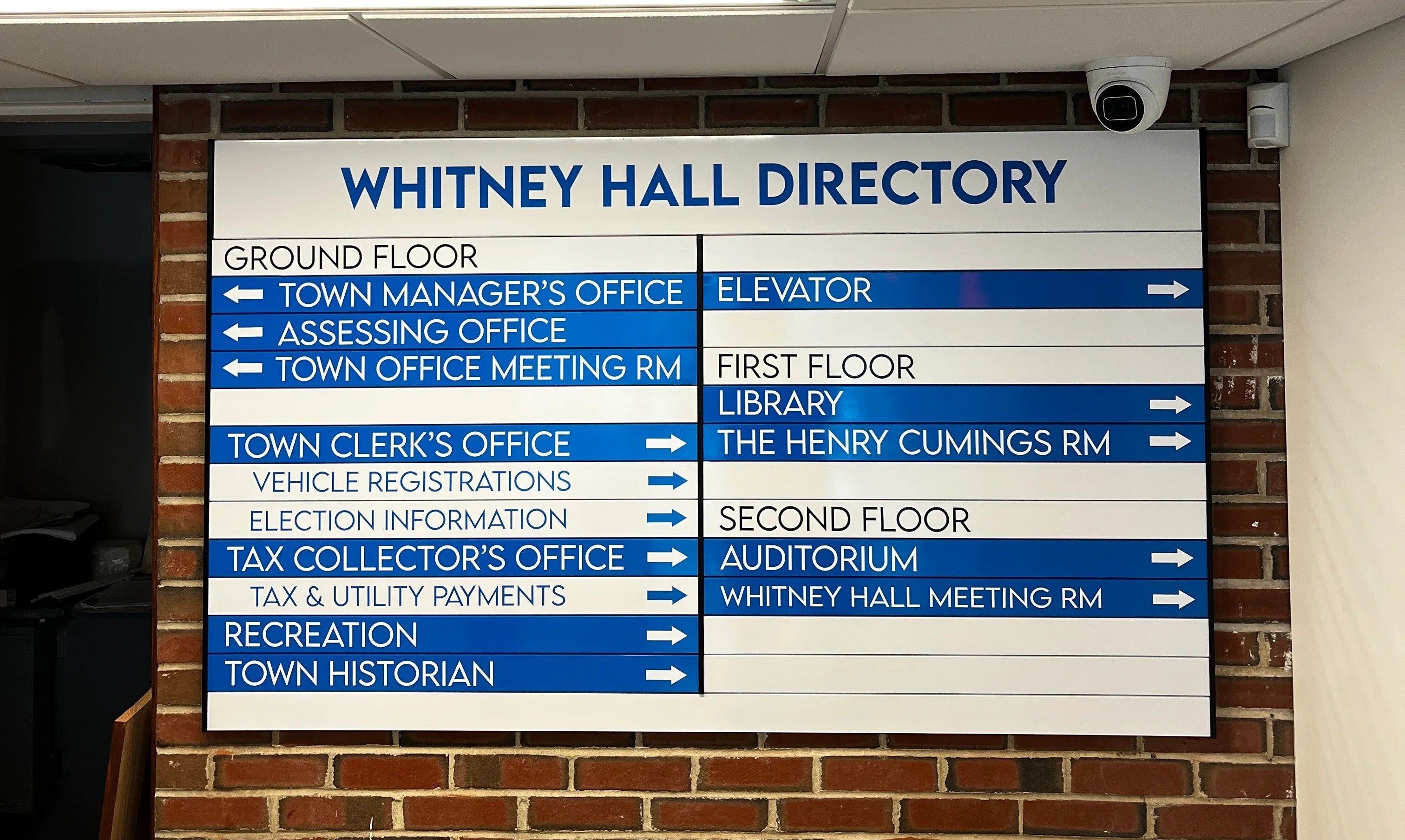
- Lobby directories listing tenants or departments
- Floor and elevator directory signs
- Room identification and suite number signs
- Restroom, exit, stair, and accessible route signs
Many interior categories of wayfinding signage have accessibility requirements, including visual readability and tactile elements for certain locations.
Where Wayfinding Signs are Used in Danbury
Danbury has the same high-friction environments every growing city has: mixed-use properties, medical corridors, busy retail, and multi-tenant offices. Wayfinding tends to matter most in places where stress or time pressure is high.
- Medical and urgent-care settings: People arrive anxious, late, or distracted. Clear directional signs reduce missed appointments and front-desk bottlenecks.
- Office buildings and industrial parks:Visitors need simple, repeatable cues from the parking lot to the right suite.
- Retail centers and plazas:Directing drivers and pedestrians to entrances, pickup zones, and return areas reduces conflict and improves flow.
- Schools and municipal buildings: Visitors often enter only a few times per year, so they rely on signs instead of memory.
How Sign Size Impacts Wayfinding Effectiveness
Wayfinding fails when people cannot read a sign in the moment they need it. Size is not about aesthetics. It is about decision distance, line of sight, and how fast someone is moving.
Standard Sign Sizes for Wayfinding
There is no single universal standard sign size for every building, because viewing distance varies. A good-sized plan starts with three questions:
- How far away must the message be read?Longer distances generally require larger letter heights and larger overall panels.
- How fast is the viewer moving?A driver needs more time and larger, simpler messaging than a walker.
- What is the complexity of the message?More words require more space, or the message needs to be simplified.
For workplace safety and hazard communication, standardized color systems help improve recognition and response time. While wayfinding is not the same as hazard labeling, the broader point holds: consistency and legibility are design choices that reduce errors.
Using Banners for Temporary Wayfinding
Banners are practical when the message is temporary or seasonal, such as:
- Grand openings and tenant move-ins
- Event parking and temporary entrances
- Construction detours and rerouted foot traffic
- Short-term promotions that also need directional guidance
Banners work best when the message is short, placed high enough to be seen, and supported by one or two repeat signs closer to the decision point.
Banner Size Basics for Directional Use
“Standard banner sizes” are usually shorthand for the most common, easy-to-produce dimensions used in the U.S. market.
In the field, you will often see:
- 2 ft. x 4 ft.: Tight spaces, fence panels, short messages
- 3 ft. x 6 ft.: One of the most common all-purpose banner dimensions
- 4 ft. x 8 ft.: High-visibility locations and longer viewing distances
If you manage multiple sites, a simple banner size chart can help you stay consistent across properties. The key is matching banner dimensions to viewing distance and placement, not picking a size because it is popular.
Design Elements That Make Wayfinding Signs Work
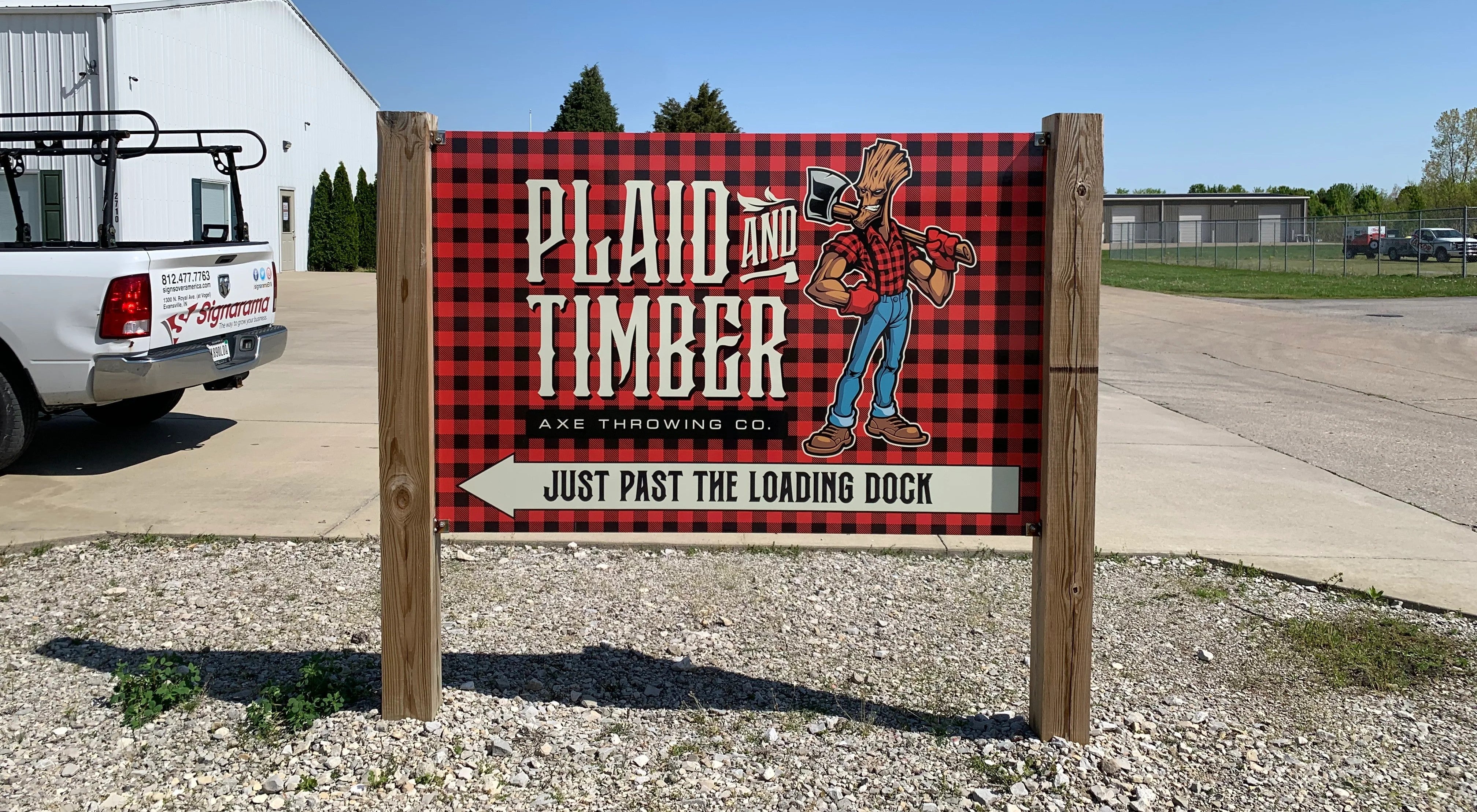
Wayfinding is a visual language. The goal is for someone to understand the message at a glance, even if they are distracted. Strong signage design principles make wayfinding systems intuitive.
- High contrast:Dark text on a light background or the reverse, chosen for the lighting conditions.
- Readable type: Simple fonts and letter spacing that stay clear at a distance.
- Icon support: Universal symbols for restrooms, stairs, elevators, and accessibility reduce language barriers.
- Directional hierarchy: Primary decisions first, details second. “Elevators” is more helpful than listing every department at the lobby entrance.
- Consistent naming: If the directory says “Suite 210,” the door should not say “Office 210.”
- Placement at decision points: Signs should appear where people decide, not after they have already turned.
For certain sign types, accessibility standards include both visual and tactile requirements so people with low vision or blindness can independently navigate.
Local Rules and Best Practices in Danbury, CT
Sign planning is not only design. It is also compliance, safety, and risk management.
- Know when ADA requirements apply: In many facilities, specific sign categories must meet technical criteria for accessibility
- Separate wayfinding from advertising when needed: A directional sign should direct first. Promotional messaging can interfere with comprehension.
- Change plan: Tenant turnover, suite renumbering, and construction phases are normal. Modular sign systems reduce rework.
- Match materials to exposure: Exterior signs in New England weather need durable finishes and mounting choices that hold up.
If your property includes traffic-facing elements like parking circulation or on-site roadways, it is worth understanding how public signage standards emphasize legibility and visibility, including night performance considerations for traffic signs.
Why Businesses Partner with a Professional Sign Company
Wayfinding mistakes are expensive because they show up as daily friction.
- Lost time: Staff spend time giving directions instead of doing their jobs.
- Bad first impressions: Confused visitors assume the business is disorganized.
- Accessibility risk: Missing required features can create compliance issues for covered sign types.
- Inconsistent growth: As spaces expand, signage becomes patchwork without a system.
A professional team helps you translate a space into a clear information flow, then produces and installs signs that hold up.
Why Signarama Is a Trusted Choice in Danbury, CT
When your goal is fewer wrong turns and fewer “Where do I go?” interruptions, local execution matters. Signarama Danbury supports businesses that need cohesive wayfinding and directional signage, including planning, production, and installation across common sign types.
If you are comparing options, look for a partner who can standardize your sign sizes, keep messaging consistent across properties, and support both permanent signage and banners for temporary needs.
Frequently Asked Questions
What is the difference between signage and wayfinding?
Signage refers to individual signs that display information. Wayfinding is the full system of signs, design elements, and visual cues that work together to help people understand where they are and how to get to their destination.
What is directional wayfinding?
Directional wayfinding uses arrows, text, and symbols to guide people along a specific path, such as pointing to parking, entrances, restrooms, or departments.
What are some examples of wayfinding signs?
Common examples include parking direction signs, building directories, lobby maps, floor and elevator directories, room identification signs, and restroom or exit signs.
What color is best for signage?
High-contrast color combinations work best. Dark text on a light background or light text on a dark background improves readability, especially from a distance or in low-light conditions.
What is the best font for wayfinding?
Simple, sans-serif fonts are best for wayfinding. Clean letterforms with consistent spacing are easier to read quickly and remain legible at different viewing distances.
Get a Wayfinding Sign Plan Built for Your Danbury Location
Walk your site like a first-time visitor. Note where people hesitate, where hallways branch, where parking decisions happen, and where confusion forces someone to ask for help. Then turn those friction points into a simple sign plan with consistent terminology, clear arrows, and right-sized panels.
For help designing and producing a cohesive system, contact Signarama in Danbury, CT at signarama.com/locations/ct-danbury to discuss directional signs, building directories, interior identification signage, and banner options that match your space.
Request a Signage Quote
Signarama Danbury, CT
contact
Signarama Danbury, CT