

Bigger Isn’t Always Better: Choosing the Right Real Estate Sign Size in Danbury, CT
Apr 10, 2026 by Signarama Danbury
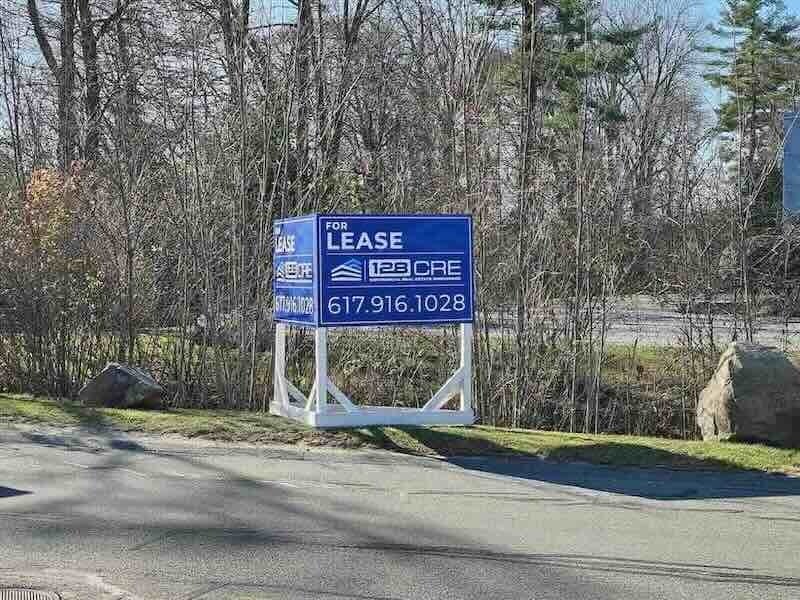
Most real estate professionals assume that larger real estate signs automatically deliver better results. The truth is that the effectiveness of a sign depends on how quickly people can see it, read it, and act on it within a limited window of attention.
Choosing the right real estate sign size comes down to visibility, readability, and context. Larger signs like 24” x 36” work best for high-speed roads and longer viewing distances. Smaller options like 18” x 24” are often more effective in residential areas where close-range clarity and aesthetics matter.
The goal is not to choose the biggest sign available. The goal is to use a sign that matches how people actually see and process information in real-world conditions.
The Science of Real Estate Sign Size: Why Visibility Depends on More Than Dimensions
When discussing real estate sign dimensions, most people focus on panel size first. In practice, visibility depends just as much on how the eye responds to contrast, scale, spacing, and visual simplicity.
Three principles matter most:
Legibility Distance
Larger letters increase the distance from which a sign can be read. If a sign is placed far from the road, letter size becomes more important than board size.
Contrast Sensitivity
High contrast between text and background improves recognition. Accessibility guidance consistently emphasizes that contrast is essential for visual clarity.
Cognitive Load
The brain processes simple messages faster. Signs with fewer words and a clear hierarchy are easier to understand, especially when viewed briefly.
The science is clear. A well-designed, smaller sign can outperform a larger one if it is easier to read and process.

Standard Real Estate Yard Sign Size
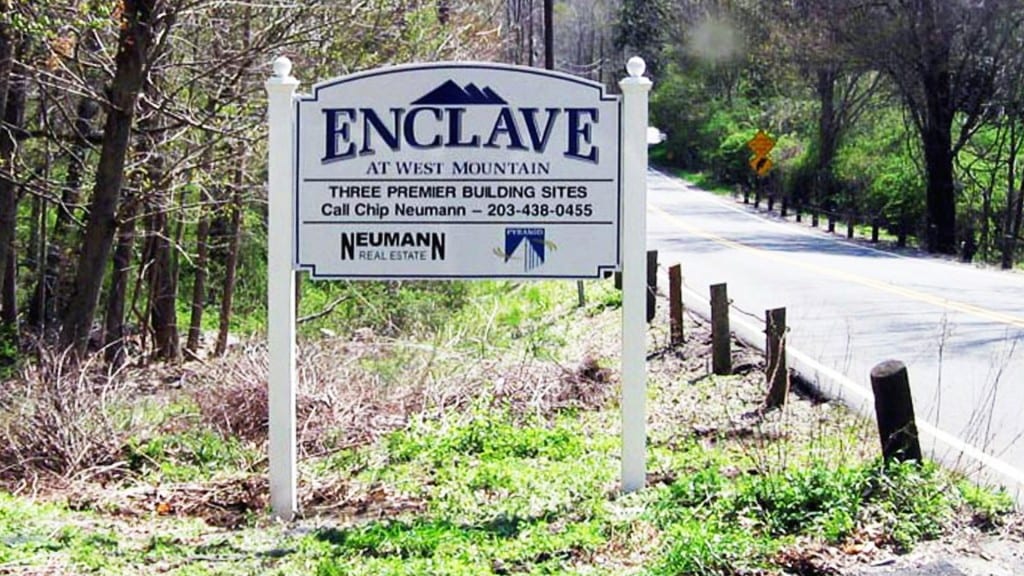
The standard real estate yard sign size often includes formats like 18" x 24" and 24" x 36". These sizes are widely used because they balance cost, durability, and general visibility.
However, standard sizes are not universal solutions.
In areas like Danbury, CT, where residential streets and suburban roads vary significantly, choosing the right real estate sign size becomes even more important.
An 18" x 24" sign often works well in residential neighborhoods where:
- Traffic is slower
- Homes sit closer to the street
- The message is simple
A 24" x 36" sign may be more effective when:
- The property sits farther from the road
- Traffic moves faster
- Visibility needs to extend over a larger area
How Real Estate Sign Size Impacts Attention, Readability, and Buyer Behavior
The right real estate sign size shapes whether buyers notice it, understand it quickly, and remember what to do next. That is why choosing the size of real estate signs should be based on real viewing conditions, not just standard measurements.
Attention: Will Buyers Notice the Sign?
Size helps a sign stand out, but only to a point. A larger sign can attract more attention, especially on busy roads or visually crowded streets. Still, bigger does not always mean more effective.
A sign is more likely to get noticed when it:
- Stands out from the surroundings
- Uses strong contrast
- Keeps the layout clean
- Makes the main message obvious at a glance
If a larger sign is cluttered with too much text, it can lose impact. In many cases, a clean, well-proportioned sign gets better results than a larger one with a crowded design.
Readability: Can Buyers Process the Message Fast?
This is where many real estate signs lose effectiveness. The best real estate sign dimensions are the ones that allow buyers to read the message quickly from a distance.
Readability depends on:
- Letter size
- Number of words
- Spacing
- Contrast
- Distance from the road
If the text is too small or packed too tightly, buyers may not process it in time. That is especially important when choosing a realtor sign size for homes on larger lots or roads with faster traffic. In those settings, larger lettering often matters more than simply using a larger board.
Buyer Behavior: Does the Sign Make Action Easier?
Once a sign gets noticed and read, it still needs to support action. A clear sign makes it easier for buyers to recognize the listing, remember the agent, or follow up later.
The best for-sale sign dimensions help buyers do three things quickly:
- Identify that the home is for sale
- Connect the listing with the agent or brokerage
- Remember how to respond
A smaller sign may work well in a neighborhood with slow traffic and short setbacks. A larger sign may make more sense when visibility is limited or the viewing distance is greater.
How To Choose the Right Real Estate Sign Size
The right size ensures your message is visible, readable, and easy to act on, whether someone is walking by or driving past. The steps below help you select the right real estate sign dimensions based on distance, speed, and property context.
Step 1: Start With Viewing Distance
Before choosing the board, look at how far the sign will be from the people who need to read it.
Ask:
- How far is the sign from the road or sidewalk?
- Will most people see it from a car or on foot?
- Is the home set back deep from the street?
This matters because the size of real estate signs should match the distance from which buyers first notice them. A sign close to the curb on a quiet neighborhood street may not need the same scale as one placed far back on a large lot.
Step 2: Consider Traffic Speed and Viewing Time
The faster people move past the property, the less time they have to process the sign.
Think about:
- Slow residential traffic
- Moderate suburban traffic
- Busier roads where cars pass quickly
For slower streets, a modest sign can still perform well if the message is simple. For faster roads, the right realtor sign size often needs to support larger text so buyers can understand it quickly.
Step 3: Decide What the Sign Must Communicate First
Every sign needs a clear message hierarchy. Too much information weakens readability.
Prioritize the essentials:
- “For Sale”
- Agent or brokerage name
- Phone number or contact point
- Optional rider or secondary detail, only if space allows
This step helps determine the right real estate sign dimensions because the board has to support the most important information without forcing the text to be too small.
Step 4: Size the Lettering Before the Board
A common mistake is choosing the panel first and then trying to fit the message into it. A better approach is to decide how large the main text needs to be, then choose a board that gives it enough room.
Keep in mind:
- The main message should be readable at a glance
- Contact details should not compete with the headline
- Extra lines of copy reduce impact
In many cases, better results come from fewer words and stronger visual hierarchy, not from squeezing more content into the sign.
Step 5: Match the Sign to the Property Type
Not every listing needs the same format. The right for-sale sign dimensions should reflect the setting.
For example:
- Smaller residential lots often benefit from a neighborhood-friendly sign
- Larger homes with deeper setbacks may need a bigger sign for visibility
- Corner lots may need a layout that reads clearly from more than one angle
- Luxury listings may need proportion and presentation as much as scale
This is why a standard real estate yard sign size can be a useful starting point, but not always the best final choice.
Step 6: Factor in Visual Clutter Around the Property
A sign does not exist in isolation. Its surroundings affect how well it performs.
Check for:
- Trees or shrubs that block sightlines
- Nearby parked cars
- Competing yard signs
- Fences, poles, or street furniture
- Visually busy backgrounds
When the area is cluttered, a slightly larger sign or simpler layout may improve visibility more than adding extra information.
Step 7: Check Local Rules and Placement Limits
The right sign size also depends on what is allowed. Local ordinances, HOA rules, brokerage policies, or property-specific limitations may affect:
- Maximum sign dimensions
- Placement on the lot
- Number of riders or add-ons
- Installation method
A sign that looks great on paper still has to work within real-world constraints.
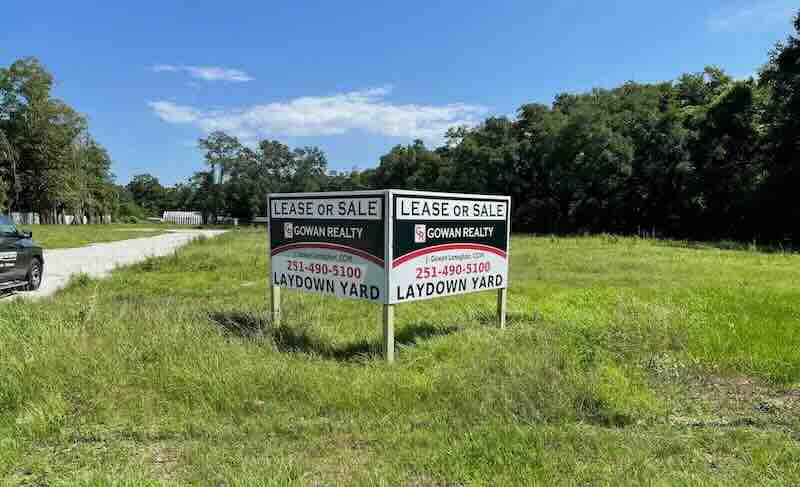
A Practical Checklist To Get Your Real Estate Sign Dimensions Right Every Time
Before finalizing your sign, check:
- Is the main message readable within a few seconds?
- Are the letters large enough for the viewing distance?
- Is the design simple and uncluttered?
- Does the sign fit the scale of the property?
- Is the contrast strong enough for clear visibility?
If any answer is no, the sign needs adjustment. That may mean:
- Increase letter size, not text quantity
- Reduce copy to essential information
- Improve text-to-background contrast
- Simplify layout and spacing
- Adjust the size for setback and traffic conditions
- Reposition for clearer sightlines
- Switch formats if readability is limited
If you are unsure which adjustments will improve visibility, working with a professional signage partner like Signarama can help you choose real estate sign dimensions that better fit the property, location, and viewing conditions.
Frequently Asked Questions (FAQs)
What color combinations make real estate signs easier to read?
High-contrast combinations usually perform best because they make the message easier to recognize quickly. Dark text on a light background or light text on a dark background tends to be more readable than low-contrast color pairings.
Should a real estate sign include a QR code?
A QR code can be useful, but only if it is large enough to scan easily and placed where people can realistically use it. On high-speed roads, it is often less practical because buyers do not have enough time to stop and scan.
Does sign shape affect visibility as much as sign size?
Shape can influence how a sign is noticed, but size and readability usually matter more. A familiar shape with clear text and strong layout will generally perform better than a creative shape that makes the message harder to read.
How many words should a real estate sign have?
Fewer words usually work better. Most real estate signs perform best when they focus on the essential message first, rather than trying to include every listing detail on the main panel.
Should every listing use the same sign size for branding consistency?
Not always. Consistent branding matters, but the sign still has to fit the property and viewing conditions. A strong system keeps brand elements consistent while allowing the real estate signs size to adjust based on visibility needs.
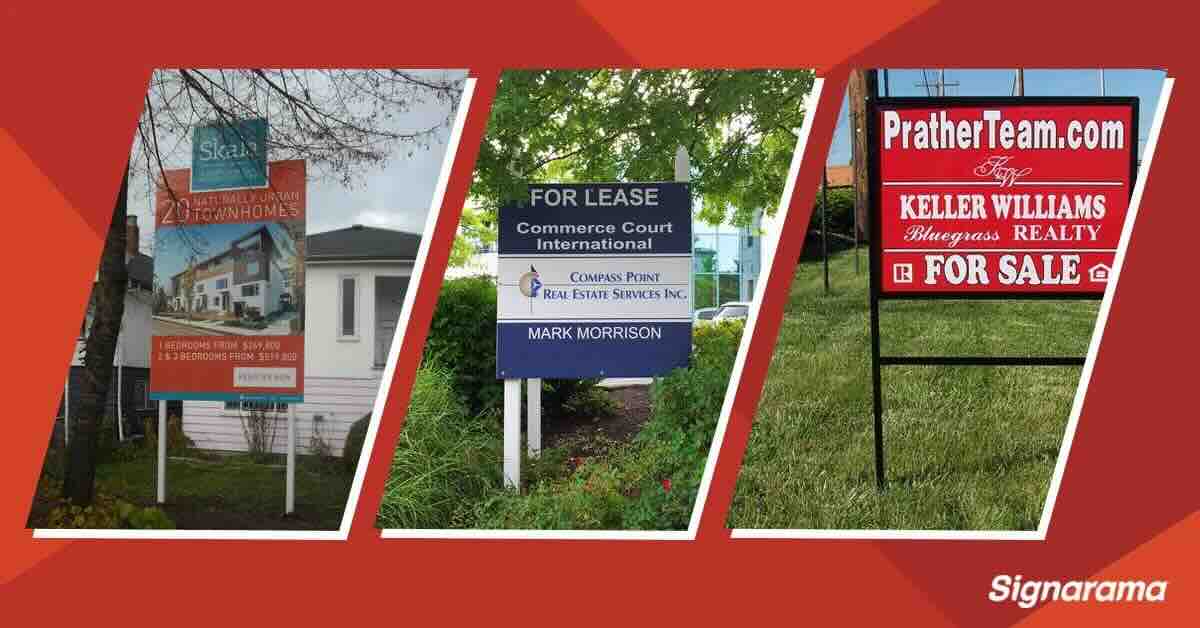
Are Your Real Estate Signs Sized for Real-World Visibility?
The most effective real estate sign dimensions are the ones that match the property, the viewing distance, and the speed of passing traffic.
If you want signage that performs in real viewing conditions, not just in a standard template, working with an experienced provider can make a measurable difference.
Signarama in Danbury, CT, helps real estate professionals create signs that are properly sized, clearly designed, and tailored to each property’s unique visibility needs.
Get expert guidance on real estate sign dimensions and create signage that performs in real-world conditions. Contact Signarama in Danbury today.

Signarama Danbury, CT
contact
Signarama Danbury, CT