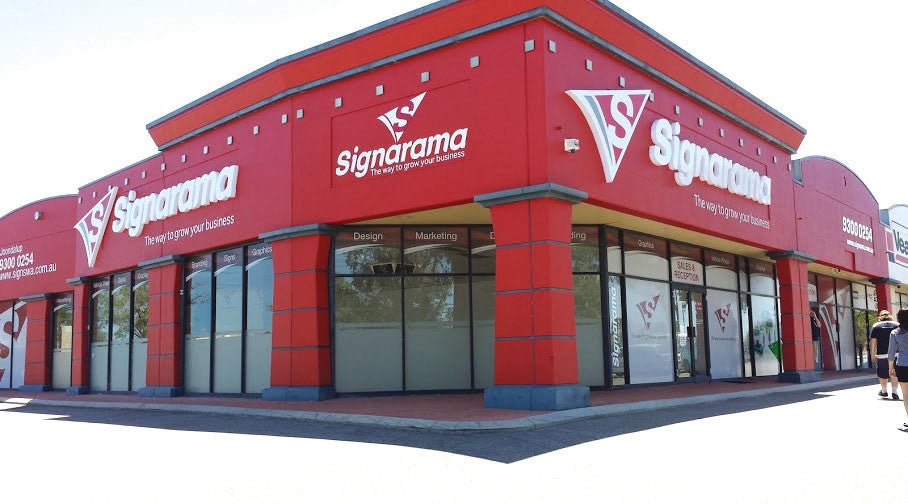
What Are the Different Types of Storefront Signage?
Storefront signage is the first visual cue that identifies a business and draws foot traffic, and most effective storefronts combine more than one sign type rather than relying on a single sign to do all the work. The right combination usually depends on the storefront itself, how much frontage there is, whether it faces a sidewalk or a parking lot, and how the building code in that district treats projecting or illuminated signage.
Channel Letters
Channel letter signs are individually mounted, illuminated 3D letters, front-lit or halo-lit, are the most common storefront sign for retail and restaurants and the anchor most other storefront elements are built around. They read well from a distance and remain the default choice for a primary business-name sign on most storefronts.
Blade and Projecting Signs
A blade sign projects perpendicular to the building face, which makes it readable to foot traffic walking along the sidewalk in a way a flat, wall-mounted sign is not. They are especially common in dense downtown districts where storefronts sit close together and a flat sign would be easy to walk past.
Backlit Cabinet Signs
A single enclosed, illuminated panel displaying text, logos, or graphics. Cabinet signs cost less than individual channel letters and work well for tenants in a shared retail center with a standard sign format, where a uniform cabinet size keeps every storefront in the plaza looking consistent.
Window Graphics
Window graphics include vinyl lettering, decals, and frosted film on storefront glass add branding and hours or promo information without a separate structure, and they are usually the least expensive storefront signage option. They also double as a way to communicate seasonal promotions without touching the primary sign at all.
Awning Signage
A branded awning does double duty. It shades the entrance and carries the business name and logo, which makes it a common choice for restaurants and retail with street-level entrances. It also gives a storefront a softer, more inviting look than a hard sign alone.
Combining Storefront Sign Types for Maximum Impact
The strongest storefronts rarely rely on one sign type alone. Channel letters handle brand identification, window graphics carry secondary messaging, and an awning or blade sign adds visibility from an angle the main sign cannot cover. Planning all of it together, rather than adding pieces over time, keeps the whole storefront looking intentional.
Storefront Sign Codes and Landlord Requirements
Many storefronts sit inside a shopping center or downtown district with its own sign criteria on top of the local building code. A landlord may restrict cabinet size, illumination type, or where a blade sign can project. Checking both the municipal code and any lease or property sign criteria before finalizing a design avoids a rejected sign application late in the process, especially in historic districts where projecting or illuminated signage often faces extra review.