




ADA‑Compliant Signage: Enhancing Accessibility for Customers in Mount Kisco & Pleasantville
Jun 22, 2026 by Christopher Hayes
Accessibility in commercial spaces is no longer viewed as optional or symbolic. It is measurable, enforceable, and essential to customer experience.
According to the Centers for Disease Control and Prevention (CDC), more than 1 in 4 adults in the United States lives with a disability. That represents more than 60 million Americans who rely on accessible environments to shop, dine, receive medical care, and conduct business.
For companies in Mount Kisco and Pleasantville, ADA-compliant signage is a legal requirement under federal law and a practical necessity for serving the local community. Proper signage ensures individuals with visual, mobility, or cognitive disabilities can independently navigate a building. It also reduces liability and reinforces professionalism.
This guide explains what ADA-compliant signage is, what the law requires, and how local businesses can meet those standards with confidence.
What Is ADA-Compliant Signage?
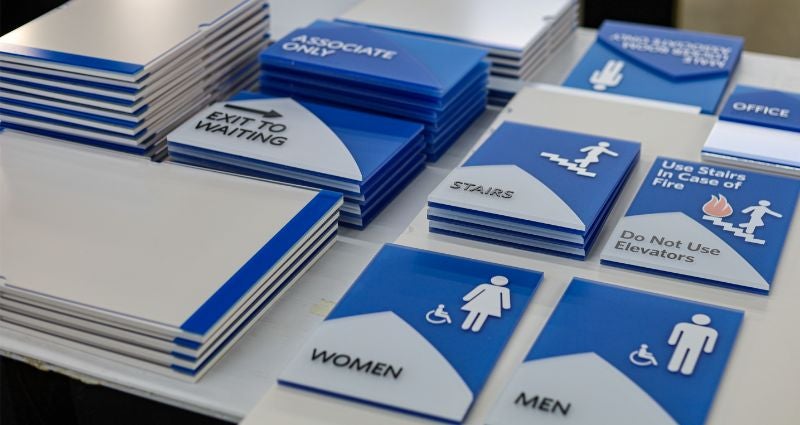
ADA-compliant signage refers to signs that meet the requirements outlined in the Americans with Disabilities Act and the 2010 ADA Standards for Accessible Design.
These federal standards regulate how permanent signs in public-facing commercial buildings must be designed, fabricated, and installed. The Americans with Disabilities Act, signed into law in 1990, prohibits discrimination against individuals with disabilities. Title III applies specifically to businesses open to the public, including retail stores, restaurants, medical offices, professional buildings, hotels, educational facilities, and government offices.
Under the 2010 ADA Standards, certain signs must include:
- Raised tactile lettering
- Grade 2 Braille
- Specific character sizing
- Proper mounting height
- Adequate color contrast
- Non-glare finishes
For businesses, compliance is not about aesthetics alone. It is about ensuring individuals can locate restrooms, exits, stairwells, and permanent rooms independently and safely.
In simple terms, ADA signage ensures that people who are blind, visually impaired, or otherwise disabled can navigate your facility without assistance.
4 Types of ADA Signs Required in Commercial Buildings
Not all signs are treated equally under ADA regulations. Requirements depend on whether a sign identifies a permanent space or provides temporary information.
1. Permanent Room Identification Signs
These signs identify rooms or spaces that will not change function over time.
Examples include:
- Restrooms
- Conference rooms
- Mechanical rooms
- Electrical rooms
- Stairwells
- Exit doors
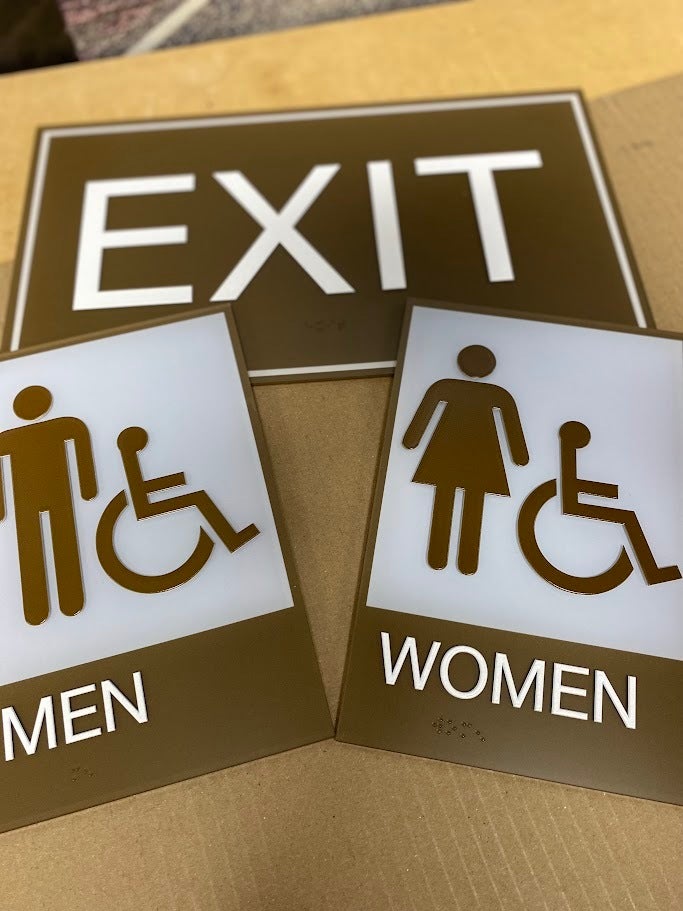
These signs must include raised tactile characters and Grade 2 Braille. They must be mounted on the wall adjacent to the latch side of the door, not on the door itself.
For example, a medical office in Pleasantville must provide tactile restroom signage so patients with visual impairments can independently locate facilities. A corporate building in Mount Kisco must label stairwells with compliant tactile characters and Braille.
2. Directional and Informational Signs
Directional signs guide visitors to specific areas such as reception, elevators, or departments. These typically do not require Braille unless they identify a permanent room, but they must maintain clear contrast and legibility.
3. Overhead Signs
Overhead signs, such as those suspended from ceilings, are generally exempt from tactile requirements because they are not within reach. These signs must still meet visibility standards but do not require Braille.
4. Restroom Signage
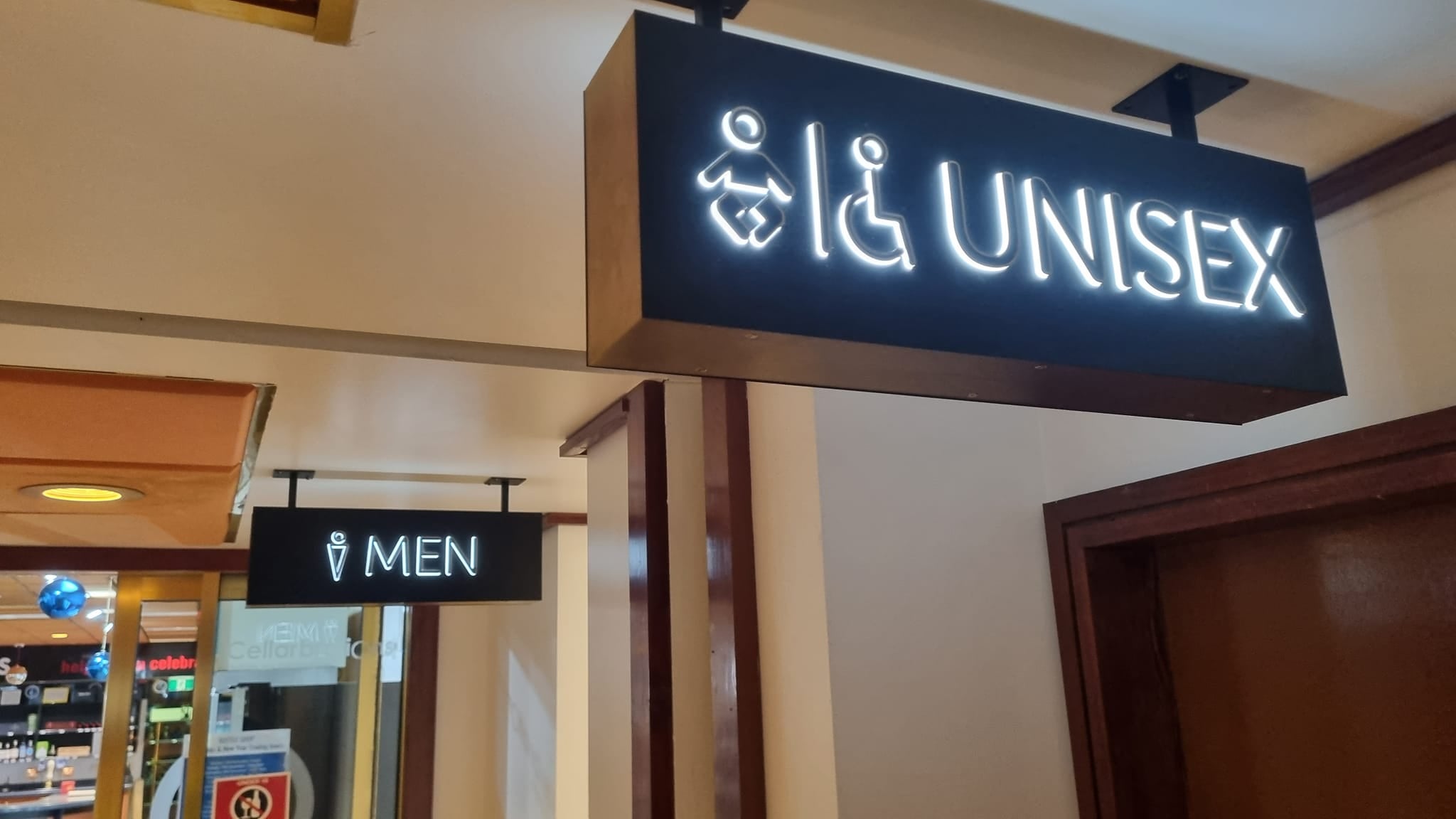
Restroom signage has specific standards:
- Tactile characters
- Grade 2 Braille
- Mounting on the latch side
- Proper pictogram field height
- High contrast design
Clear restroom identification is one of the most scrutinized elements during compliance inspections.
5 Key ADA Signage Requirements Businesses Must Follow
Understanding the technical standards prevents costly errors. The 2010 ADA Standards outline precise fabrication and installation requirements.
1. Lettering Requirements
- Characters must be uppercase
- Fonts must be sans serif
- Characters must be raised at least 1/32 inch
- Height typically ranges from 5/8 inch to 2 inches, depending on the application
- Spacing must follow ADA specifications
Decorative or script fonts are not permitted for tactile signage because they reduce readability.
2. Braille Requirements
- Must use Grade 2 Braille
- Positioned directly below the corresponding text
- Proper spacing and a domed shape are required
Incorrect Braille spacing or flat engraving can invalidate compliance.
3. Mounting Height and Placement
- Baseline of the lowest tactile character must be at least 48 inches above the finished floor
- The highest tactile character must not exceed 60 inches
- Installed on the latch side of the door
- Clear floor space must allow wheelchair access
Improper placement is one of the most common compliance violations.
4. Color Contrast and Finish
Signs must have a strong contrast between the background and the characters. Light text on a dark background or dark text on a light background is required. A non-glare finish is mandatory to prevent reflection that could impair readability.
5. Pictogram Standards
If pictograms are used, they must:
- Be located within a 6-inch minimum high field
- Include text descriptors below the pictogram
- Maintain high contrast
These details ensure consistency and usability across public environments.
Why ADA-Compliant Signage Matters for Local Businesses
ADA signage is more than regulatory paperwork. It affects liability, reputation, and customer trust.
Legal Risk and Enforcement
ADA Title III lawsuits have increased significantly in recent years. Federal court data shows thousands of accessibility-related lawsuits are filed annually across the United States.
Non-compliant signage can expose businesses to legal complaints, civil penalties, and required retrofits. Correcting signage after a complaint is often more expensive than proactive compliance.
Customer Experience
Accessibility directly impacts how customers perceive your business. When signage is clear and compliant, visitors can navigate independently. That independence builds confidence and comfort.
Mount Kisco and Pleasantville serve diverse populations, including seniors, veterans, and individuals with disabilities. Creating accessible environments signals professionalism and responsibility.
Community Responsibility
Inclusive design reflects community values. Businesses that prioritize accessibility demonstrate respect for all customers, not just a majority.
How to Ensure Your Business Is ADA Signage Compliant
Compliance does not require guesswork. It requires systematic evaluation.
Step 1: Conduct an Accessibility Audit
Walk through your facility and identify all permanent rooms. Confirm that each required sign includes tactile lettering and Grade 2 Braille. Pay close attention to restrooms, stairwells, and mechanical rooms.
Step 2: Review ADA Standards
Compare your signage against the 2010 ADA Standards for Accessible Design. Verify character height, font style, Braille placement, and mounting location.
Step 3: Check Placement and Height
Measure installation height. Ensure the baseline of the lowest tactile character is at least 48 inches from the floor and no more than 60 inches at the highest point. Confirm placement on the latch side of doors.
Step 4: Evaluate Contrast and Finish
Inspect color combinations and glare. Replace signs with reflective surfaces or low contrast that reduce readability.
Step 5: Upgrade or Replace Non-Compliant Signs
Prioritize critical areas first, including restrooms and exits. Maintain documentation of updates for internal records.
Step 6: Work With an Experienced Sign Professional
Professional fabrication ensures tactile elements meet dimensional standards. Proper installation ensures compliance with mounting regulations. Planning signage early in new construction or renovation projects reduces the risk of costly corrections later.
Common ADA Signage Mistakes to Avoid
ADA signage problems usually come down to a few repeat issues: the sign is made correctly but installed incorrectly, or it looks right visually but fails the tactile and Braille standards.
Here are the most common mistakes that put businesses out of compliance:
- Mounting signs in the wrong location. Permanent room ID signs must be installed on the latch side of the door (or the nearest adjacent wall if there is no latch side space). Placing signs on the door, behind the door swing, or on the hinge side is a frequent error.
- Installing at the wrong height. Tactile signs must fall within the ADA reach range. If the raised text is too high or too low, it may be unusable for someone reading by touch.
- Using the wrong type of Braille.ADA requires Grade 2 Braille. Businesses sometimes use Grade 1, apply incorrect spacing, or use poorly formed Braille dots that are hard to read.
- Choosing non-compliant fonts or character styles.Decorative, script, condensed, or overly thin fonts may look on-brand, but tactile lettering must be simple, legible, and sans serif, with proper spacing and stroke width.
- Skipping tactile characters on required signs.Signs that identify permanent rooms and spaces must include raised characters and Braille. A flat-printed sign for a restroom, stairwell, or conference room is a common compliance gap.
- Low contrast or glossy finishes.ADA requires good contrast and non-glare surfaces. Shiny materials, reflective laminates, or low-contrast color combos make signs harder to read for people with low vision.
- Pictograms without proper formatting.If you use pictograms (like restroom icons), ADA requires them to be placed in a field with the correct minimum height, with a text descriptor below. Missing descriptors or cramped layouts can be non-compliant.
- Not updating signage after renovations.Even small remodels can change door swings, room functions, or circulation paths. Businesses often forget to update permanent IDs and wayfinding signs to match the new layout.
Addressing these issues early can prevent expensive rework and help ensure customers can navigate your space independently and safely.
ADA Signage in New Construction vs. Existing Buildings
New construction projects must meet ADA requirements before occupancy approval. Building inspectors often verify accessibility compliance during final inspections.
Existing buildings must also comply, especially when renovations alter layout or function. If a Mount Kisco retail store remodels its interior and reassigns room functions, signage must reflect updated ADA standards.
New York building codes align with federal ADA regulations, reinforcing accessibility expectations at the state level. Proactive planning during design and construction phases ensures signage is integrated correctly from the start.
Frequently Asked Questions About ADA Signage
Are all signs required to have Braille?
No. Only signs that identify permanent rooms or spaces require tactile lettering and Braille. Directional and temporary signs typically do not require Braille.
Does ADA apply to small businesses in Mount Kisco and Pleasantville?
Yes. Title III applies to businesses open to the public, regardless of size, with limited exceptions.
What happens if my signage is not compliant?
Non-compliance can result in complaints, lawsuits, and civil penalties. Businesses may also be required to correct violations within specific timeframes.
Can ADA signs match my branding?
Yes. Signs can incorporate brand colors and design elements as long as they meet contrast, tactile, and sizing requirements.
How often should signage be reviewed?
Review signage after renovations, layout changes, or periodically as part of facility maintenance.
Make Your Business More Accessible Today
ADA-compliant signage is not a cosmetic upgrade. It is a legal obligation and a meaningful investment in accessibility. With one in four adults in the United States living with a disability, accessible design affects a significant portion of your customer base.
Clear, compliant signage reduces legal risk, strengthens trust, and creates an inclusive environment where visitors can move independently and confidently.
Businesses in Mount Kisco and Pleasantville that want to ensure their signage meets federal standards can consult with Signarama Millwood for professionally designed and properly installed ADA-compliant solutions tailored to their facility.
Accessibility is not optional. It is foundational to doing business responsibly.
Upgrade to ADA-Compliant Signs

Signarama Millwood, NY
contact
Signarama Millwood, NY