

Download our ADA Guide Book
Apr 14, 2023 by Dawn Homa
What Does ADA Mean?
ADA stands for the Americans with Disabilities Act. It is a U.S. civil rights law enacted in 1990 that prohibits discrimination against individuals with disabilities and requires equal access to public spaces, services, and facilities.
In 2008, the ADA was expanded to cover a broader definition of disability. This includes, but is not limited to: Caring for oneself, Performing manual tasks, Seeing and hearing, Eating and sleeping, Walking, standing, lifting, and bending, Speaking and breathing, Learning, reading, and concentrating, Communicating and working, abd Major bodily functions (such as neurological, respiratory, digestive, and immune systems)
What Industries Are Impacted by ADA Regulations? Short answer: Almost every business or facility open to the public. If the public can access the space, ADA regulations likely apply.
Employers & Public-Facing Businesses: Retail stores and shops, Restaurants and bars, Service establishments, Theaters and entertainment venues, and Office buildings
Public Entities & Transportation: Museums, Schools and universities, Recreation facilities, State, county, and local government buildings, and Public transportation facilities
Commercial Facilities: Hotels, Factories, Warehouses, Manufacturing plants, and Public areas of apartments and condominiums
What Does ADA Mean for Signs?
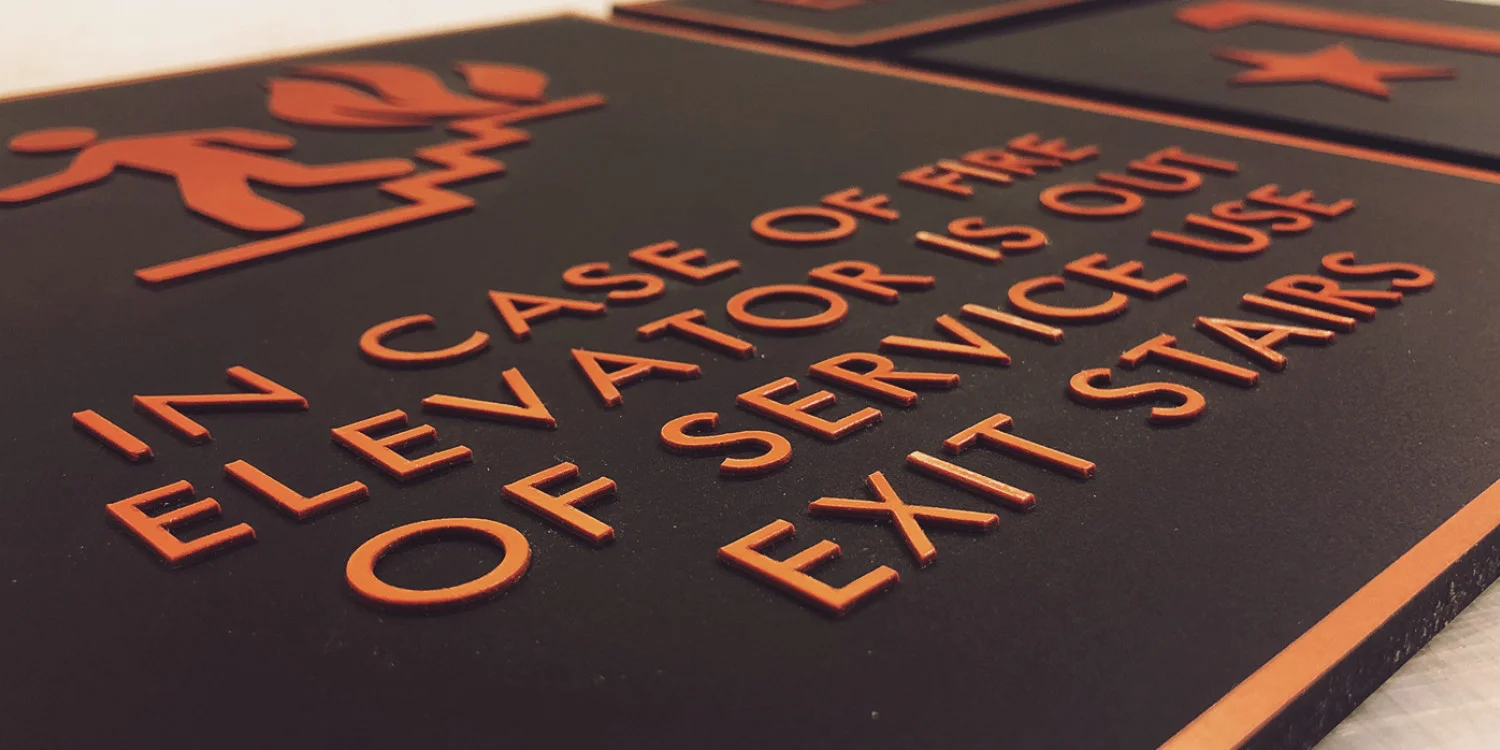
ADA signage ensures that people with disabilities can independently navigate a building. When most people hear “ADA signs,” they think only of braille signs. In reality, ADA-compliant signage involves much more than braille.
ADA signage is now standard practice in: Architecture, Construction, Interior design, and Commercial signage
The 3 Main ADA Sign Requirements
ADA sign compliance focuses on three major areas:
1. When a Sign Is Required - Not all signs require ADA treatment. Typically required signs include:
- -Restrooms
- -Exits
- -Elevators
- -Permanent room identification
- -Accessible entrances
Temporary signs or promotional signage usually do not require ADA compliance.
2. ADA Sign Design Requirements - ADA guidelines specify exactly how signs must be designed, including:
- -Font type: Sans serif, easy to read
- -Character height: Based on viewing distance
- -Raised characters: Required on certain signs
- -Braille: Grade 2 braille placement and spacing
- -Contrast: High contrast between text and background
- -Finish: Non-glare surfaces
These rules ensure signs are readable by touch and sight.
3. ADA Sign Installation & Placement - Even perfectly designed signs can fail compliance if installed incorrectly. Improper placement is one of the most common reasons buildings fail ADA inspections. ADA guidelines control: Mounting height, Location relative to doors, Tactile reach ranges, and Clear floor space
Why ADA Signs Matter? - Reduces legal risk, Supports accessibility and inclusion, Helps buildings pass inspections, and Improves navigation for all users
Non-compliant signage can lead to: Costly retrofits, Project delays, and Fines and legal exposure
Don’t Know Where to Start? Start by downloading our ADA Guide Book. ADA requirements are detailed and technical. Most business owners and contractors rely on sign professionals to ensure compliance.
Start with Signarama Brighton's ADA guidebook or give us a call at 303-914-9700 to consult with an ADA sign expert on:
- -Local building codes
- -Federal ADA guidelines
- -Architectural standards
- -Fabrication and installation requirements
As your signage partner, we will ensure your facility is accessible and compliant.
Quick Summary: Understanding ADA Sign Compliance The Americans with Disabilities Act (ADA) ensures that public spaces are accessible to everyone. For business owners and contractors, this means signage is more than just a design choice—it is a legal requirement. ADA-compliant signs are essential for navigating retail stores, restaurants, offices, and public facilities safely and independently. The Essentials of ADA Signage: -Where They Are Required: ADA signs are mandatory for permanent spaces, including restrooms, exits, elevators, and permanent room identification. -Precision Design: Compliance requires specific sans-serif fonts, high-contrast colors, non-glare finishes, and Grade 2 Braille to ensure readability for everyone. -Strict Installation Rules: A sign is only compliant if it is installed at the correct height and distance from the door. Improper placement is the leading cause of failed building inspections. -Risk Management: Proper signage reduces legal liability, prevents project delays, and avoids costly retrofits after a building is completed.

Signarama Brighton, CO
Sales by Appointment Only. Pick-up/Deliveries Monday-Friday 8:30am-5pm.
contact
Signarama Brighton, CO