

How ADA Signs Are Made: A Behind-the-Scenes Look
Apr 15, 2025 by Parsa
Item 1 of 1
ADA signs — the signage required by the Americans with Disabilities Act — are essential for accessibility in public spaces. From restrooms to exits and room identifications, these signs ensure everyone, including those with visual impairments, can navigate buildings safely and independently. But how exactly are ADA-compliant signs made? Here's a closer look at the process.
1. Designing the Sign
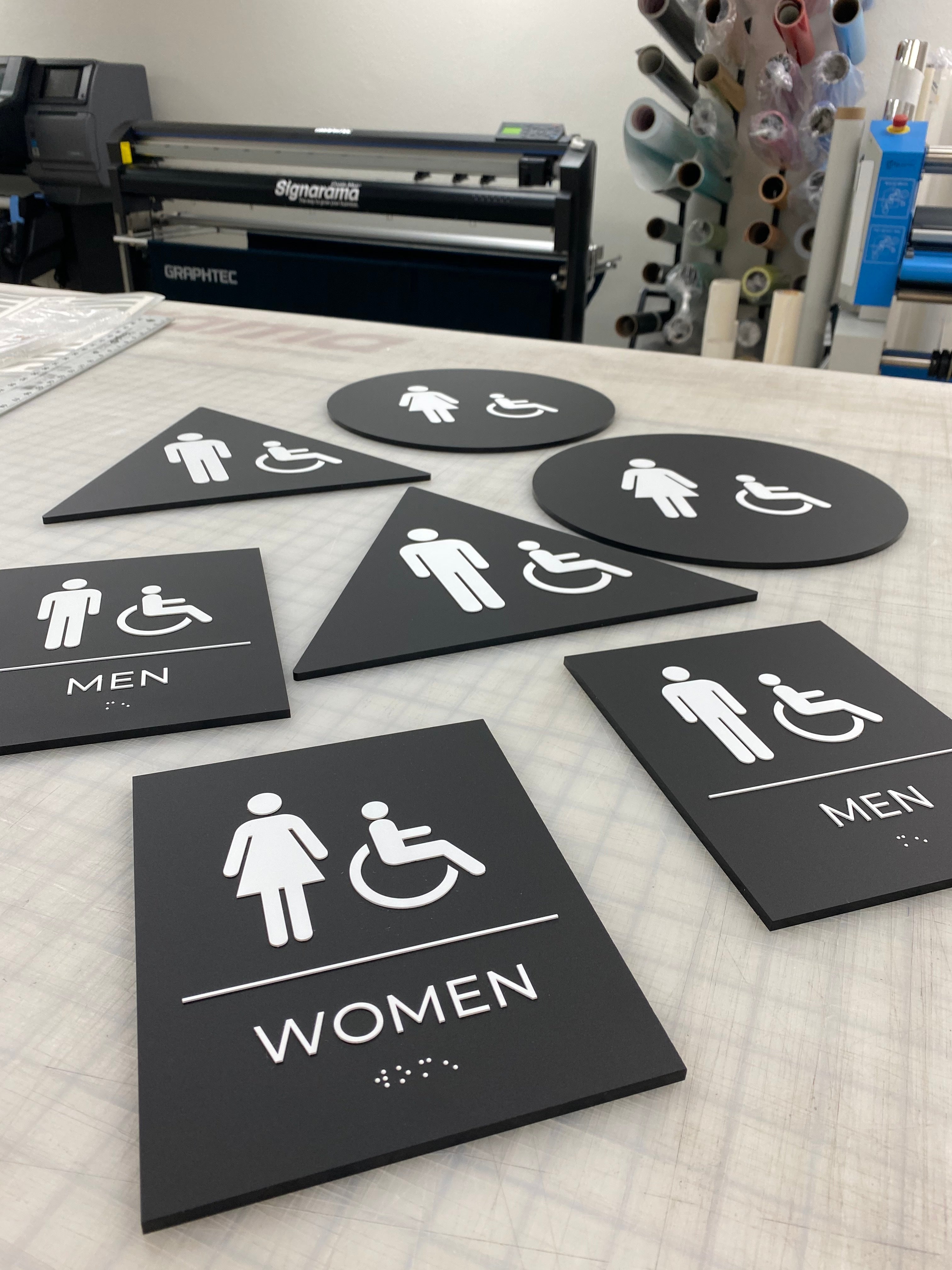
The process begins with design. ADA signs must meet strict regulations for font, size, contrast, tactile features, and placement. Common requirements include:
Sans-serif fonts like Helvetica or Arial
High-contrast color schemes (e.g., white text on a dark background)
Tactile lettering that can be read by touch
Grade 2 Braille, located directly below the text
Graphic designers use specialized software like Adobe Illustrator or CorelDRAW to layout the sign’s text, symbols, and spacing, ensuring it meets ADA specifications.
2. Choosing Materials
ADA signs are typically made from durable materials such as:
Acrylic (the most common)
Photopolymer
Aluminum
ABS plastic
These materials are chosen for their longevity, easy maintenance, and ability to hold tactile lettering and Braille.
3. Fabrication Process
Acrylic Signs
Laser Cutting: The sign base and raised characters are cut using a laser cutter for precision.
Tactile Lettering: Letters are cut separately, then carefully adhered to the base. Alternatively, they can be engraved and filled with contrasting paint.
Braille Insertion: Holes for Braille dots are drilled or engraved using a CNC router or laser. Then, tiny round beads (or domes of resin) are inserted to create the raised Braille dots.
Photopolymer Signs
Photopolymer Sheets: A UV-sensitive sheet is exposed to a light source with a design mask on top. The exposed areas harden to form the tactile letters and Braille in one piece.
Washing and Drying: Unexposed areas are washed away, leaving raised elements.
Painting: Once dried, the sign is painted with contrasting colors for visual clarity.
4. Finishing Touches
Signs are cleaned, edges are polished, and mounting options are added. Most ADA signs are installed using double-sided VHB tape, silicone adhesive, or mechanical fasteners, depending on the surface and permanence needed.
5. Quality Control
Before leaving the shop, signs go through a strict quality check to ensure all ADA requirements are met — from spacing and size to Braille accuracy and durability.
Why ADA Signs Matter
ADA signs are more than just compliance — they represent inclusivity and safety. By making spaces easier to navigate for people of all abilities, these signs are a small detail that makes a big difference.
Brought to You by Signarama Costa Mesa
Looking for professional, high-quality ADA signs? Signarama Costa Mesa is your trusted local partner for custom ADA signage that’s 100% compliant, durable, and visually polished.
Whether you need signs for an office, hotel, school, or medical facility, our team handles design, fabrication, and installation all under one roof.
Fast Turnaround
Expert Craftsmanship
Local Service with National Quality
Visit us in Costa Mesa or get a free quote today!
www.signarama-costamesa.com
(714)-884-3068
Let’s make your space more accessible — together.

Signarama Costa Mesa, CA
3303 Harbor Blvd Ste F1
Costa Mesa California 92626
Opening Hours:
Monday
9:00 am - 5:30 pm
Tuesday
9:00 am - 5:30 pm
Wednesday
9:00 am - 5:30 pm
Thursday
9:00 am - 5:30 pm
Friday
9:00 am - 5:30 pm
contact
Signarama Costa Mesa, CA
CLIENTS WE HAVE WORKED WITH: